
Approximating cell geometry in a cellular transmission system
Patent Information
- Authority / Receiving Office
- US · United States
- Current Assignee / Owner
- Publication Date
- 2005-12-08
- Estimated Expiration
- Not applicable · inactive patent
Smart Images
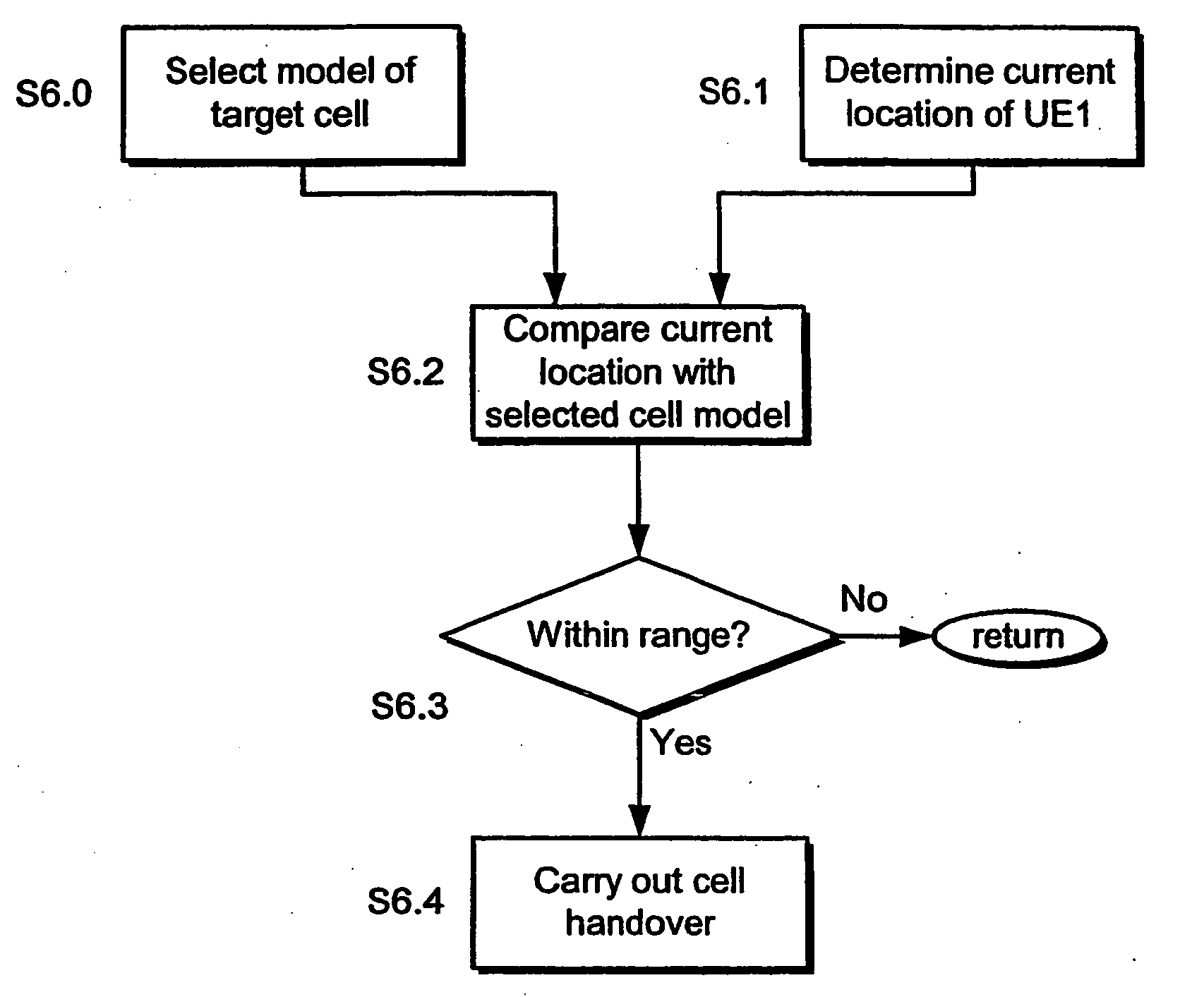
Figure 1 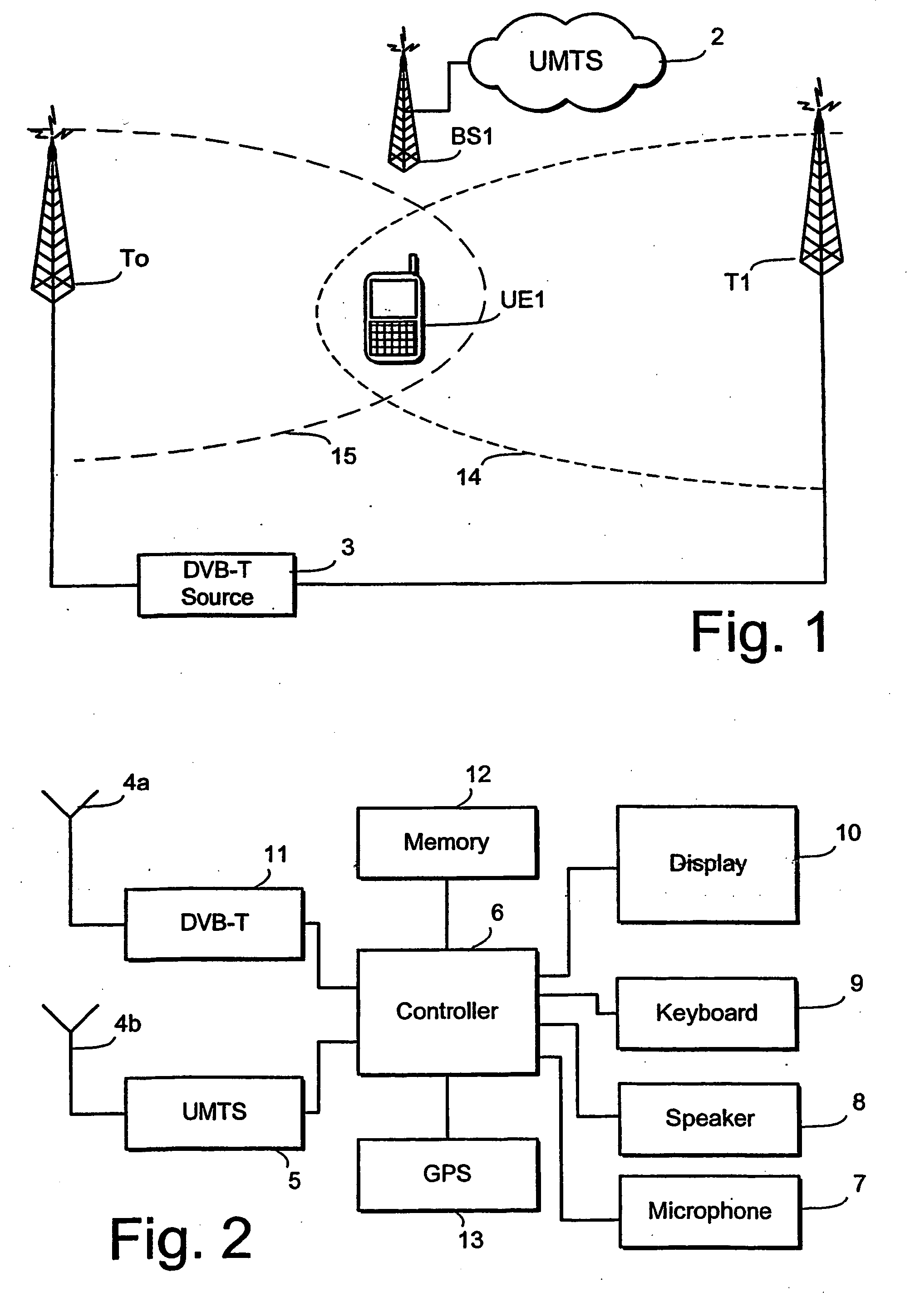
Figure 2 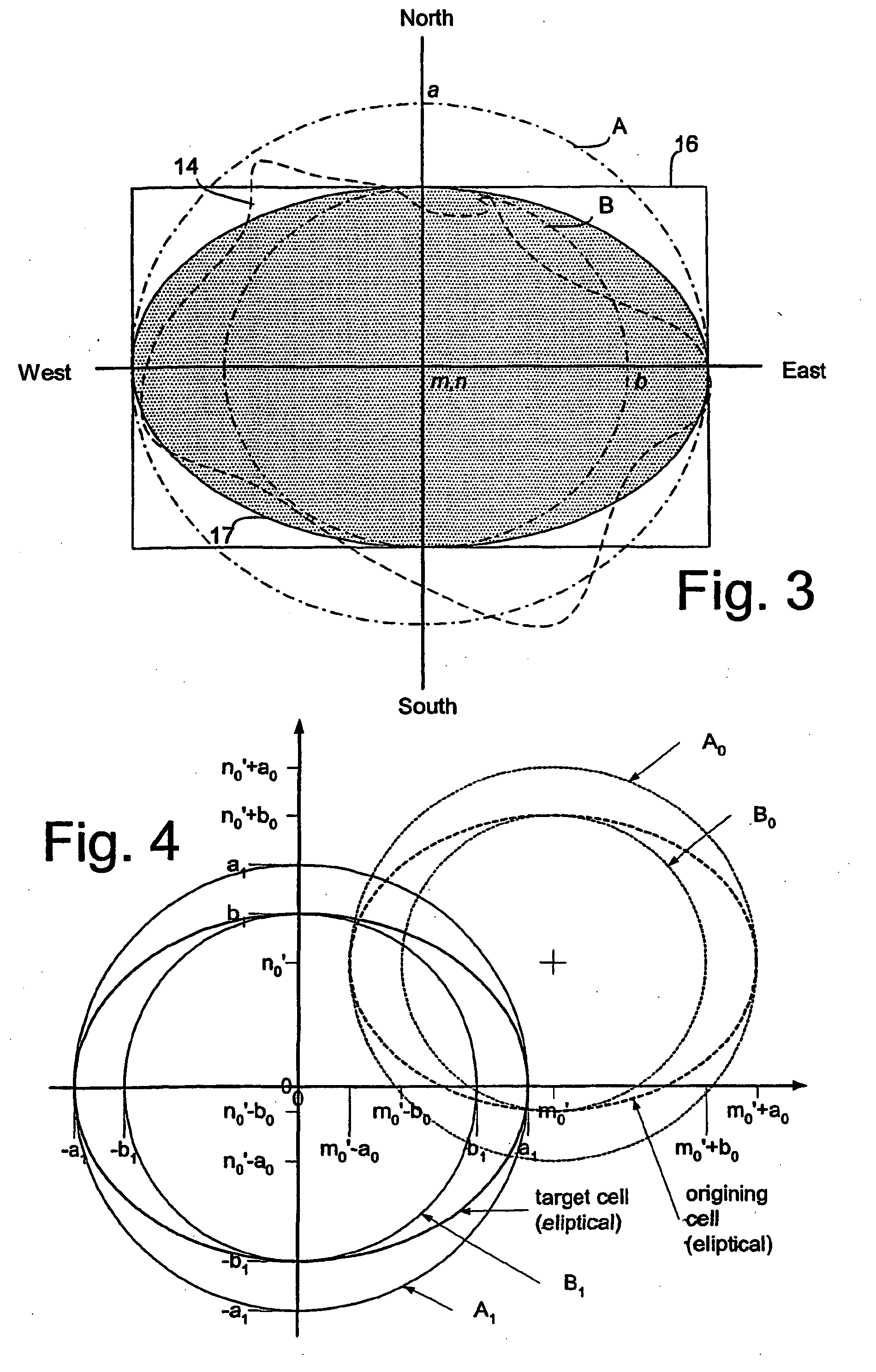
Figure 3
Abstract
Description
FIELD OF THE INVENTION
[0001] This invention relates to a method of approximating cell geometry in a cellular transmission system and particularly but not exclusively to improving cell handovers. BACKGROUND
[0002] Cell handovers occur between cells in a wireless mobile communications network when user equipment (UE) moves from the coverage area of one cell to another. It involves setting up new connections and releasing or maintaining old connections to network cells as the user equipment (UE) moves from the coverage area of one cell to another. Typically, the coverage area of neighbouring cells overlap, which leads to the possibility of maintaining multiple cell connections and handing over by increasing, reducing or maintaining the number of UE-network cell connections. In 3G systems, “soft-handover” uses this technique.
[0003] Handover in wireless cellular systems is normally a three-phase process: (1) measurement—measurement criteria, measurement reports; (2) handover decision—a...
Examples
Embodiment Construction
System Overview
[0025] In the following description, the invention is described by of example with reference to a DVB-T network although as will be evident hereinafter it can be applied to any cellular network. Referring to FIG. 1, UE1 is a dual mode mobile device for use with a UMTS telecommunications network and the DVB-T network. The UMTS network includes a base station BS1 connected to a land network 2, although in practice, the UMTS network will include many base stations and only one is shown in order to simplify the drawing. The UMTS network provides cellular voice and IP data communication with UE1 in a manner known per se.
[0026] The DVB-T network includes geographically spaced apart base stations T0 and T1 that may be connected in a network to a content source 3 shown schematically that can supply UE1 with video streaming or other data. The data received through the DVB network may be used in conjunction with services provided through the UMTS network. The network may inc...