
Pop Can Beak Spout Design
a pop can and beak technology, applied in the field of pop can lids, can solve the problems of contaminated cans, exposed outside surfaces, and touching the liquid inside with the risk of contamination, and achieve the effect of easily creating a sanitary spou
- Summary
- Abstract
- Description
- Claims
- Application Information
AI Technical Summary
Benefits of technology
Problems solved by technology
Method used
Image

Examples
Embodiment Construction
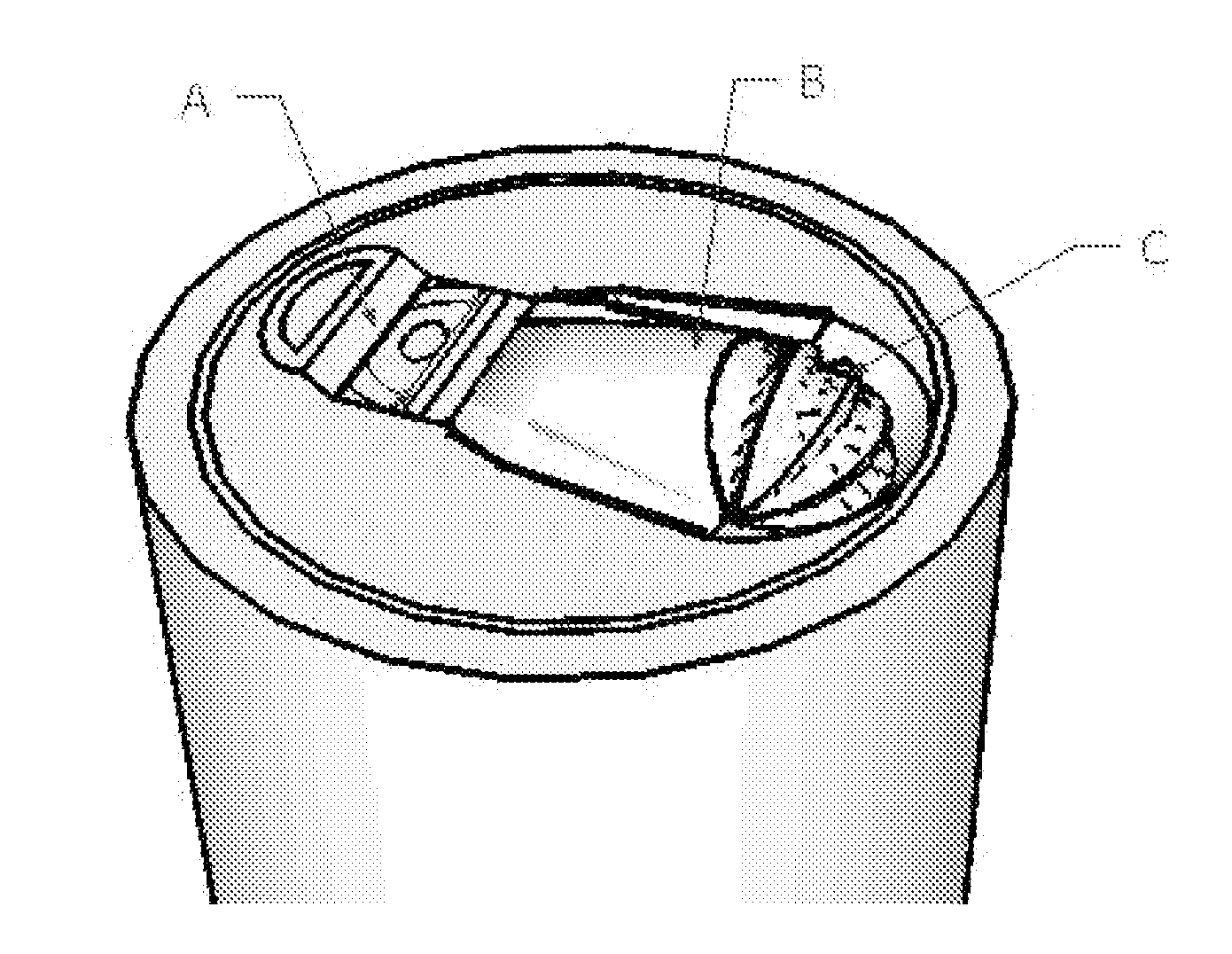
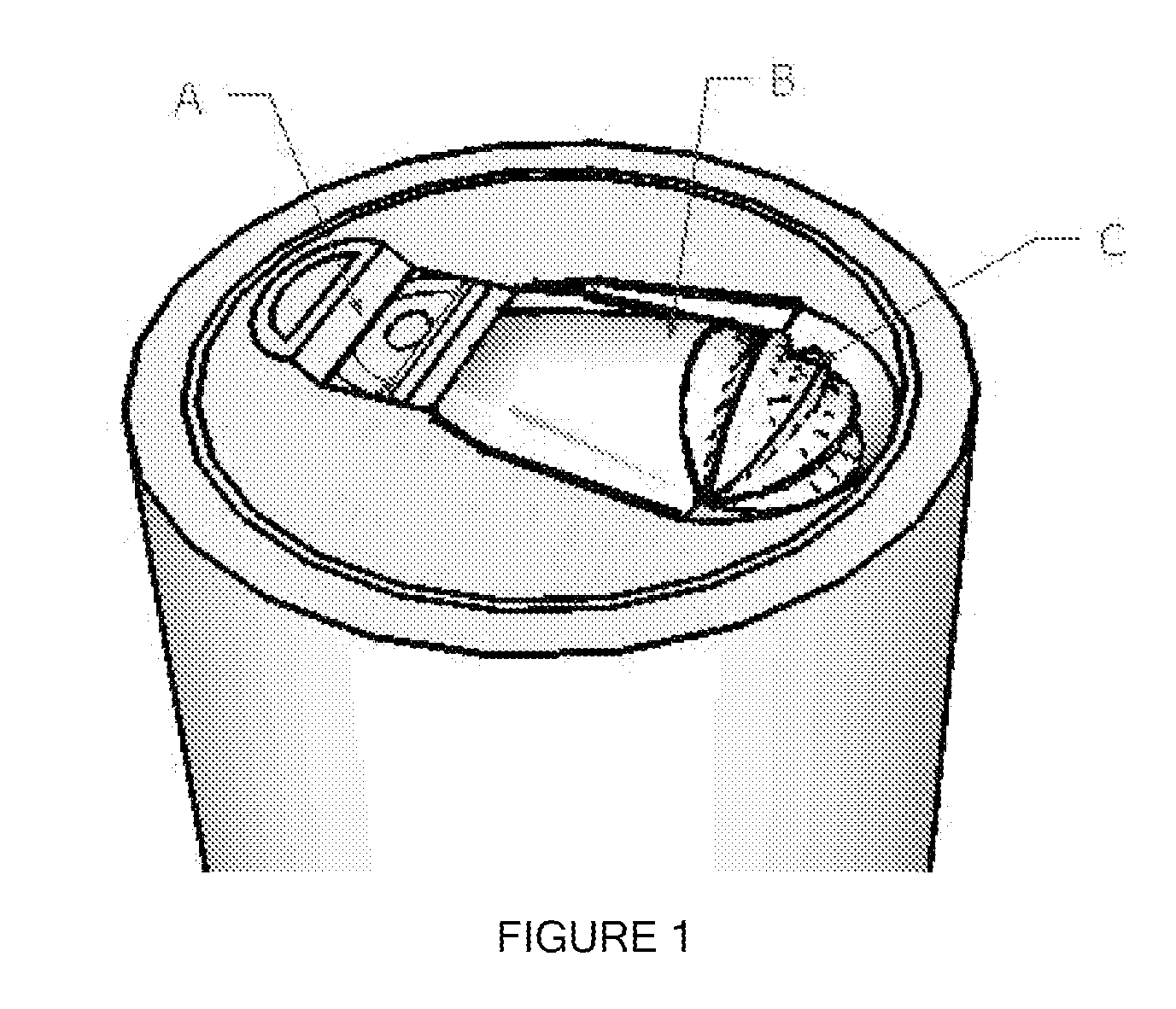
[0027]Referring to the FIG. 1 (an environmental perspective view of the pop can), the present invention includes the pull-ring portion A in the front, the central beak portion B in a projecting convex form like “bird beak”, and the “accordion” portion C behind with wrinkled surface linking to the upper surface.
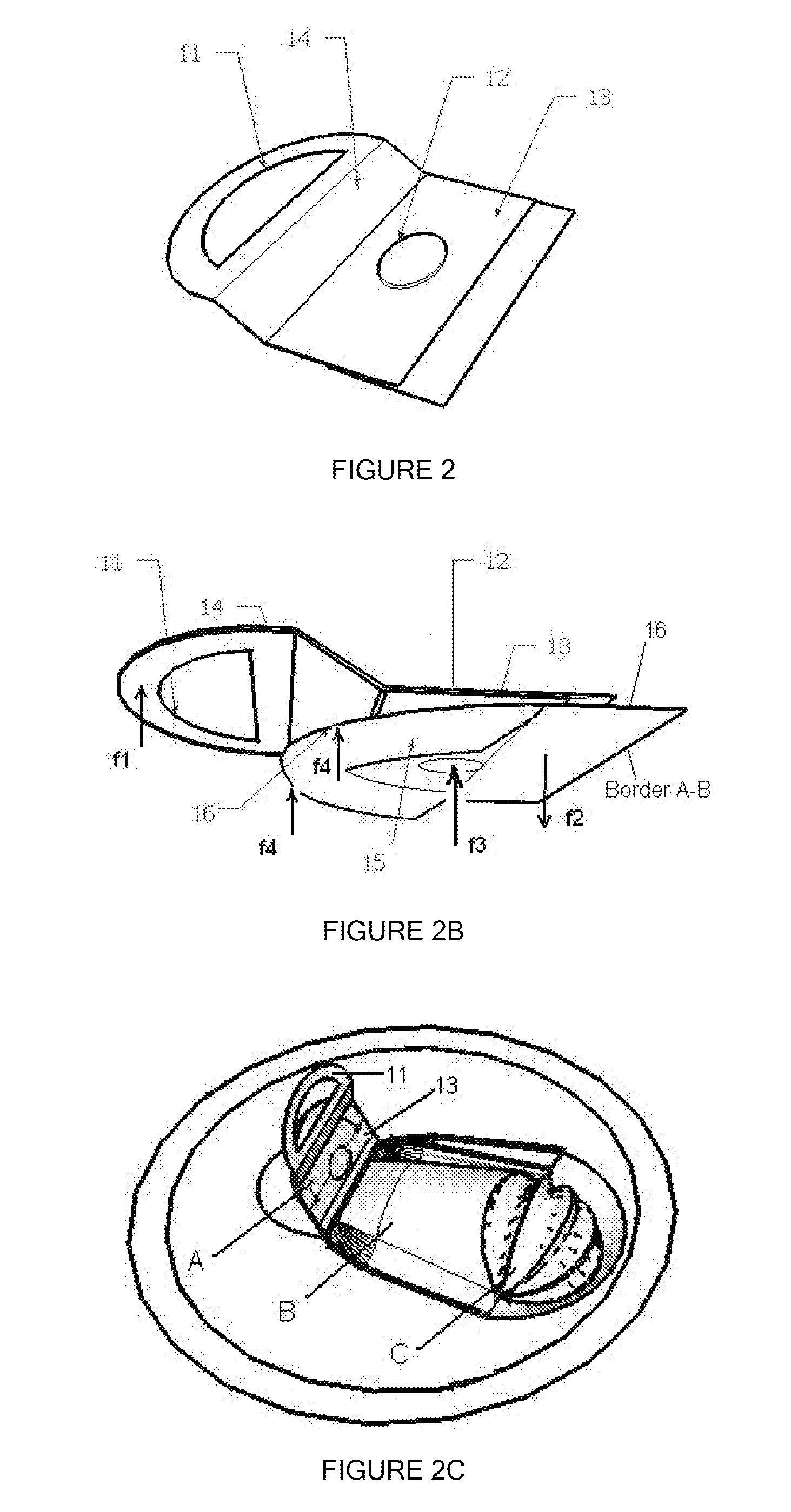
[0028]As seen in view FIG. 2, the pull-ring portion A has the pull-ring 11 combined with the rear rectangle lame 13 which is fixed by the rivet 12 on the upper surface. The pull-ring 11 is heading outward to the peripheral rim of the pop can. Its front part 14 is folded upward like a wing which allows having more space for user to insert the finger underneath. It also allows reducing the total length of pull-ring portion A and thus leaving more space for other portions if needed.
[0029]As illustrated in bottom view FIG. 2B, below the pull-ring 11, there is a half circle concave groove 15 on the upper surface, which is combined with half circle score line 16 near the edge to fac...
PUM
 Login to View More
 Abstract
Description
Claims
Application Information
 Login to View More