
Noninvasive Lacrimal Canalicular Occlusion Device and Method
a technology of lacrimal canal and occlusion device, which is applied in the field of medical instruments, can solve problems such as difficulty in locating these segments, and achieve the effect of prolonging the retention time of medicine on eyes and increasing patient complian
- Summary
- Abstract
- Description
- Claims
- Application Information
AI Technical Summary
Benefits of technology
Problems solved by technology
Method used
Image

Examples
Embodiment Construction
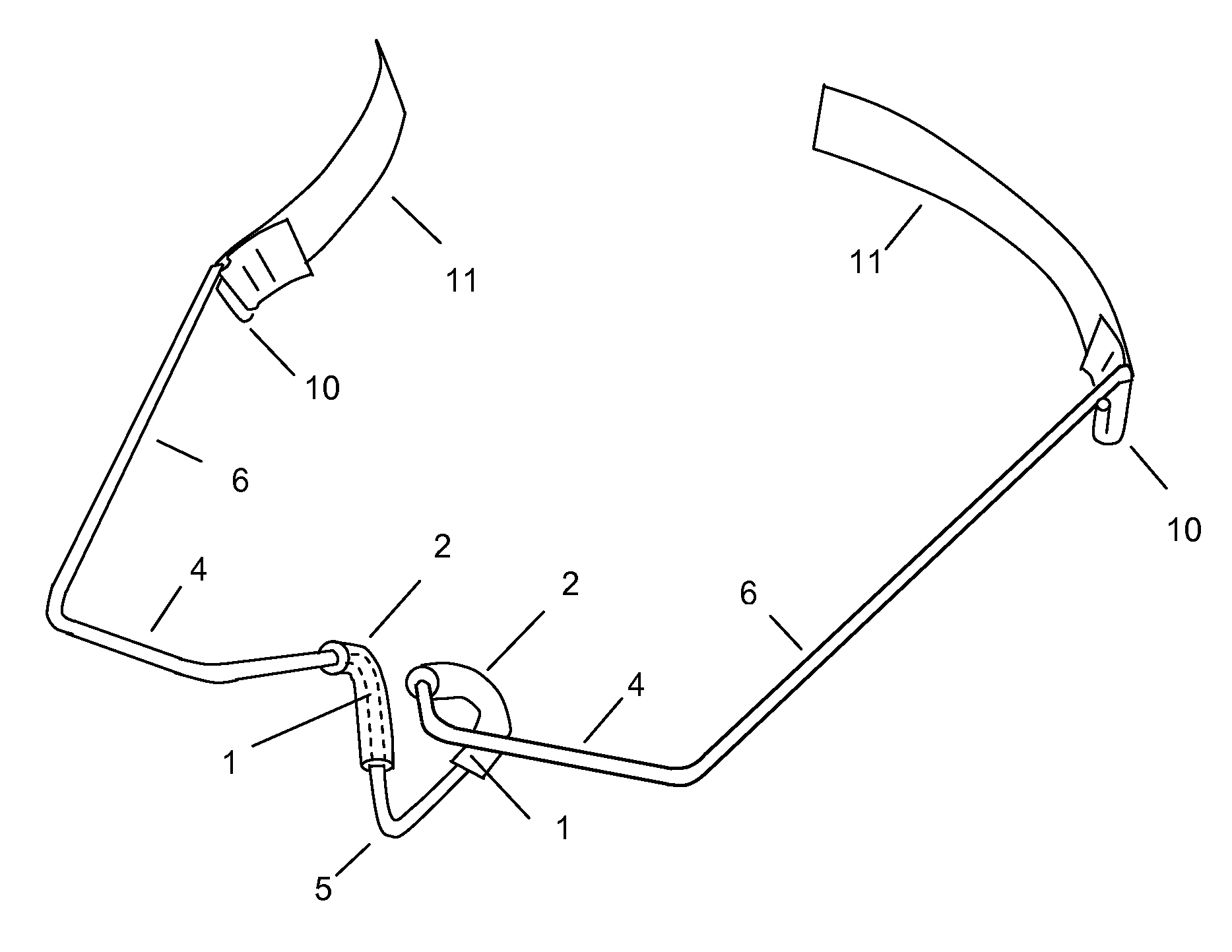
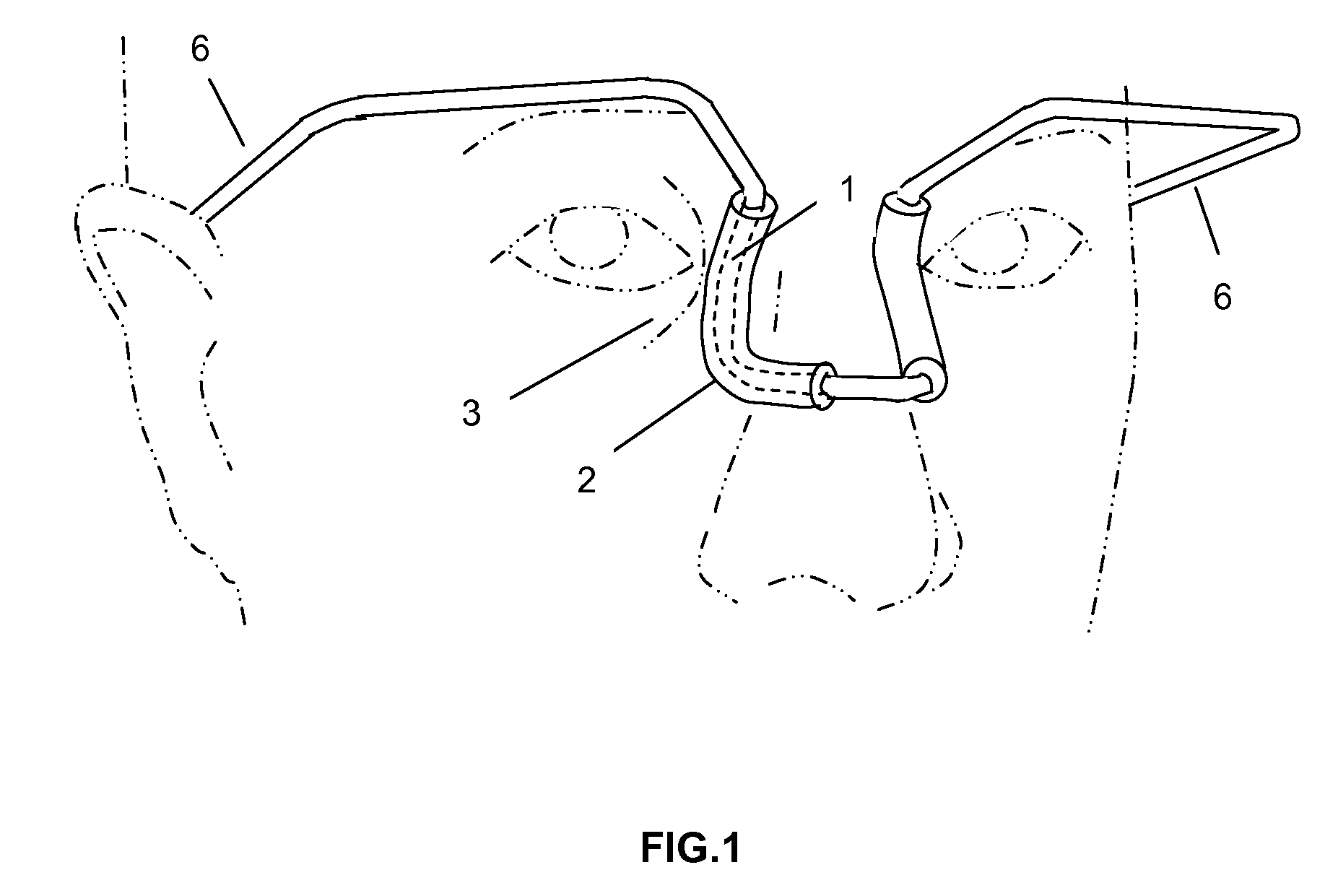
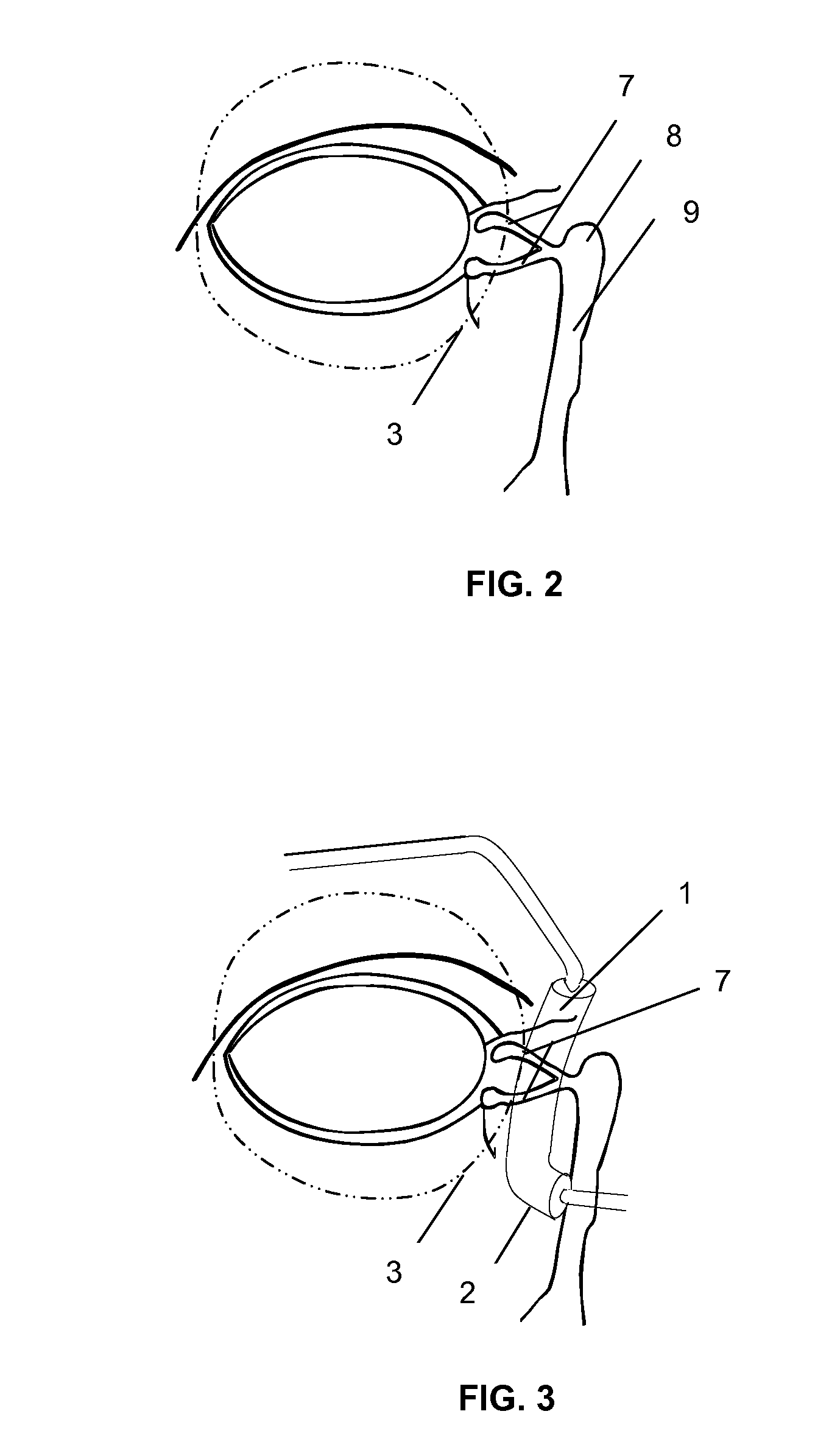
[0035]The basic embodiment of this invention is a device that enables patients to perform noninvasive punctal occlusion to prolong eyedrop retention time on eyes. The path that allows tear to drain away from eyes includes lacrimal canaliculi, lacrimal sac, and nasolacrimal ducts. Applying pressure on skin above any one of these segments, except the distal part of nasolacrimal ducts, can block the tear drainage path. The distal part of nasolacrimal ducts are encased in bone and can not be blocked by pressure on the skin over this part of nasolacrimal ducts. Applying pressure on superior part of nasolacrimal ducts by a clamp may risk the possibility of miss-placing the clamp on the bone as there is no distinguishable feature on the nose to signify where the nasolacrimal ducts begin entering the bone. For this reason, the device of this invention applies pressure on lacrimal canaliculi instead which is clearly identifiable by following the nasal aspect of the orbital rim that concaves ...
PUM
 Login to View More
 Abstract
Description
Claims
Application Information
 Login to View More