Stimulation method for the sphenopalatine ganglia, sphenopalatine nerve, or vidian nerve for treatment of medical conditions

a technology of sphenopalatine ganglia and sphenopalatine nerve, which is applied in the field of sphenopalatine ganglia, sphenopalatine nerve, or vidian nerve for treatment of medical conditions, can solve the problems of cluster headaches, short-lived suppression of migraine pain, and difficult pinpointing specific etiology of headaches

US20120071811A1Inactive Publication Date: 2012-03-22ANSARINIA MEHDI M
4 Cites 14 Cited by

Patent Information

Authority / Receiving Office
US · United States
Patent Type
Applications(United States)
Current Assignee / Owner
Publication Date
2012-03-22
Estimated Expiration
Not applicable · inactive patent

Smart Images

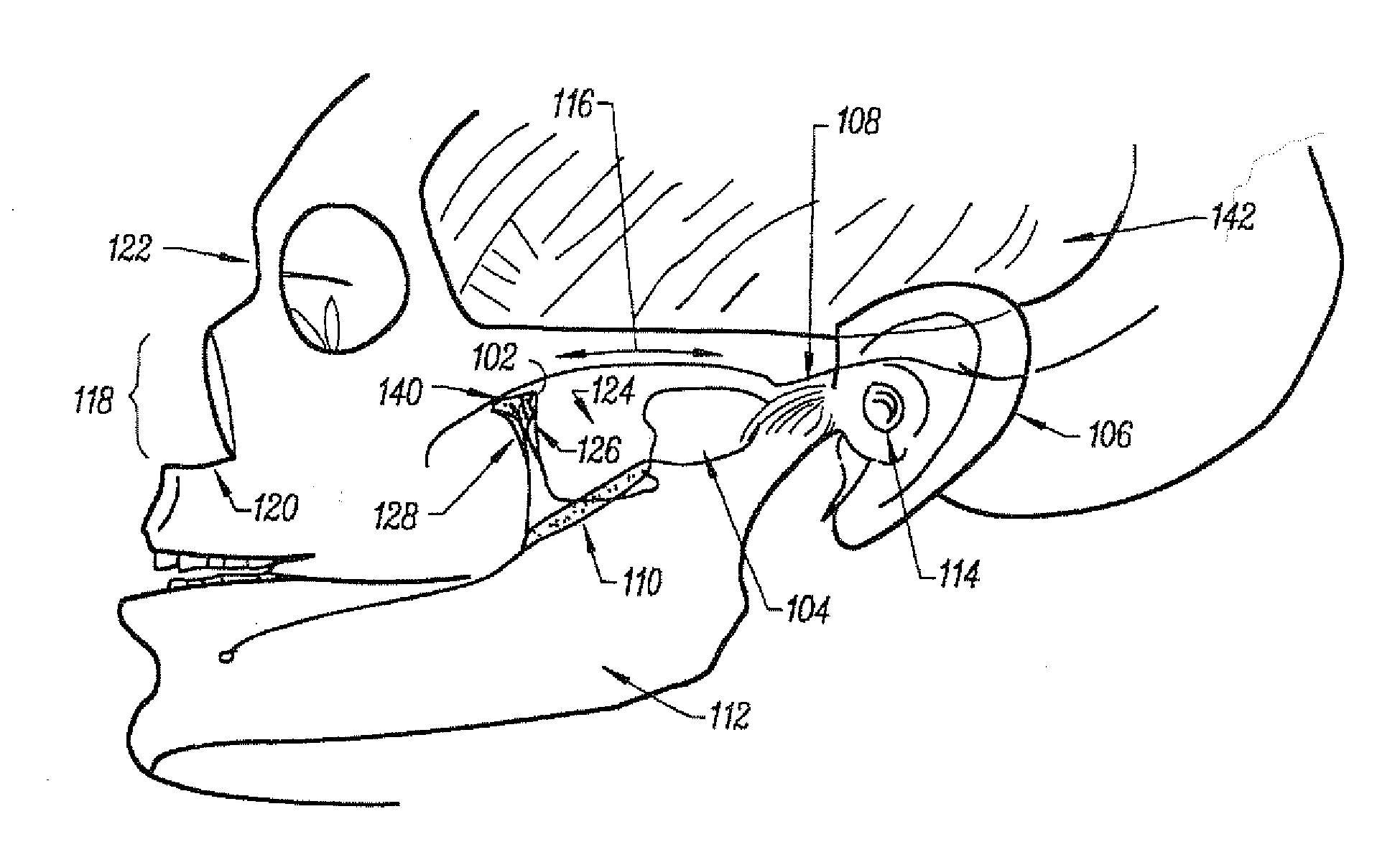
  • Figure 1
    Figure 1
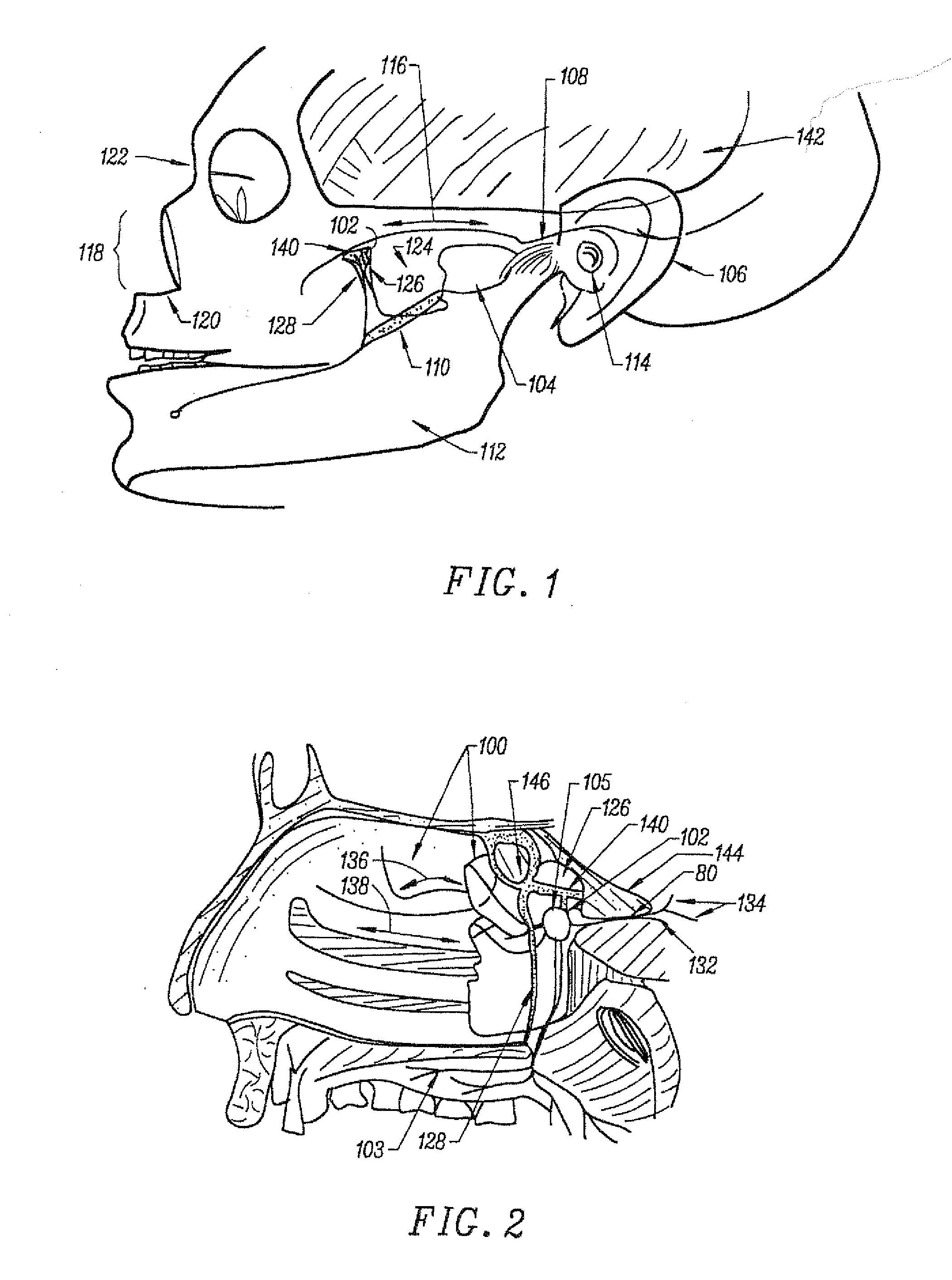
  • Figure 2
    Figure 2
Patent Text Reader

Abstract

A method is provided for suppressing or preventing pain in a patient. One step of the method includes positioning first and second electrodes, without penetrating the cranium, on or proximate to at least one of the sphenopalatine ganglia, the sphenopalatine nerves, or the vidian nerves on both sides of the patient's face. At least one of a medication solution, an analgesic, or an electrical signal is then applied to at least one of the sphenopalatine ganglia, the sphenopalatine nerves, or the vidian nerves through the first and second electrodes. Pain signal generation in, or transmission through, the at least one of the sphenopalatine ganglia, sphenopalatine nerves, or vidian nerves is disrupted on both sides of the patient's face.
Need to check novelty before this filing date? Find Prior Art

Description

FIELD OF THE INVENTION

[0001] The present invention relates generally to methods for suppressing or preventing medical conditions such as pain, movement disorders, sleep disorders, autonomic disorders, gastrointestinal disorders, and abnormal metabolic states arising from signals generated by or transmitted through the sphenopalatine ganglia, the sphenopalatine nerve, or vidian nerve.BACKGROUND OF THE INVENTION

[0002] Headaches are one of the most common ailments, and afflict millions of individuals. The specific etiology of headaches may be difficult to pinpoint. Known sources of headache pain include trauma and vascular, autoimmune, degenerative, infectious, drug and medication-induced, inflammatory (sarcoid), neoplastic (primary or metastatic), metabolic-endocrine, iatrogenic (such as post-surgical), muscloskelatal and myofascial causes. Even if the condition underlying the headache pain is identified and treated, headache pain may persist.

[0003] Diagnosis of headache pain will typica...

Examples

Embodiment Construction

[0022]A first preferred embodiment of the inventive method utilizes direct and localized electrical stimulation of the sphenopalatine ganglion (“SPG”; also called the pterygopalatine ganglion), the sphenopalatine nerve (“SPN”; also called the pterygopalatine nerve) and / or the nerve of the pterygoid canal, also termed the vidian nerve (“VN”), using one or more surgically implanted electrodes, for treatment of a number of medical conditions. Medical conditions which may be treated by the inventive method include, but are not limited to: pain, movement disorders, epilepsy, cerebrovascular diseases, autoimmune diseases, sleep disorders, autonomic disorders, urinary bladder disorders, abnormal metabolic states, disorders of the muscular system, and neuropsychiatric disorders.

[0023]Pain treatable by the inventive method may be caused by conditions including, but not limited to: migraine headaches, including migraine headaches with aura, migraine headaches without aura, menstrual migraines...