
Performing statistical timing analysis with non-separable statistical and deterministic variations
a timing analysis and statistical technology, applied in the field of design automation, can solve the problems of unavoidable manufacturing and environmental variations of integrated circuit chips, non-separable variables like supply voltage, and variable separability
- Summary
- Abstract
- Description
- Claims
- Application Information
AI Technical Summary
Benefits of technology
Problems solved by technology
Method used
Image

Examples
Embodiment Construction
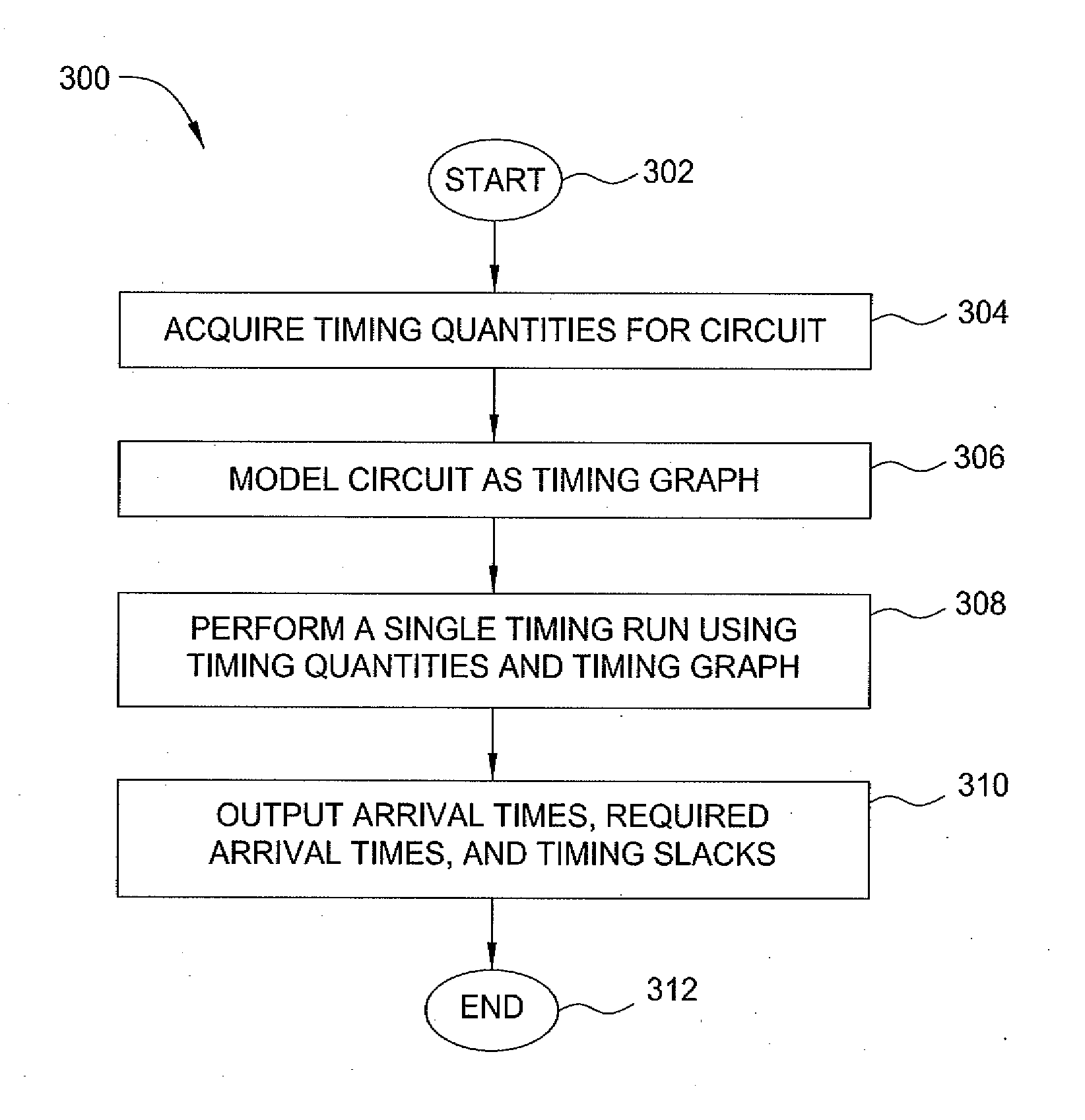
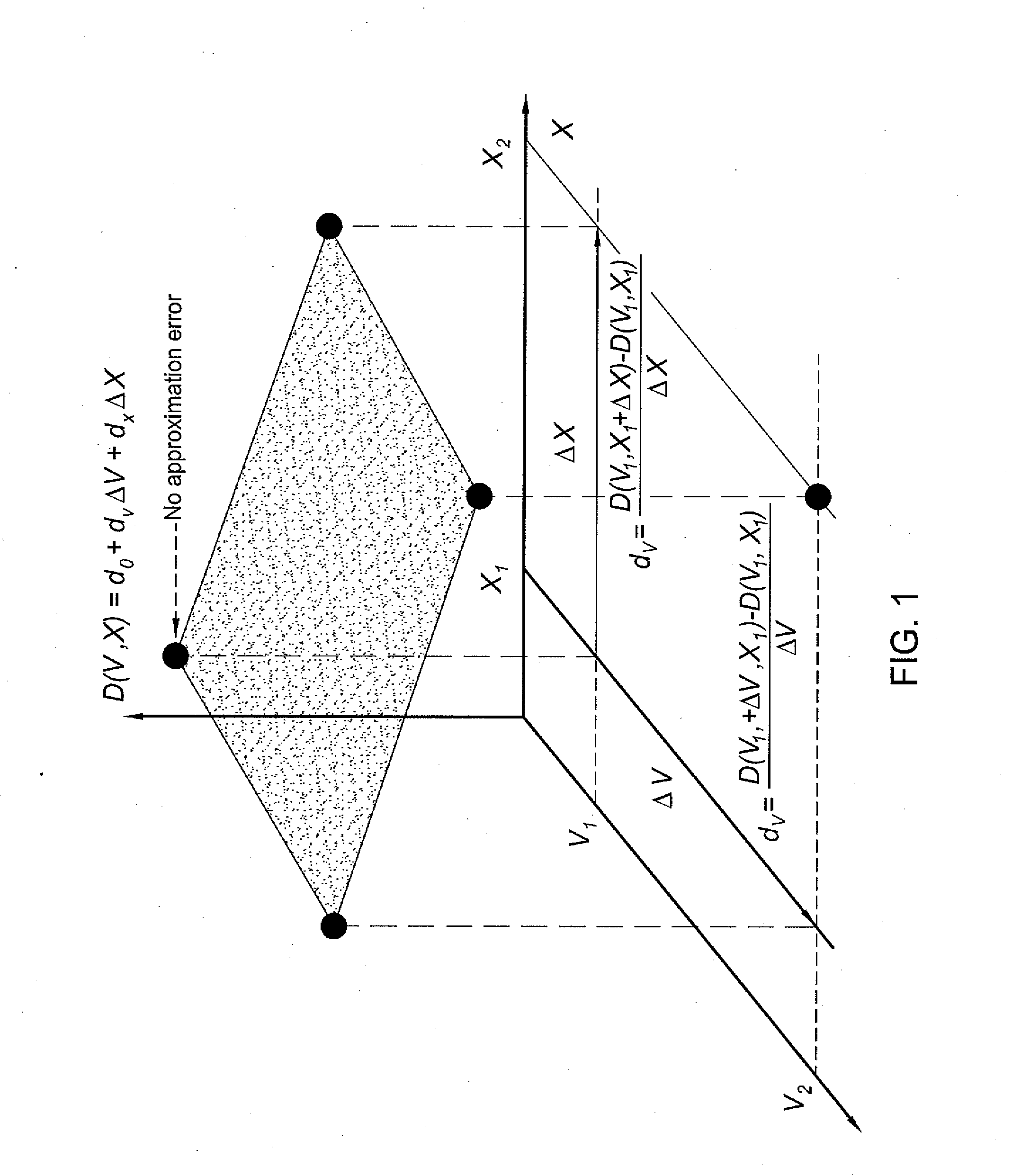
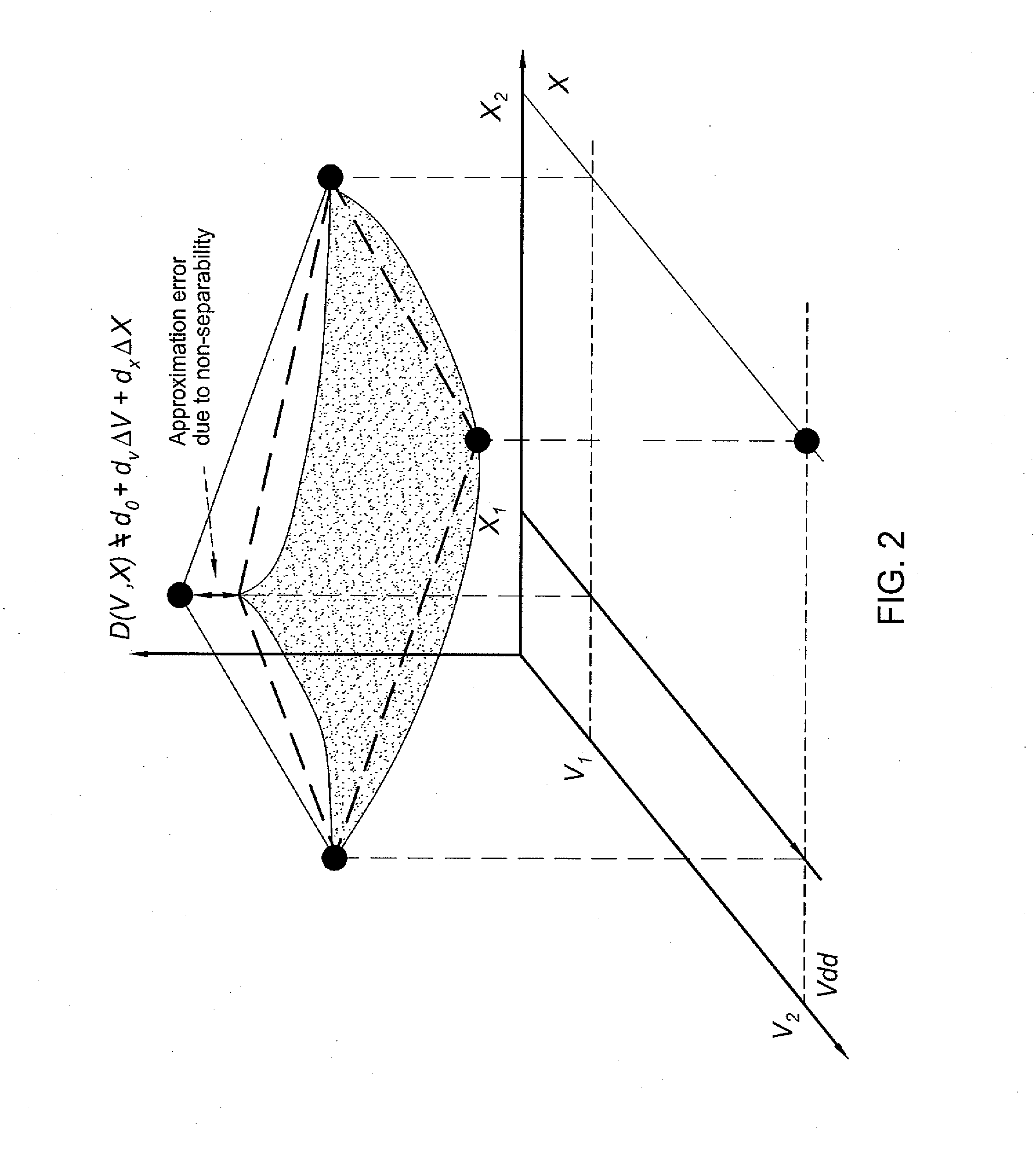
[0018]In one embodiment, the present invention is a method and apparatus for performing statistical timing analysis with non-separable statistical and deterministic variations. Embodiments of the invention extend the linear canonical forms of process parameters (variables) by including cross-terms that model the interaction of the non-separable statistical variables with deterministic corner-based variables. The extended canonical form models timing quantities as a function of separable and non-separable variations with a hyperbolic surface. The cross-terms for delays and slews of logic gates and wires can be computed by finite differencing to the corners involving variations of the deterministic corner-based and corresponding non-separable variables simultaneously. The variability of delays and slews can also be assigned to logic gates and wires without their explicit computation by applying known information about the amount of variability. Arrival times and required arrival times...
PUM
 Login to View More
 Abstract
Description
Claims
Application Information
 Login to View More