
Body shape analysis method and system
a body shape and analysis method technology, applied in image analysis, instruments, computing, etc., can solve the problems of different fit problems, limited automated custom system, and ten custom-made garments from the system providing good fi
- Summary
- Abstract
- Description
- Claims
- Application Information
AI Technical Summary
Benefits of technology
Problems solved by technology
Method used
Image

Examples
example 1
6.1 Example 1
Lower Body Shape Analysis
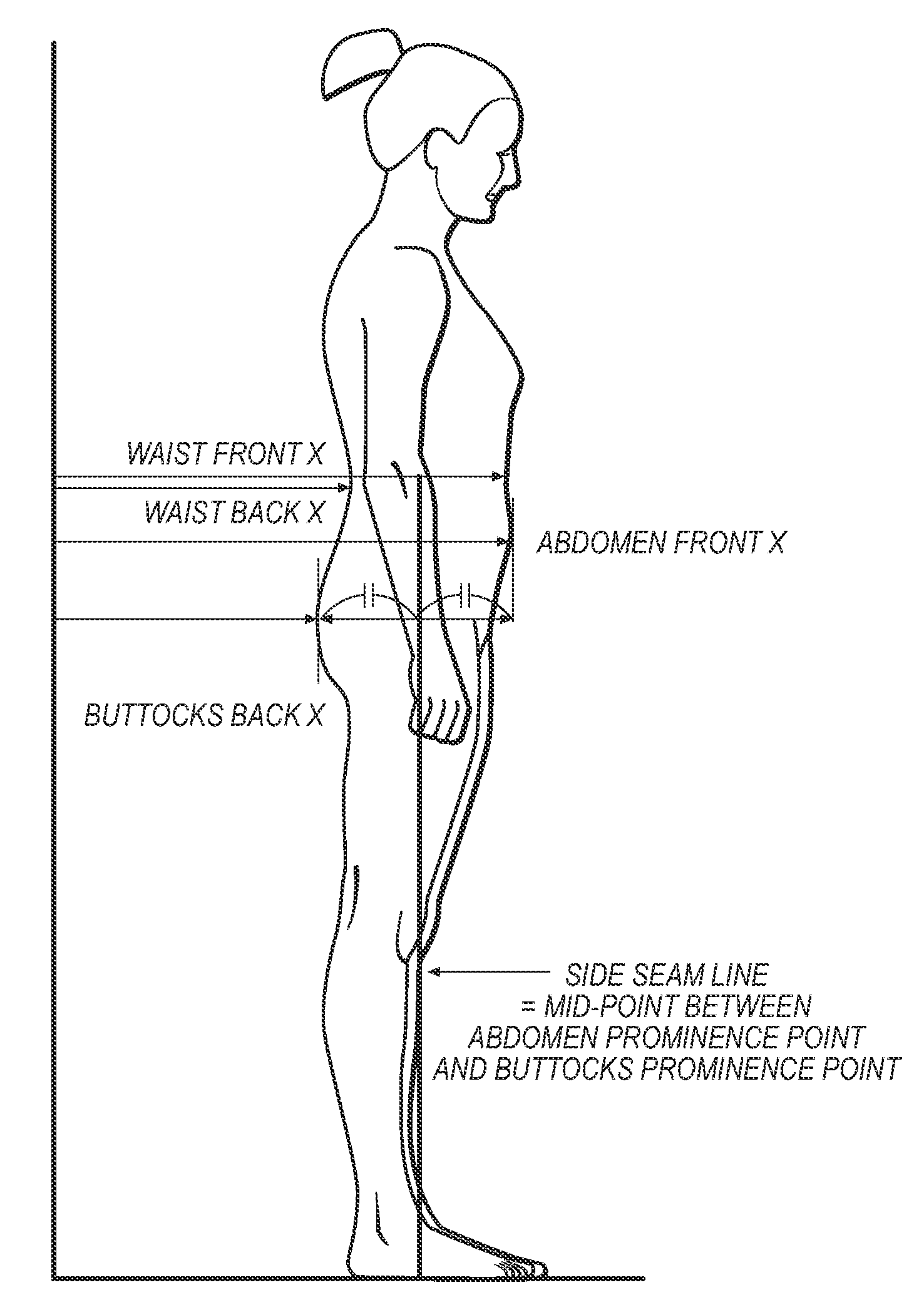
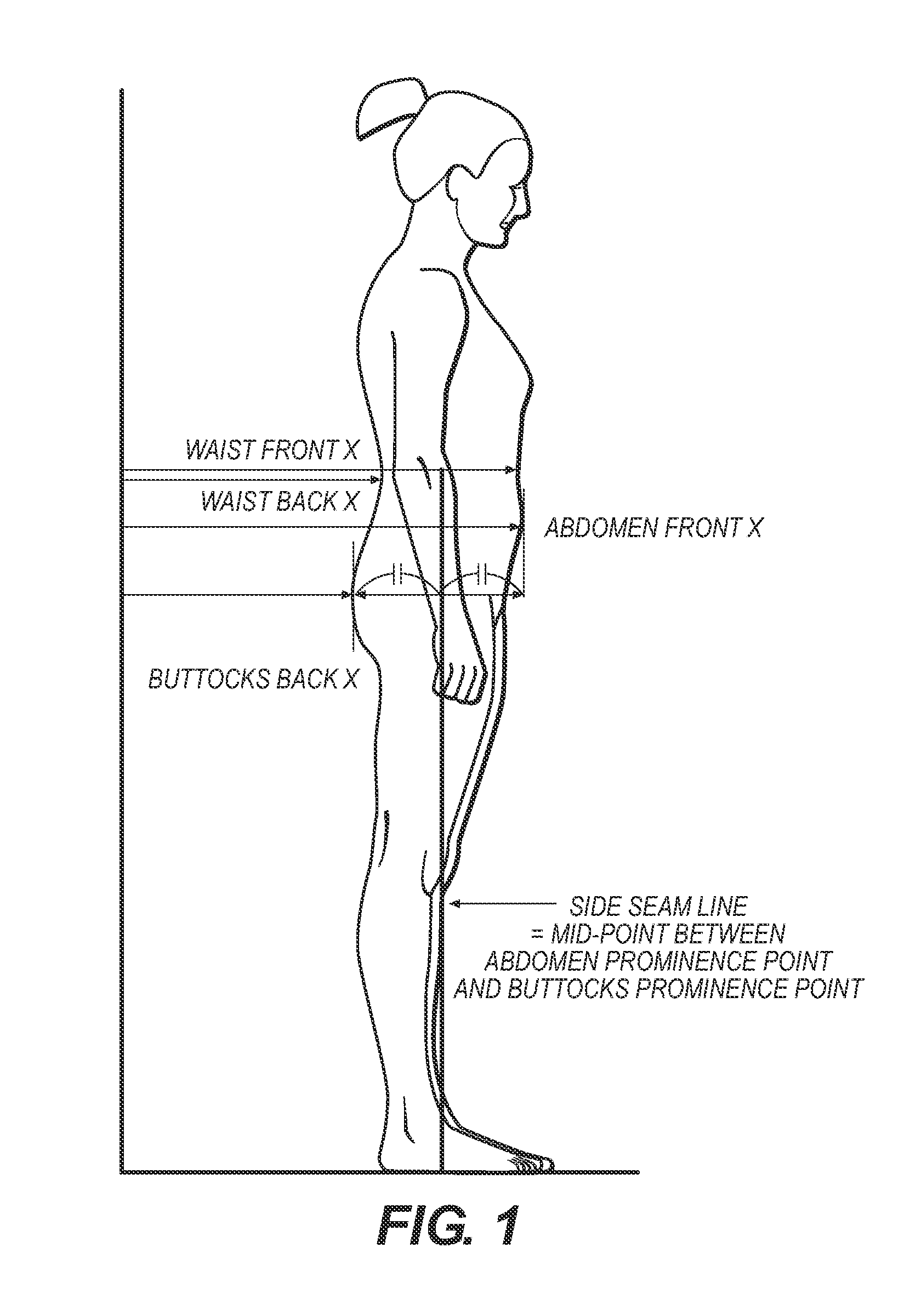
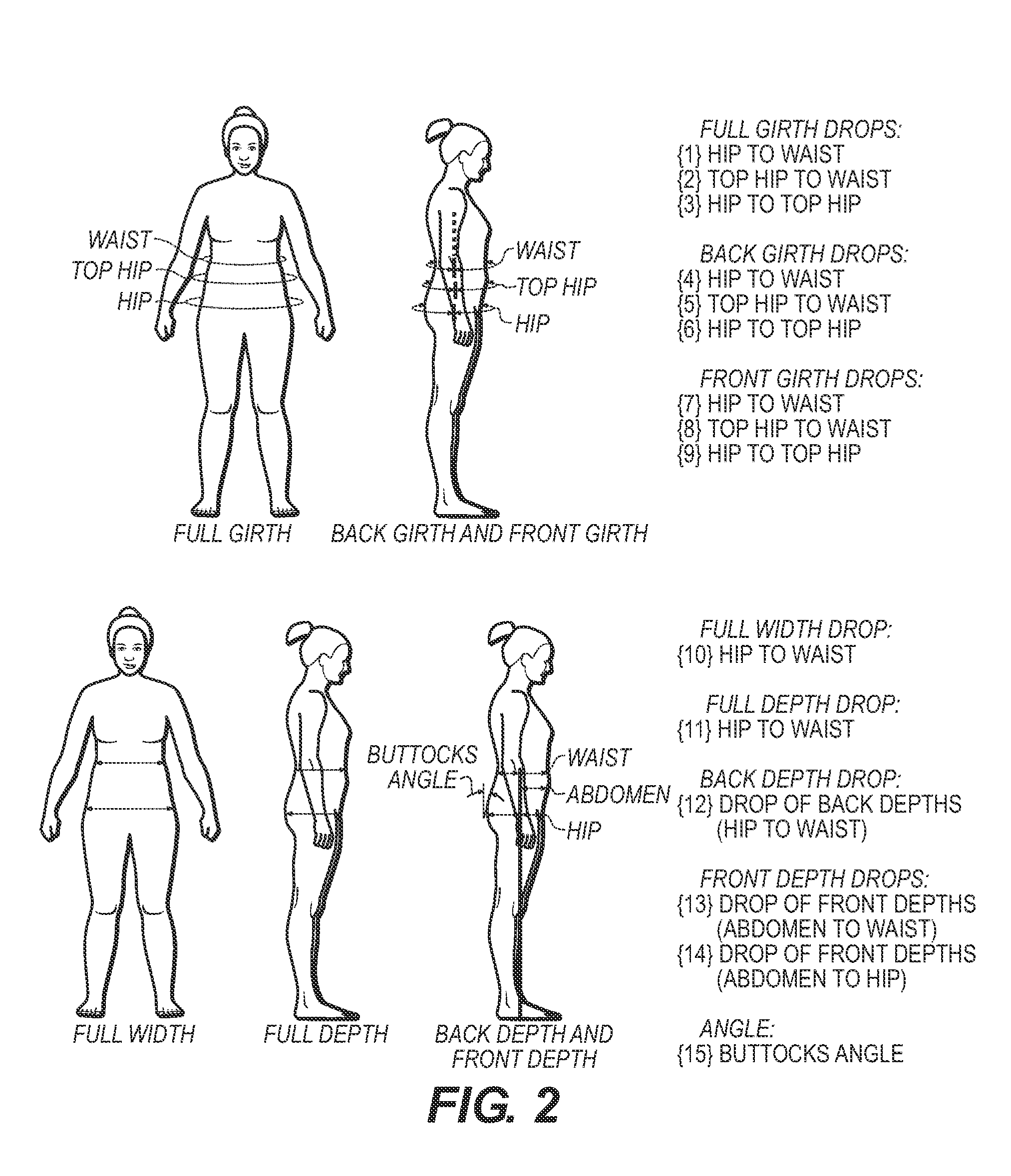
[0177]This example demonstrates a method for lower body shape categorization. In this example, principal component (PC) analysis was selected to extract distinctive shapes from silhouette and profile views of the body. The example also demonstrates that an improved system for automatic customization of patterns can be created if the process is started from base patterns that are balanced and corrected for each customer's figure type.
[0178]To address problems found in previous PC studies, we employed two strategies. The first strategy was to focus on classifying only the lower body shapes rather than the whole body shapes. Lower body shape analysis was selected for the study disclosed in this example because: (a) customers are the least satisfied with the fit of pants compared to all other apparel items (Charoensiriwath, S., and Spichaikul, P., Constructing Thailand's National Anthropometrics Database Using 3d Body Scanning Technology, in “Procee...
example 2
6.2. Example 2
Development of Automated Custom-Made Pants Driven by Body Shape
[0236]Clothing fit is considered as a central element in clothing quality and customer satisfaction in the apparel industry. The right fit cannot be emphasized enough, and an appropriate fit not only ensures that the garment will wear well, but it will be worn often (Cotton Incorporated. (2002). Women uncover the key to looking great. Retrieved Jun. 26, 2010, from http: / / www.cottoninc.com / lsmarticles / ?articleID=97). However, in a study of young women's attitudes toward clothing fit almost 54% of the respondents reported being from only somewhat satisfied to mostly unsatisfied with the fit of ready-to-wear apparel (Alexander, M., Connell, L. J., & Presley, A. B. (2005). Communications: Clothing fit preferences of young female adult consumers. International Journal of Clothing Science and Technology, 17(1), 52-64), and these figures are consistent with survey results from Kurt Salmon Associates (Kurt Salmon A...
PUM
 Login to View More
 Abstract
Description
Claims
Application Information
 Login to View More