
Method and system for sharing transmission revenue between mobile operators and content providers
a technology for mobile operators and content providers, applied in data switching networks, special services for subscribers, instruments, etc., can solve the problems of slowing down the wide adoption of mobile services, adding inconvenience to end users, and content providers not expected to generate revenue from providing information or data
- Summary
- Abstract
- Description
- Claims
- Application Information
AI Technical Summary
Benefits of technology
Problems solved by technology
Method used
Image

Examples
Embodiment Construction
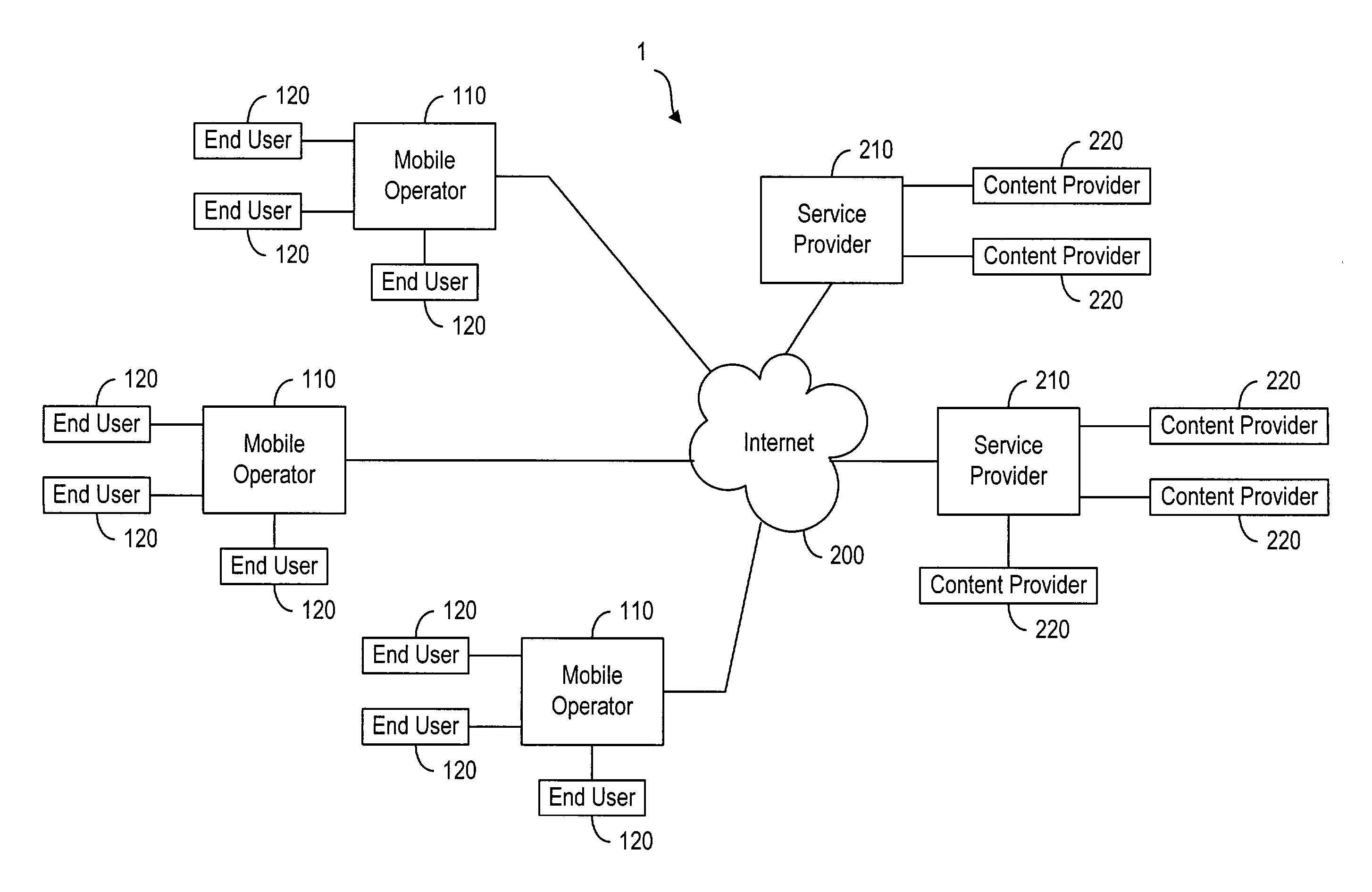
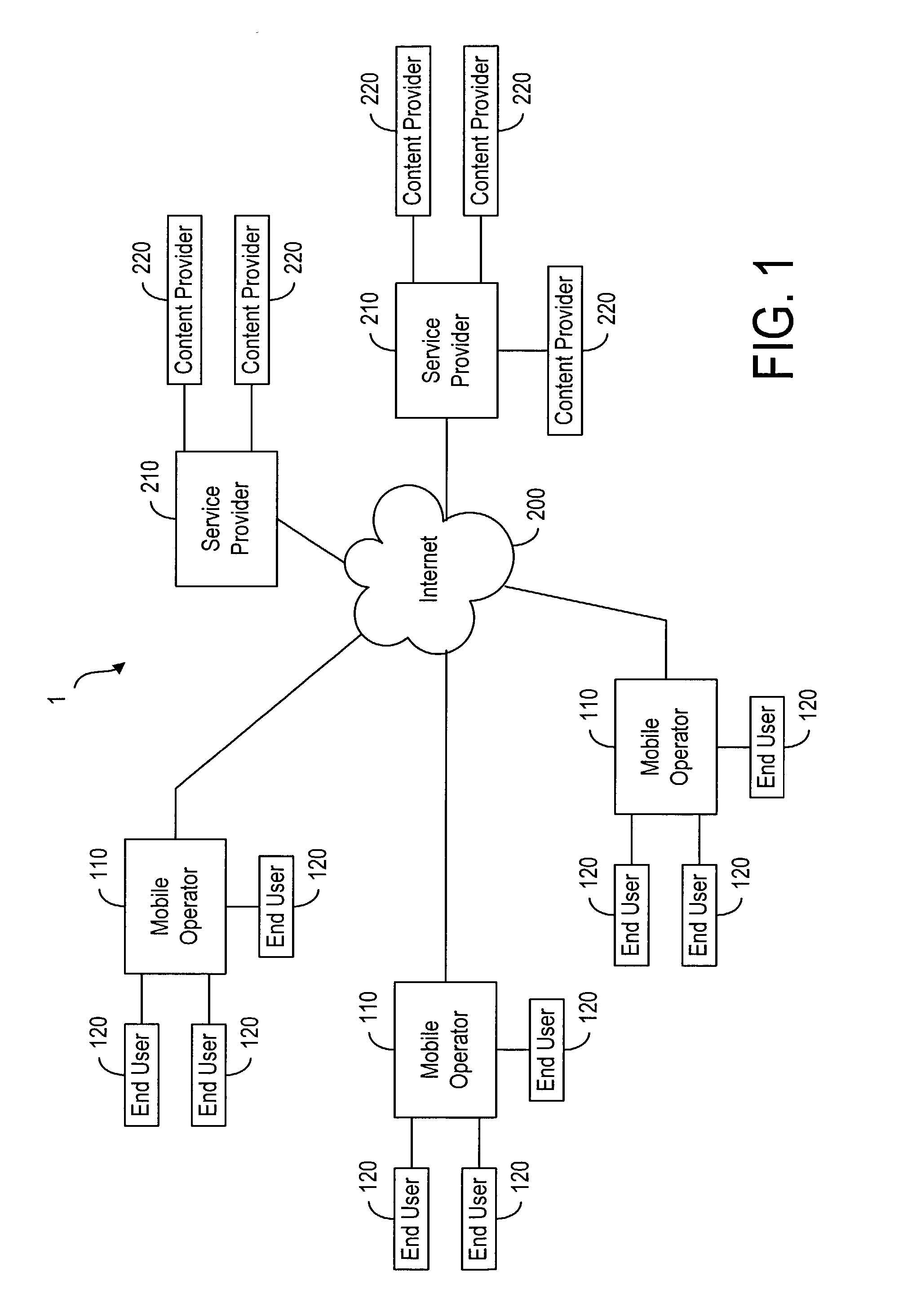
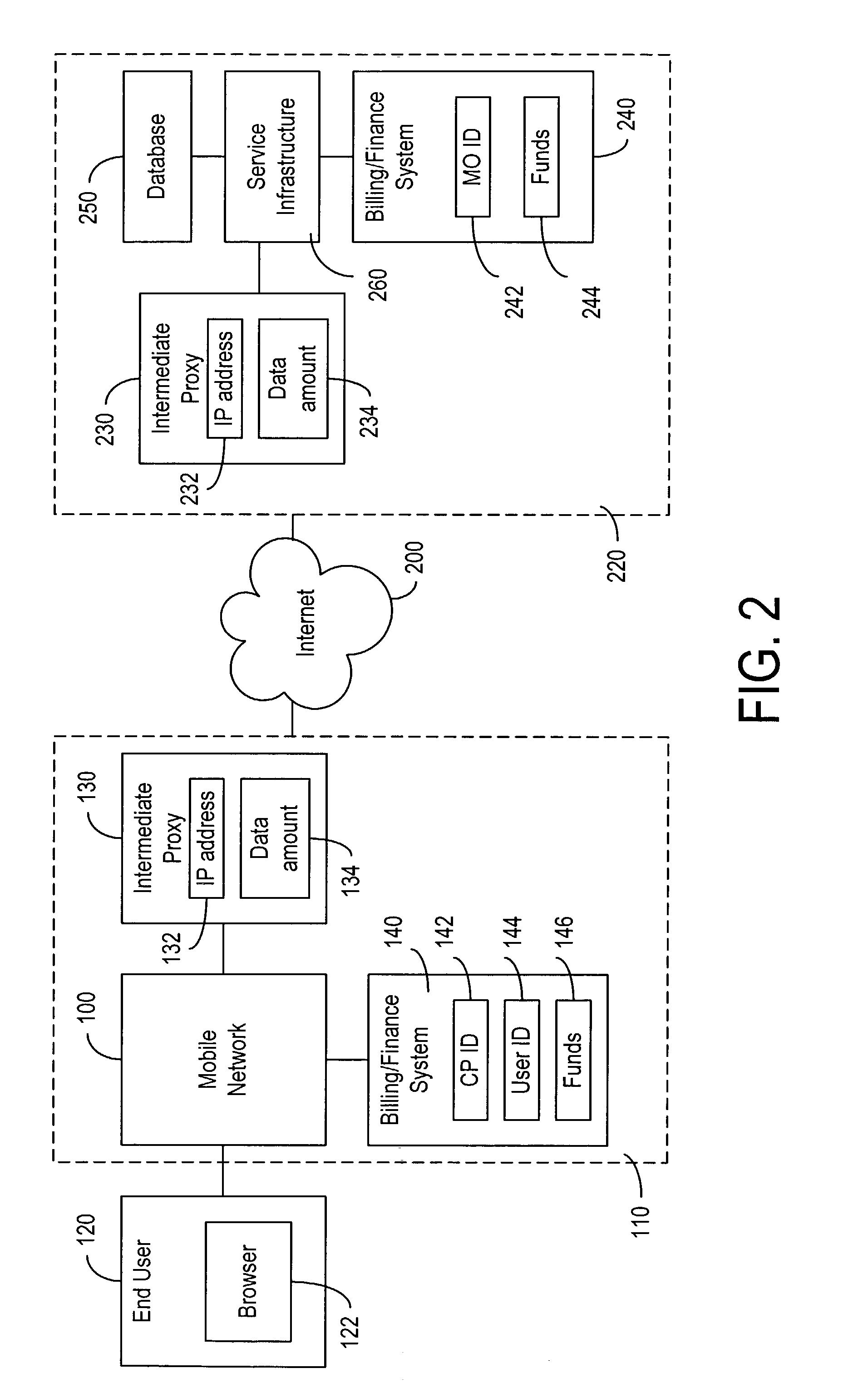
[0024]The method of revenue sharing between mobile operators and content providers, according to the present invention, uses an intermediate proxy that lies in the mobile operator's network logically between the mobile network and a data network, such as the Internet, for data traffic monitoring. The proxy, as used in the present invention, is a generic term that describes an intermediate agent which is capable of providing a communication link between two remote network elements for performing pre-configured functions for those network elements. This intermediate proxy is capable of keeping track of the agreements established between each mobile operator and the content providers and the data amount received from those content providers. The agreements can be monitored based on the IP (Internet Protocol) address or domain name of the content providers, for example. For data transmission in a packet-switched system, the data amount can be monitored by counting the number of packets ...
PUM
 Login to View More
 Abstract
Description
Claims
Application Information
 Login to View More