
Process to prepare a lubricating base oil
a technology of base oil and lubricating oil, which is applied in the direction of hydrocarbon oil cracking, hydrocarbon distillation, hydrocarbon oil treatment products, etc., can solve the problem of one grade of base oil preparation, and achieve the effect of different viscosities and high quality
- Summary
- Abstract
- Description
- Claims
- Application Information
AI Technical Summary
Benefits of technology
Problems solved by technology
Method used
Image

Examples
example 1
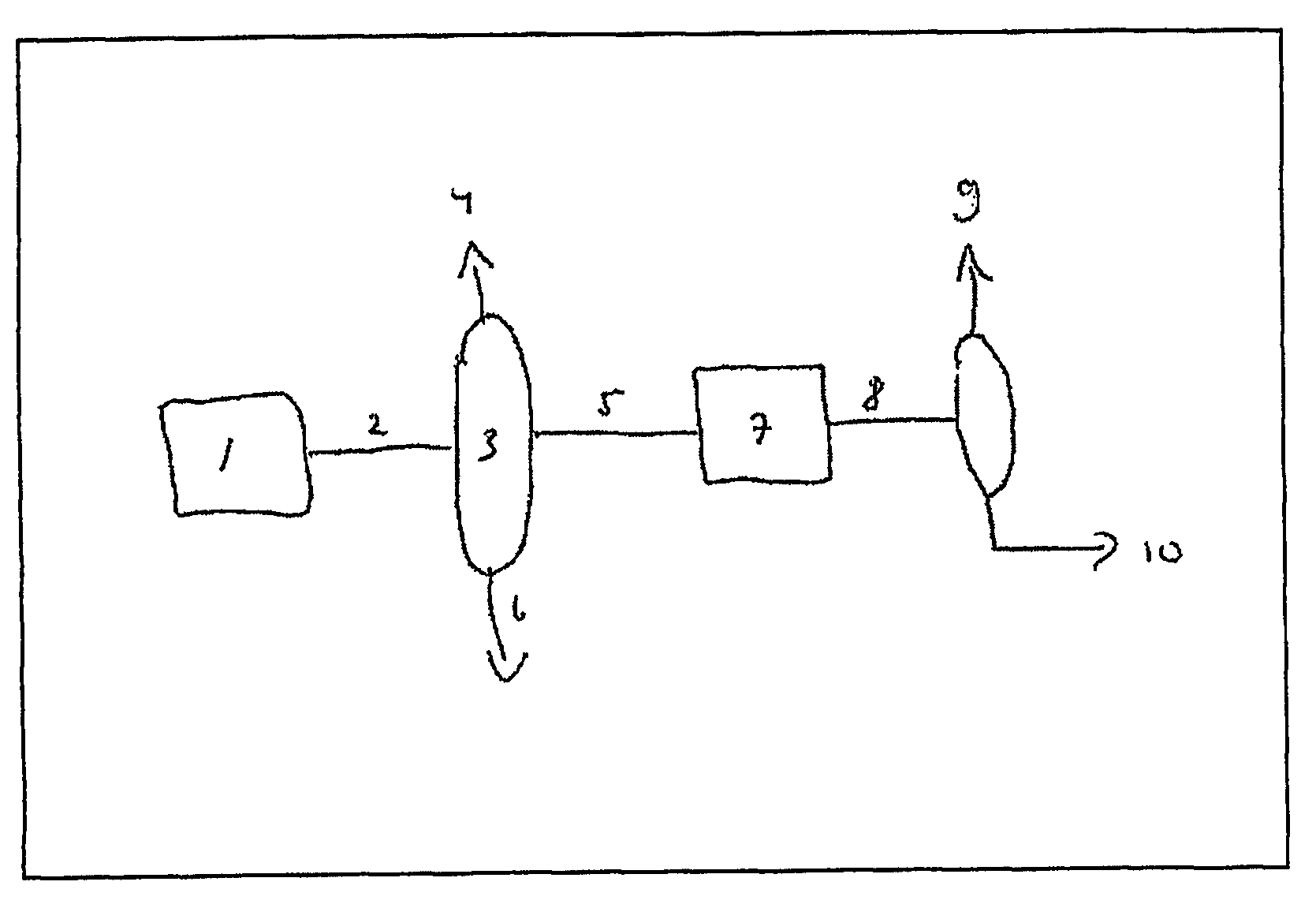
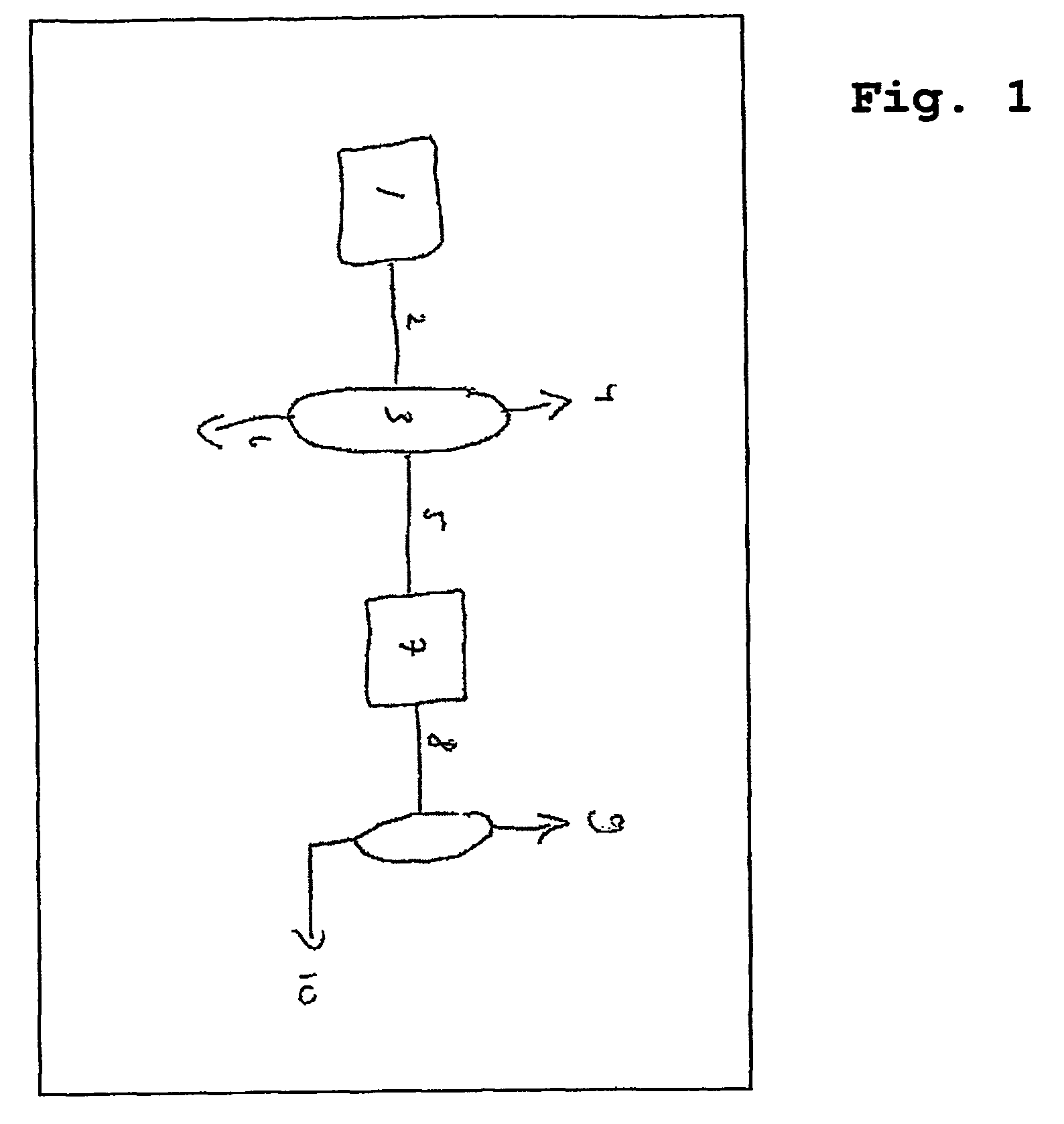
[0033]1000 g per hour of a distillate fraction of an isomerised Fischer-Tropsch product having the properties as Feed N° 1 in Table 1 was fed to a catalytic dewaxing reactor. The effluent of the catalytic dewaxing reactor was topped at 390° C. to remove only the light boiling fraction. The thus obtained base oil was recovered in a 69 wt % yield based on Feed N° 1. The dewaxing conditions are as in Table 2. The catalyst used in the dewaxing step was a Pt / silica bound ZSM-5 catalyst as described in Example 9 of WO-A-0029511. The properties of the thus obtained base oils are in Table 3.
example 2
[0034]Example 1 was repeated except at different dewaxing conditions (see Table 2). The properties of the base oil are in Table 3.
[0035]
TABLE 1Feed No.12Density at 70° C.784.8784.5T10 wt % boiling point (° C.)407346T90 wt % boiling point (° C.)520610Kinematic viscosity at5.1516.24410° C. (cSt)Pour point (° C.)+46+30
[0036]
TABLE 2Dewaxing conditionsExample 1Example 2Reactor temperature (° C.)325342Hydrogen pressure (bar)3736Weight hourly space1.01.0velocity (kg / l / h)Hydrogen flow rate700700(Nl / h)
[0037]
TABLE 3Example 1Example 2FeedFeed No. 1Feed No. 1Base oil propertiesDensity at 20° C. (kg / m3)819.7819.0Kinematic viscosity at5.515.41100° C. (cSt)Pour Point (° C.)−20−48Noack (wt %)6.37.4
example 3
[0038]Example 1 was repeated at the conditions described in Table 4 using Feed No. 2 (see Table 1). The properties of the resulting base oil are presented in Table 5.
PUM
| Property | Measurement | Unit |
|---|---|---|
| kinematic viscosity | aaaaa | aaaaa |
| kinematic viscosity | aaaaa | aaaaa |
| kinematic viscosity | aaaaa | aaaaa |
Abstract
Description
Claims
Application Information
 Login to View More