
Bottom clothes
a technology for bottom clothes and bottoms, applied in protective garments, garment special features, gymnastics, etc., can solve the problems of wearers not being able to obtain effective shape-up effects, people having an interest in shape-up, and difficulty in continuous exercise, so as to enhance the shape-up effect for wearers, maintain wear comfort and ease of walking, and enhance the effect of wear comfor
- Summary
- Abstract
- Description
- Claims
- Application Information
AI Technical Summary
Benefits of technology
Problems solved by technology
Method used
Image

Examples
Embodiment Construction
[0026]Preferred embodiment of bottom garment according to the present invention will be hereunder explained in detail referring to accompanying drawings.
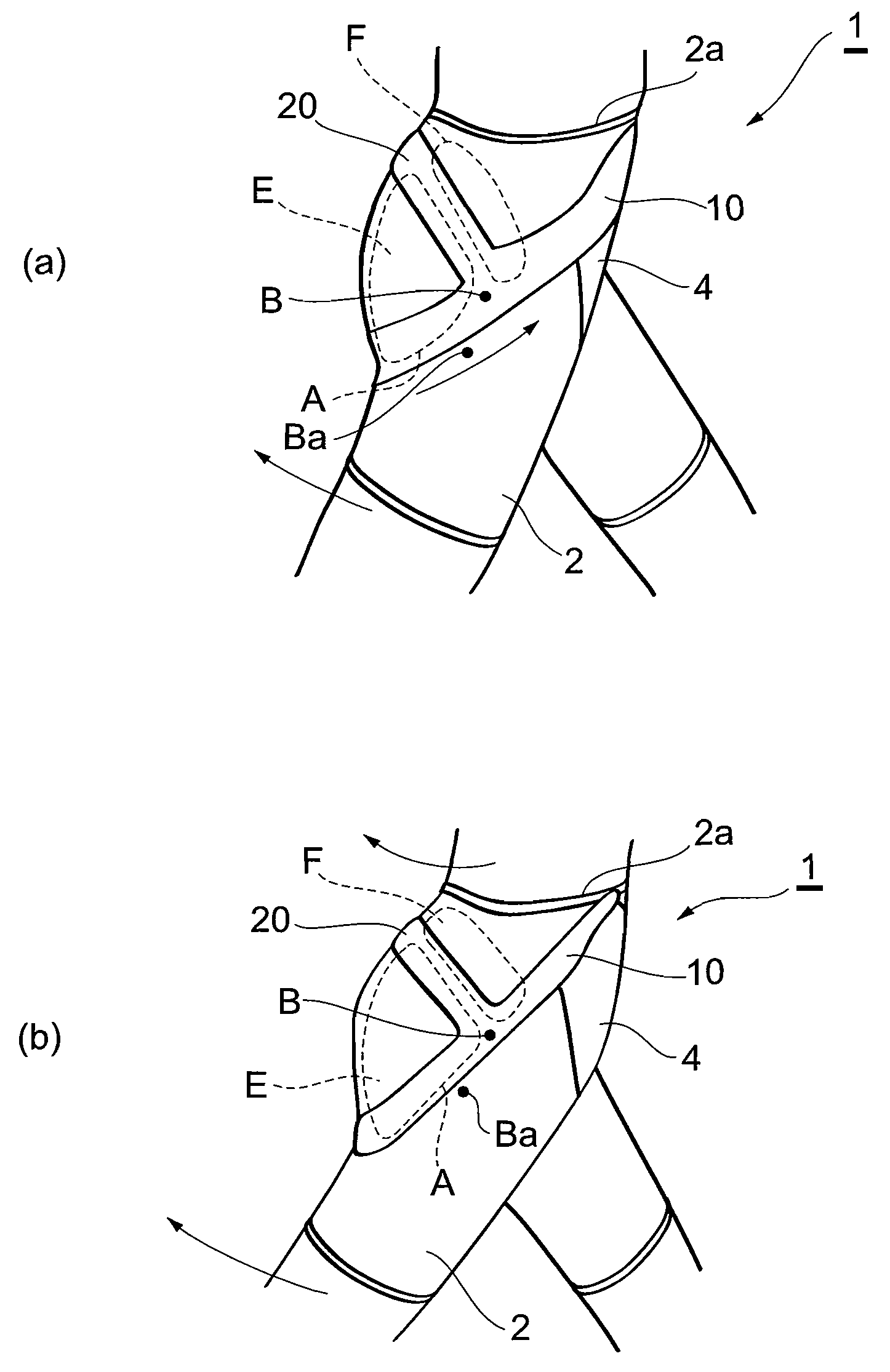
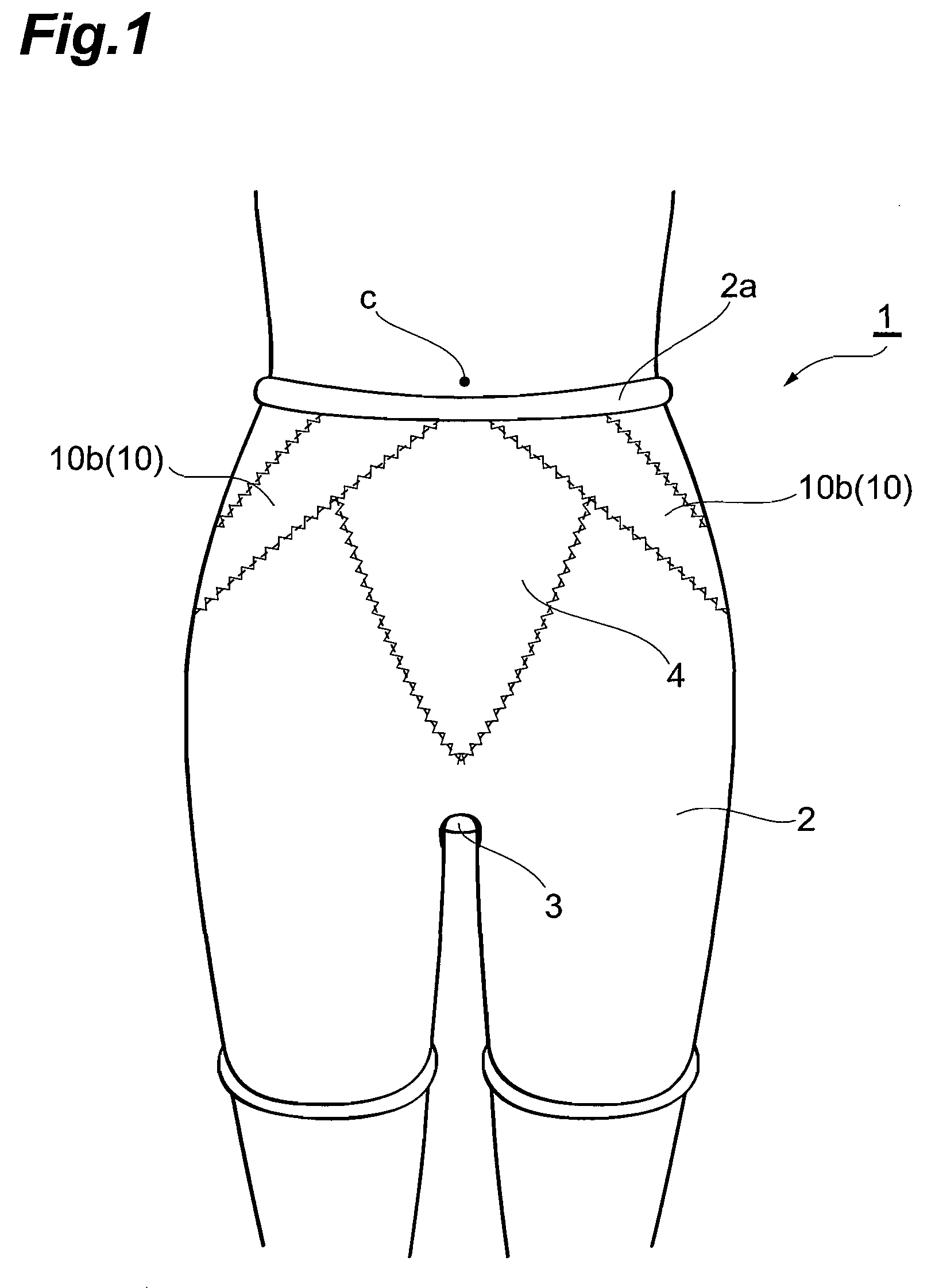
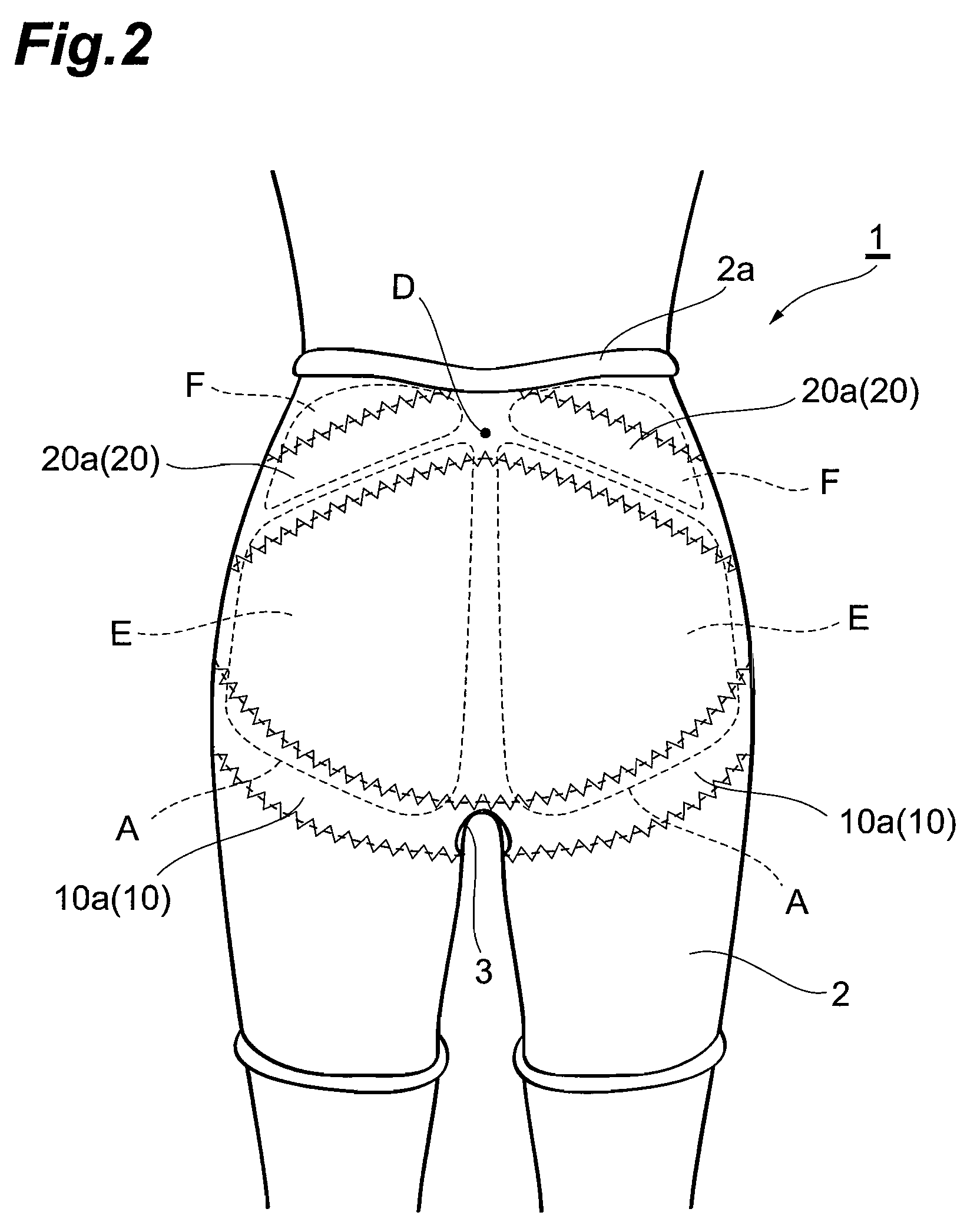
[0027]FIG. 1 is a front view showing a girdle which is one embodiment of the bottom garment configured according to the present invention, and FIG. 2 and FIG. 3 are a rear view and a side view, respectively. Further, FIG. 4 is a perspective view, viewed from a rear side. FIGS. 1 to 4 show a state in which a wearer is wearing the girdle. As shown in FIGS. 1 to 4, this girdle 1 is, as we say, a long-type girdle and comprises a girdle main body portion 2, a crotch portion 3, a filler cloth 4, first tightening portions 10, 10, and second tightening portions 20, 20, a hem of which ends above the wearer's knee. In addition, tightening portions in this case refer to portions composed of material more difficult to stretch than a material of the girdle main body portion, which provides stronger pressure than those of a periphery when worn.
[0...
PUM
 Login to View More
 Abstract
Description
Claims
Application Information
 Login to View More