
Dynamic schedule mediation
a scheduling and dynamic technology, applied in multi-programming arrangements, instruments, data processing applications, etc., can solve problems such as waste of productive time on inefficient scheduling, customers who miss appointments or customers, and aggravating serious customer damage to customer relations, service provider personnel,
- Summary
- Abstract
- Description
- Claims
- Application Information
AI Technical Summary
Benefits of technology
Problems solved by technology
Method used
Image

Examples
Embodiment Construction
[0034]Dynamic Schedule Mediation provides a self-learning system and method that significantly improves time management and efficiency for service providers and service recipients (“customers”) by analyzing real time service delivery data and a service provider's learned historical performance patterns, and automatically notifying customers of the status and expected time of their scheduled appointments through personalized alerts and reminders to any communications device.
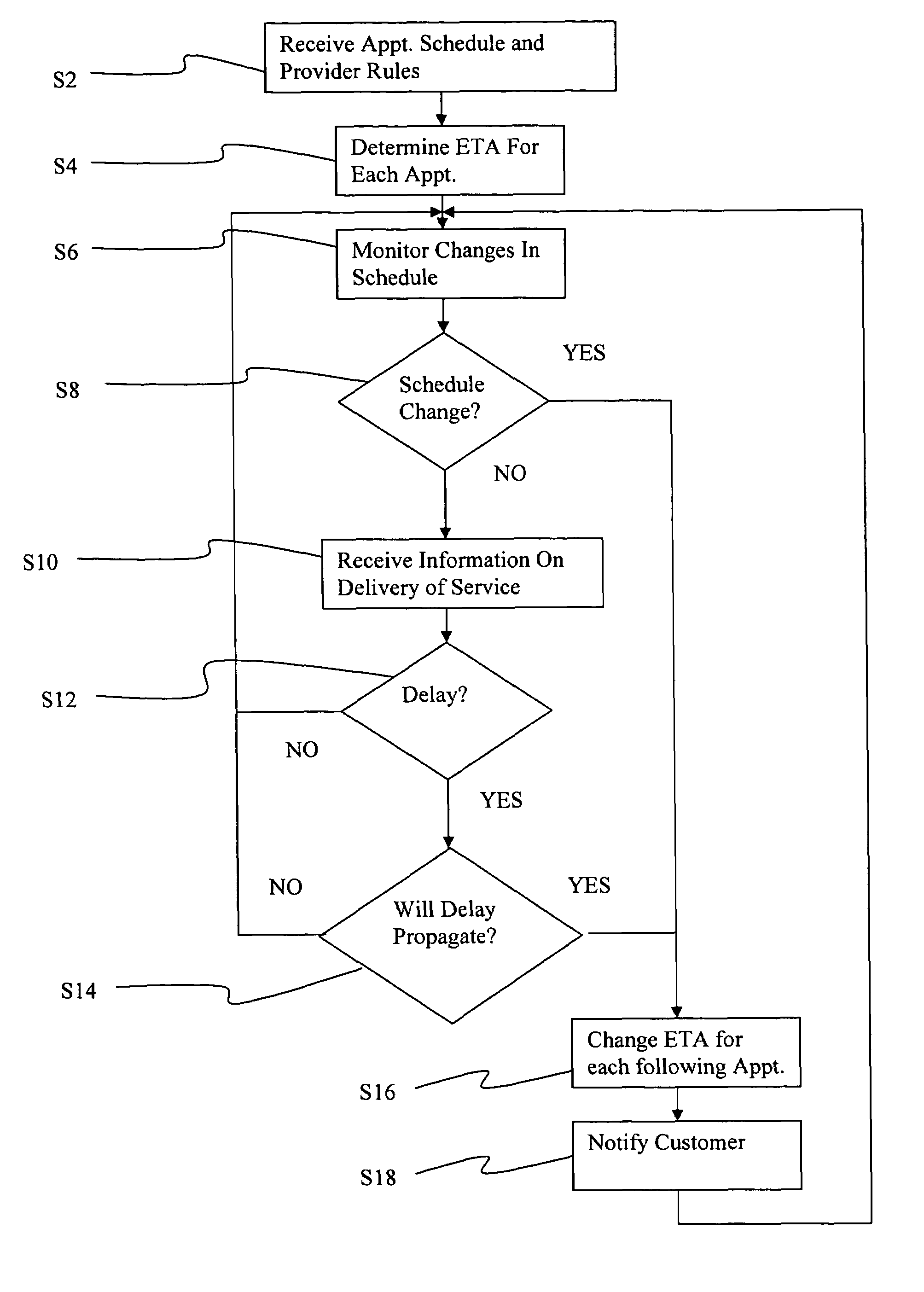
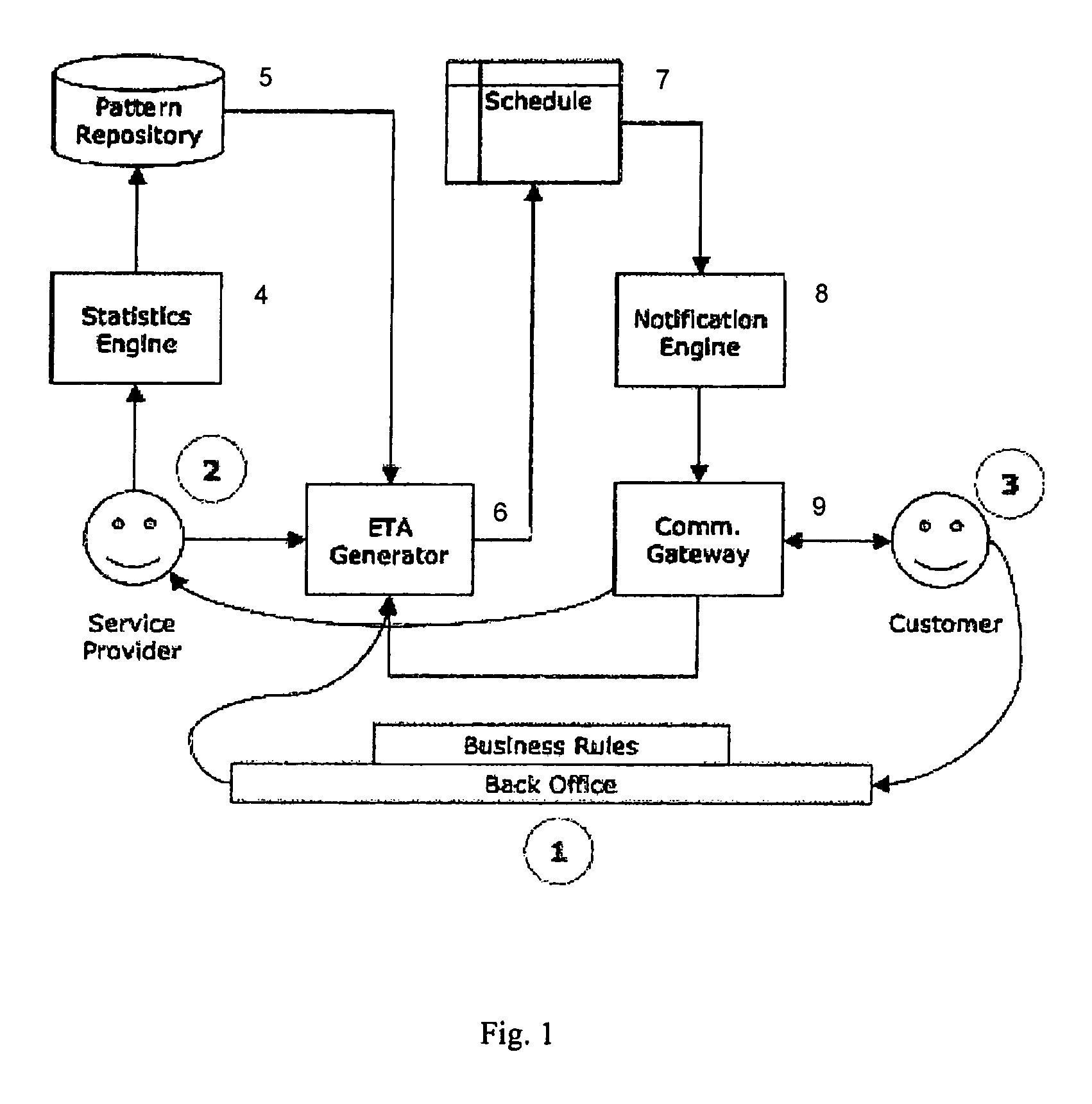
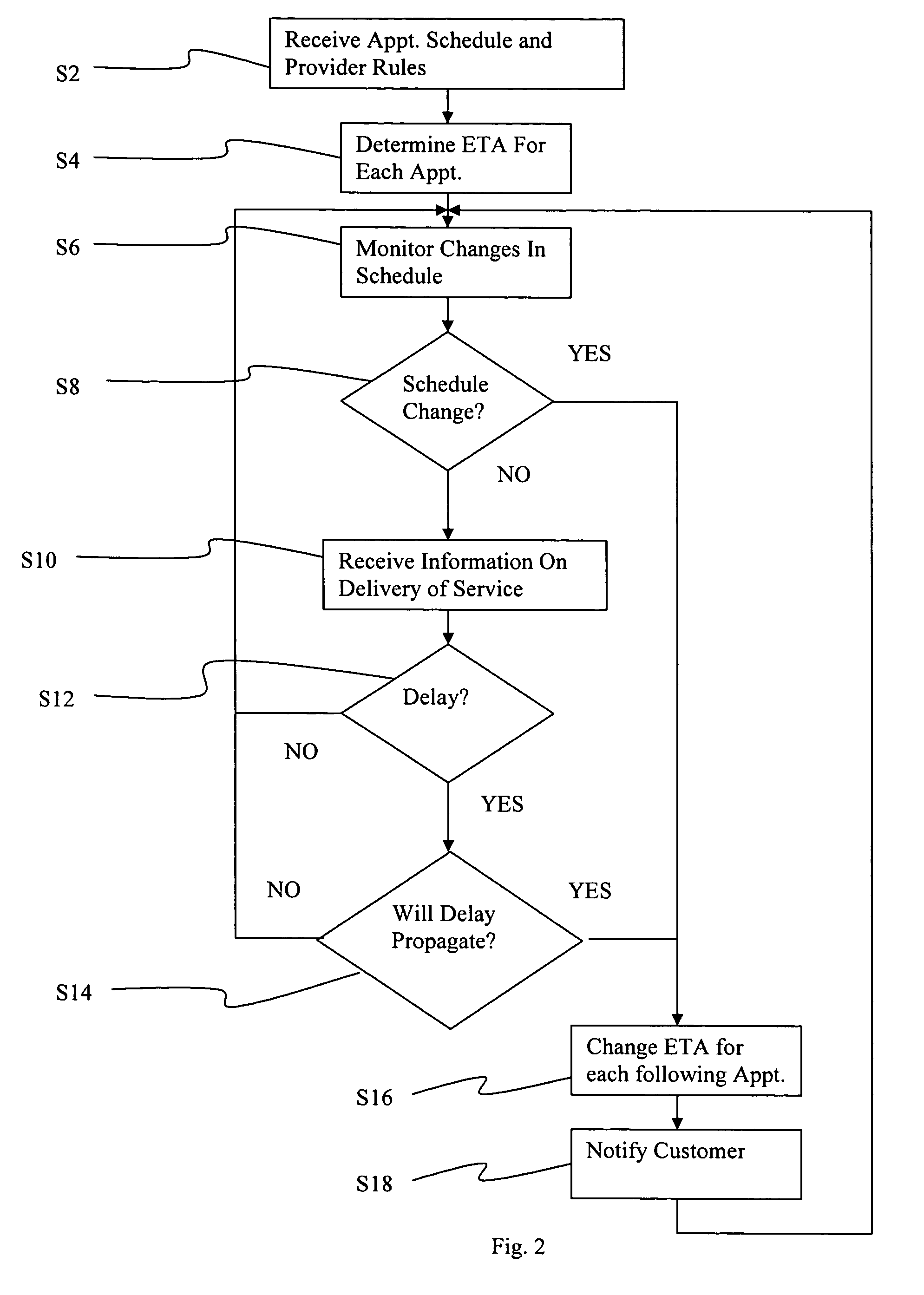
[0035]FIG. 1 illustrates an exemplary system for implementing the principles of the present invention. For convenience of explaining the principles of the invention, FIG. 1 illustrates three principle entities being involved, a back office 1 which manages the operations of a company using the invention, a service provider 2 which delivers the service to the customer on behalf of the company, and a customer 3 which receives the service from the service provider. Dynamic scheduler 10 preferably communicates with eac...
PUM
 Login to View More
 Abstract
Description
Claims
Application Information
 Login to View More