
Method and system to characterize transcriptionally active regions and quantify sequence abundance for large scale sequencing data
a technology of large-scale sequencing and sequence abundance, applied in the field of sequence data analysis system, can solve the problems of high-throughput sequencing for rna expression profiling and genome-wide biomarker discovery, the genomic transcribed regions of the genomic transcribed regions are often not well defined, and the cost of dna sequencing technology has been trending down quickly
- Summary
- Abstract
- Description
- Claims
- Application Information
AI Technical Summary
Problems solved by technology
Method used
Image

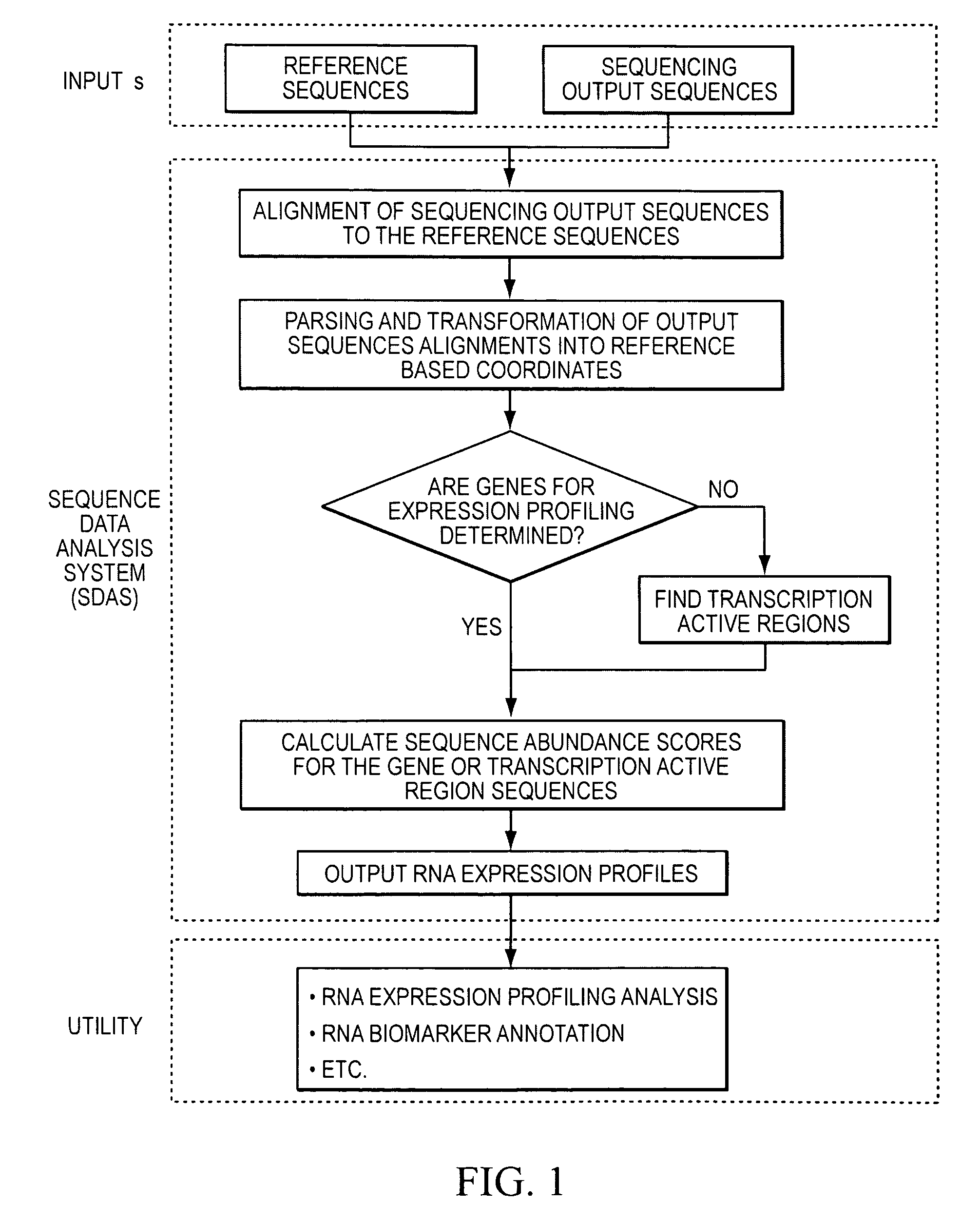
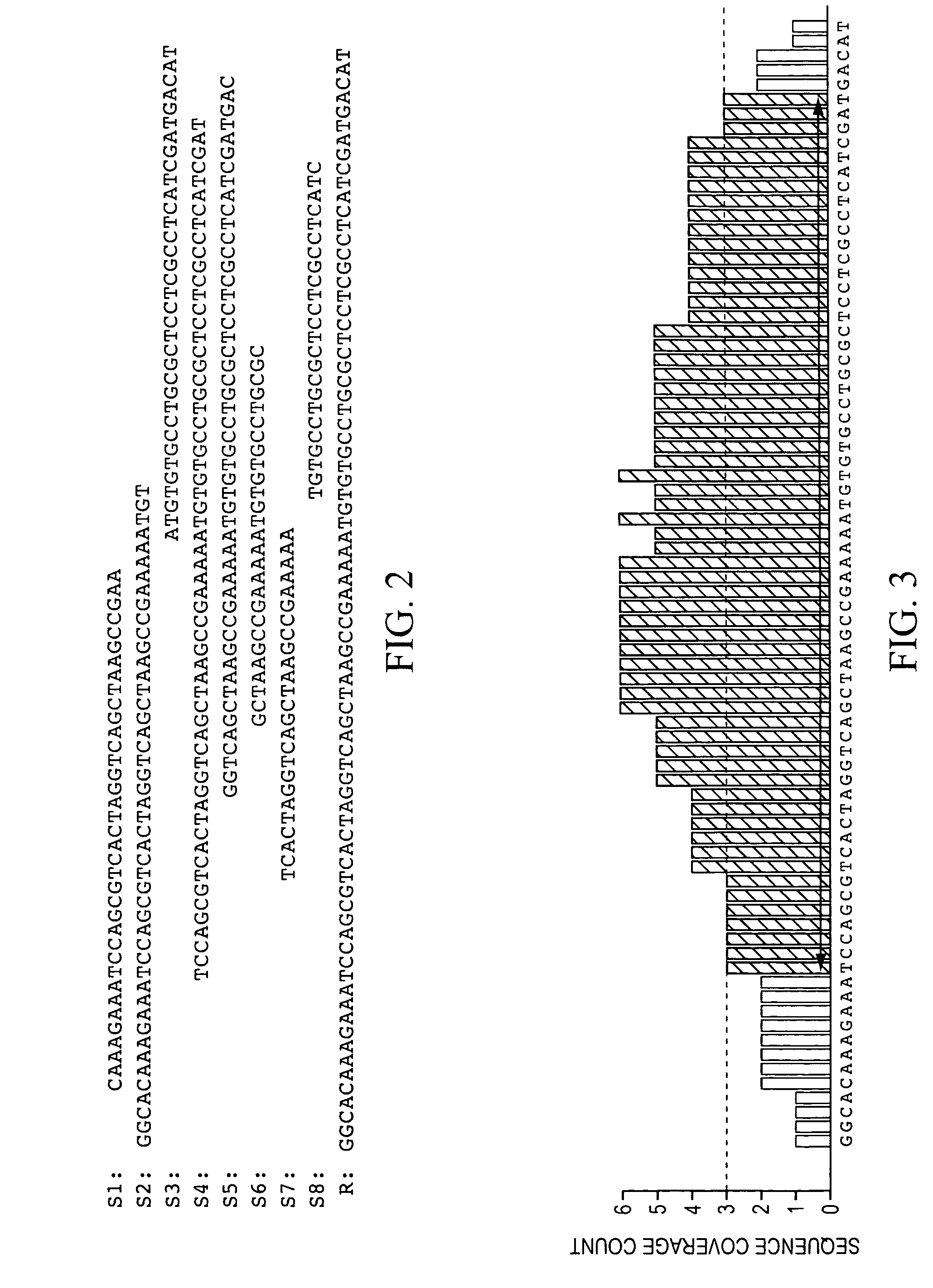
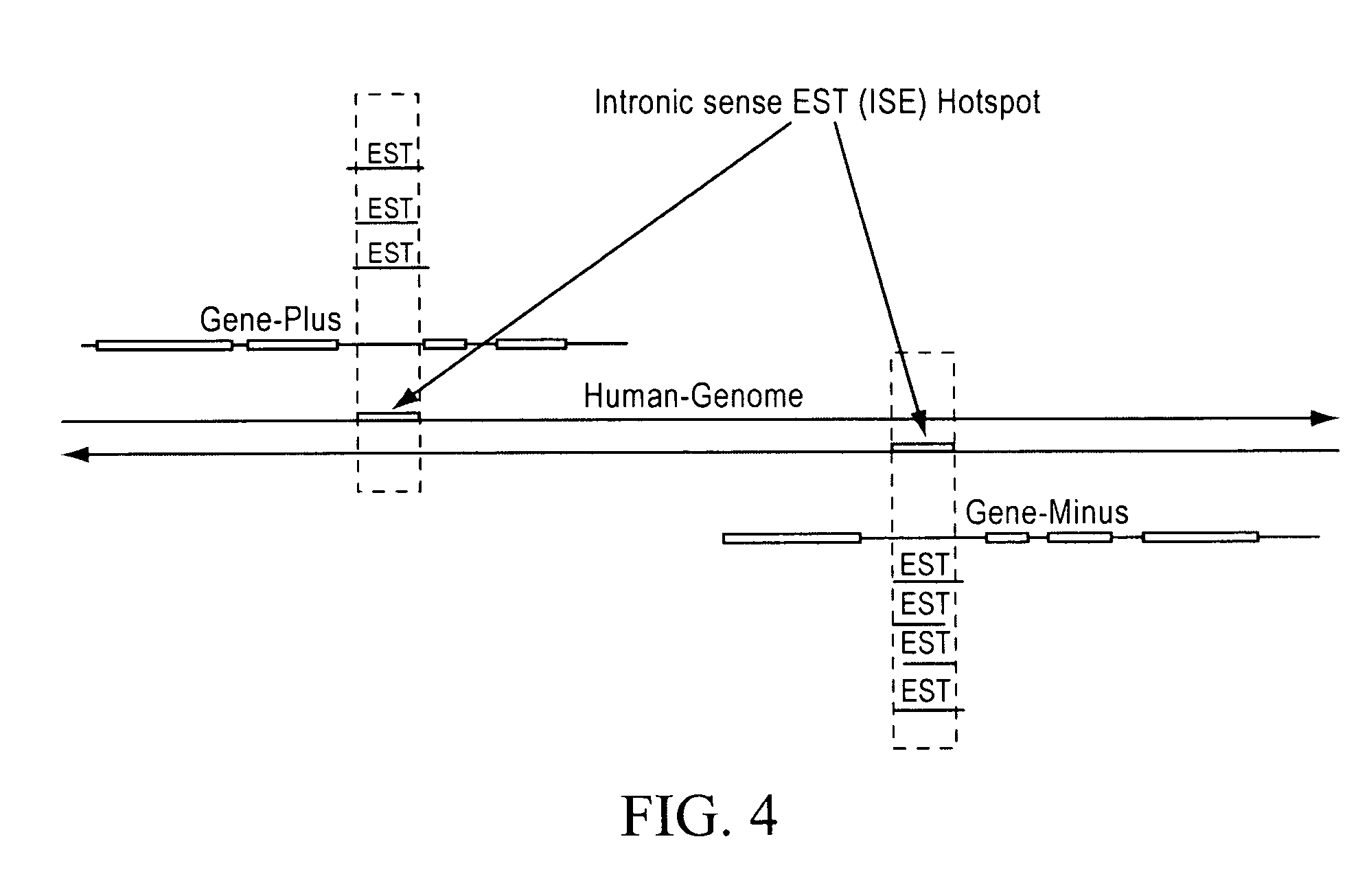
Examples
example 1
Computational Identification of Human Intronic Sense EST (ISE) Hotspots Reveals Potential Functional RNA Elements
[0077]Recent evidence suggests that a large portion of the mammalian genome is transcribed. Expressed sequence tags (ESTs) identified through large sequencing projects mark the transcribed regions of the genome. EST hotspots, genomic regions where many ESTs are mapped, may have significant biological functions and biomarker potential although many of them map to the non-coding portions of genes. The instantly claimed method applies a transcriptionally active region discovery algorithm to identify EST hotspots in the genome and to quantify their “hotness” by calculating an abundance score. Using the public dbEST data, the instant method was able to identify a set of human intronic sense EST (ISE) transcriptionally active regions, or “hotspots”. The results show that the ISE transcriptionally active regions likely represent both coding and non-coding functional RNA elements...
example 2
[0087]In another example, an expression profile dataset for human tissues was generated from a proprietary sequencing dataset of approximately thirteen million ESTs. Recent evidence indicates that approximately 60% of the mammalian genome is transcribed. The transcribed RNA sequences can be effectively detected through large scale sequencing projects and outputted as expressed sequence tags (ESTs). ESTs mark the transcribed sequences in the genome, frequently map to noncoding regions, i.e., intronic or intergenic gene sequences. These non-coding ESTs may identify functional RNA elements that have significant biological function and biomarker potential. Thus there is a need for an efficient method to identify functional RNA elements through EST sequencing and data analysis.
[0088]In this example, an SQL database management system was utilized to create and implement an efficient algorithm that identifies transcriptionally active regions (TARs) in the genome and quantifies their abunda...
PUM
| Property | Measurement | Unit |
|---|---|---|
| threshold | aaaaa | aaaaa |
| length | aaaaa | aaaaa |
| overlap length | aaaaa | aaaaa |
Abstract
Description
Claims
Application Information
 Login to View More