
Non-ironing crease-proofing agent and use method thereof
An anti-wrinkle finishing agent and catalyst technology, which can be used in fiber treatment, textile and papermaking, plant fibers, etc., can solve the problems of unsatisfactory non-iron effect of fabrics, and achieve low cost, improved cross-linking effect, and high flatness and stiffness. Effect
Patent Information
- Authority / Receiving Office
- CN · China
- Patent Type
- Patents(China)
- Current Assignee / Owner
- Publication Date
- 2010-06-02
Smart Images
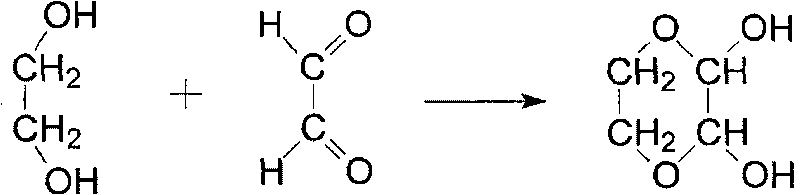
Figure 1 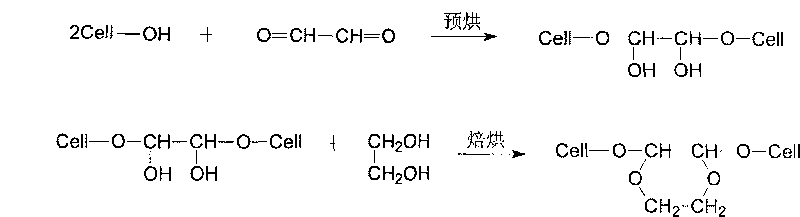
Figure 2
Abstract
Description
technical field
[0001] The invention relates to the field of printing and dyeing auxiliaries, in particular to a non-ironing anti-wrinkle finishing agent and its application method. Background technique
[0002] In recent years, with the strengthening of people's awareness of environmental protection, formaldehyde-free non-ironing finishing agents have become an important research topic in the field of non-ironing finishing agents. At present, polycarboxylic acid is the formaldehyde-free finishing agent that has the most potential to replace N-methylol amide compounds, and wherein, butane tetracarboxylic acid (BTCA) has the best finishing effect, but due to its high price (approx. 10 times that of 2D resin), which hinders its industrialized large-scale production; citric acid (CA) is cheap, safe and non-toxic, but the finishing effect is not as good as BTCA, and there are problems such as yellowing and poor wash fastness, so it cannot be widely used.
[0003] Glyoxal series...
Examples
Embodiment 1
[0025] 100 parts of glyoxal (40%), 70 parts of aluminum sulfate, 10 parts of aluminum citrate, 400 parts of ethylene glycol, and 300 parts of deionized water are used to control the temperature of the material at 30°C with a constant temperature water bath, and stir for 0.5h. A light yellow translucent solution was obtained, and an appropriate amount of deionized water was added to adjust the mass concentration of the product system to 30%. Sodium perborate is 0.1% (to the working fluid wt%), and formic acid is 1.0% (to the working fluid wt%), and the two are directly added to the rolling groove working fluid when the fabric is processed.
Embodiment 2
[0027] 110 parts of glyoxal (40%), 100 parts of aluminum chloride, 20 parts of aluminum citrate, 420 parts of ethylene glycol, and 310 parts of deionized water are used to control the temperature of the material at 35 °C with a constant temperature water bath, and stir for 1 h. A light yellow translucent solution was obtained, and an appropriate amount of deionized water was added to adjust the mass concentration of the product system to 30%. Sodium perborate is 0.2% (to the working liquid wt%), and formic acid is 1.2% (to the working liquid wt%), and the two are directly added into the rolling groove working liquid respectively when the fabric is processed.
Embodiment 3
[0029] Mix 120 parts of glyoxal (40%), 90 parts of aluminum phosphate, 10 parts of aluminum tartrate, 460 parts of diethylene glycol, and 320 parts of deionized water. Use a constant temperature water bath to control the temperature of the material at 40 ° C. Stir for 1 hour to obtain light yellow Translucent solution, add appropriate amount of deionized water to adjust the mass concentration of the product system to 30%. Borax is 0.4% (to the working solution wt%), and formic acid is 1.7% (to the working solution wt%), and the two are directly added to the rolling groove working solution when fabrics are processed.