
Method for preparing heat impact resisting ceramic capacitor
A ceramic capacitor, heat-resistant technology, applied in the direction of capacitors, fixed capacitors, fixed capacitor electrodes, etc., can solve problems such as cracking, micro-cracks, difficult to meet the requirements of thermal shock resistance in the automotive industry, etc., to solve thermal stress and improve Effect of Thermal Shock Resistance
Patent Information
- Authority / Receiving Office
- CN · China
- Current Assignee / Owner
- Publication Date
- 2009-07-29
Smart Images
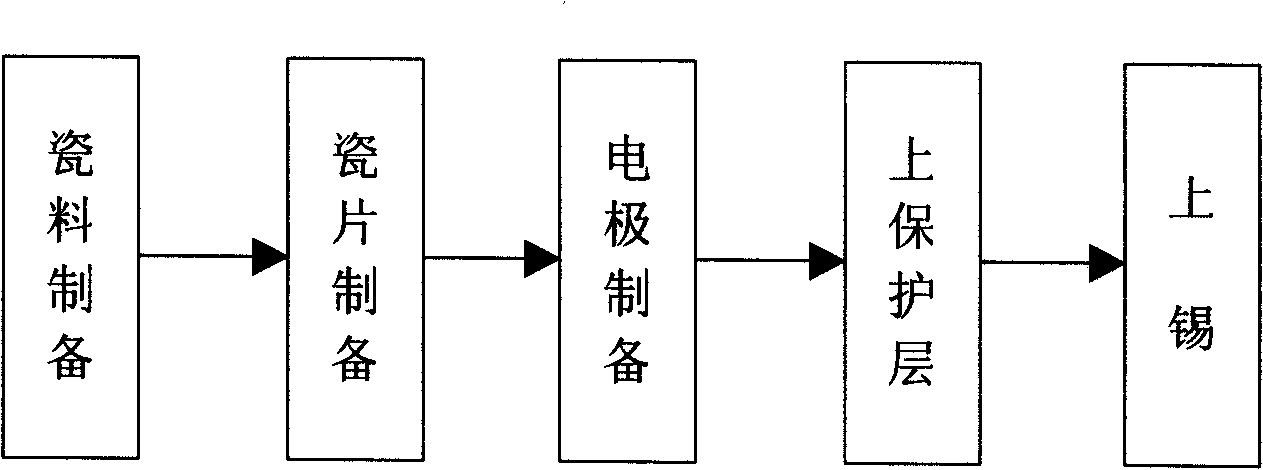
Figure 1 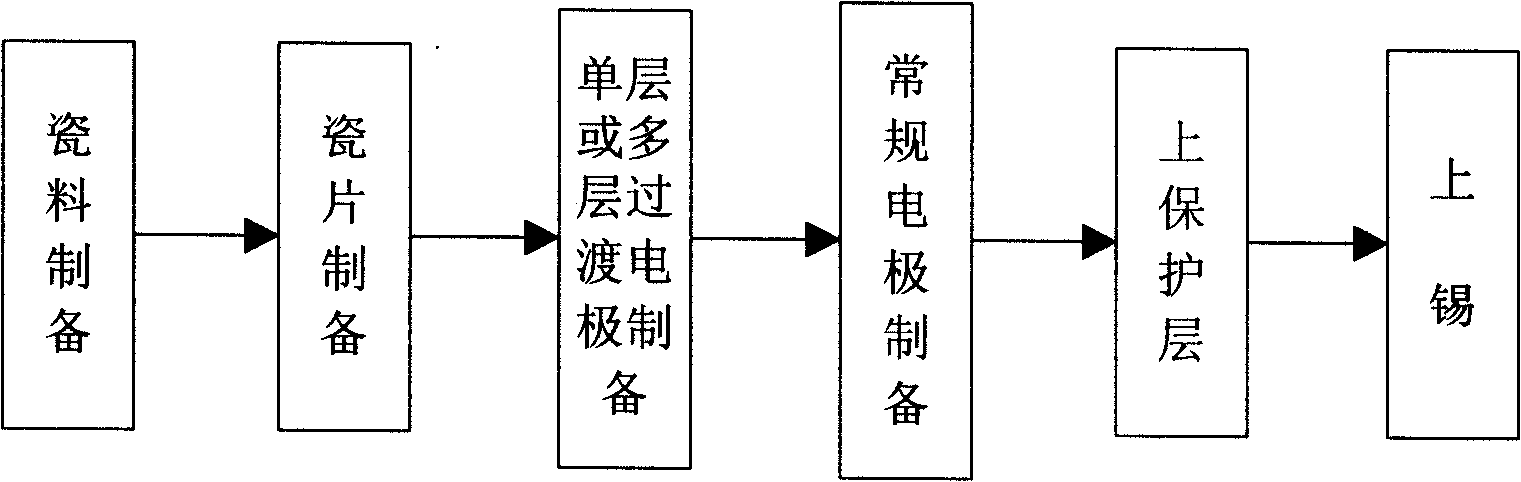
Figure 2
Abstract
Description
technical field
[0001] The invention belongs to the technical field of electronic components and materials, in particular to a preparation method of a ceramic capacitor. Background technique
[0002] A large number of cars are beginning to add more and more electronic technology content to the well-known engine and engine components. Therefore, the automotive industry's requirements for electronic components continue to increase, and ceramic capacitors are no exception. Due to the extremely harsh working environment of automobiles, the automotive industry has very high requirements for ceramic capacitors, especially requiring that they can work reliably under extreme and rapidly changing conditions of temperature, that is, in addition to dealing with sharply changing temperatures, they must also withstand strong thermal shocks . In order to simulate the performance of ceramic capacitor products under the above conditions, a thermal shock test is usually adopted, and the per...
Examples
Embodiment 1
[0017] Take the SrTiO3 ceramic material containing a small amount of Ta, Al, Si and add 30 grams of PVA material with a concentration of 25%, and then go through the process of rough rolling, intermediate rolling and finishing rolling to make the thickness of the diaphragm reach 0.8mm±0.03mm; punch the diaphragm into: Length 5.8±1mm, width: 4.8±0.5mm green sheet, the green sheet is deglued at 1100℃~1200℃ and atmospheric atmosphere for 2h±20min to make a degummed film; and then at 1450℃ and N2, H2 reducing atmosphere Under sintering for 3h. After the product is restored, use a 300-mesh nylon screen to coat the coating material containing Bi and Cu plasma on the surface of the product, dry it at 160°C to 180°C for 15 to 25 minutes, and then dry it at 1300°C and atmospheric conditions. Heat treatment for 2 hours, so that the coating material can completely penetrate into the interior of the porcelain body, fully wrap the grains, and insulate the grain boundaries. Thus, a capacit...
Embodiment 2
[0019] Take the SrTiO3 ceramic material containing a small amount of Ta, Al, Si and add 30 grams of PVA material with a concentration of 25%, and then go through the process of rough rolling, intermediate rolling and finishing rolling to make the thickness of the diaphragm reach 0.8mm±0.03mm; punch the diaphragm into: Length 5.8±1mm, width: 4.8±0.5mm green sheet, the green sheet is deglued at 1100℃~1200℃ and atmospheric atmosphere for 2h±20min to make a degummed film; and then at 1450℃ and N2, H2 reducing atmosphere Under sintering for 3h. After the product is restored, use a 300-mesh nylon screen to coat the coating material containing Bi and Cu plasma on the surface of the product, dry it at 160°C to 180°C for 15 to 25 minutes, and then dry it at 1300°C and atmospheric conditions. Heat treatment for 2 hours, so that the coating material can completely penetrate into the interior of the porcelain body, fully wrap the grains, and insulate the grain boundaries. Thus, a capacit...
Embodiment 3
[0021] Take the SrTiO3 ceramic material containing a small amount of Ta, Al, Si and add 30 grams of PVA material with a concentration of 25%, and then go through the process of rough rolling, intermediate rolling and finishing rolling to make the thickness of the diaphragm reach 0.8mm±0.03mm; punch the diaphragm into: Length 5.8±1mm, width: 4.8±0.5mm green sheet, the green sheet is deglued at 1100℃~1200℃ and atmospheric atmosphere for 2h±20min to make a degummed film; and then at 1450℃ and N2, H2 reducing atmosphere Under sintering for 3h. After the product is restored, use a 300-mesh nylon screen to coat the coating material containing Bi and Cu plasma on the surface of the product, dry it at 160°C to 180°C for 15 to 25 minutes, and then dry it at 1300°C and atmospheric conditions. Heat treatment for 2 hours, so that the coating material can completely penetrate into the interior of the porcelain body, fully wrap the grains, and insulate the grain boundaries. Thus, a capacit...