
Optical detection method of verticality error of longitudinal axis and latitudinal axis of horizontal type telescope
A telescope and horizontal technology, applied in the direction of using optical devices, measuring devices, instruments, etc., can solve problems such as inappropriate promotion and complicated calculation process, and achieve the effect of reliable measurement method, simple method principle and easy realization.
Patent Information
- Authority / Receiving Office
- CN · China
- Current Assignee / Owner
- Publication Date
- 2010-02-17
- Estimated Expiration
- Not applicable · inactive patent
Smart Images
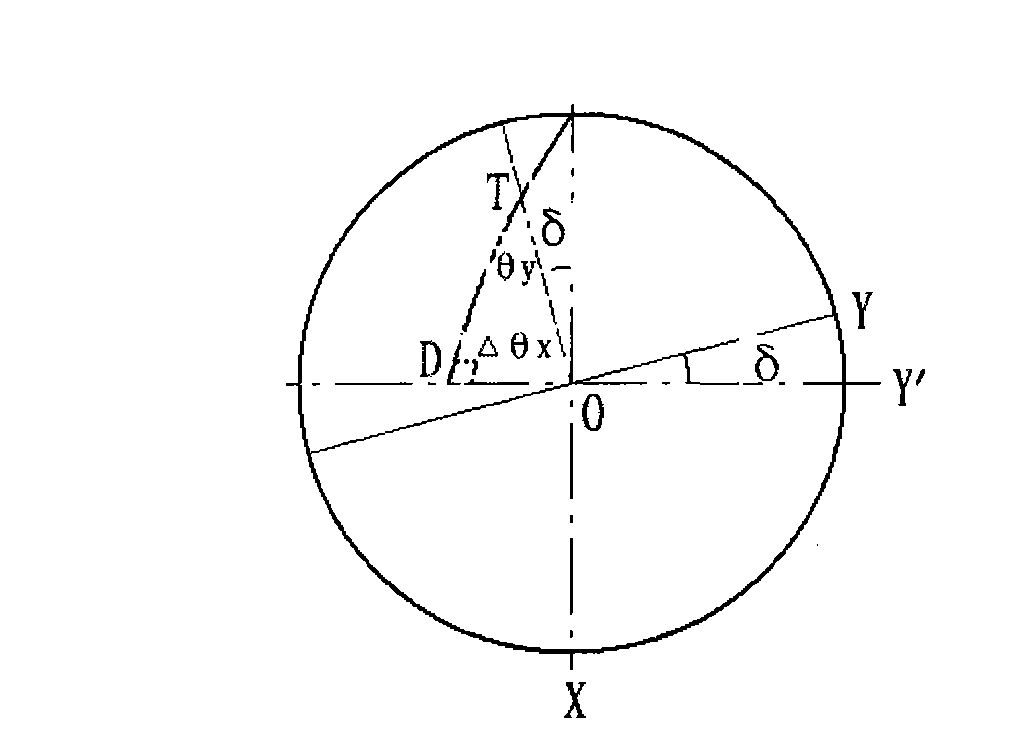
Figure 1 
Figure 2 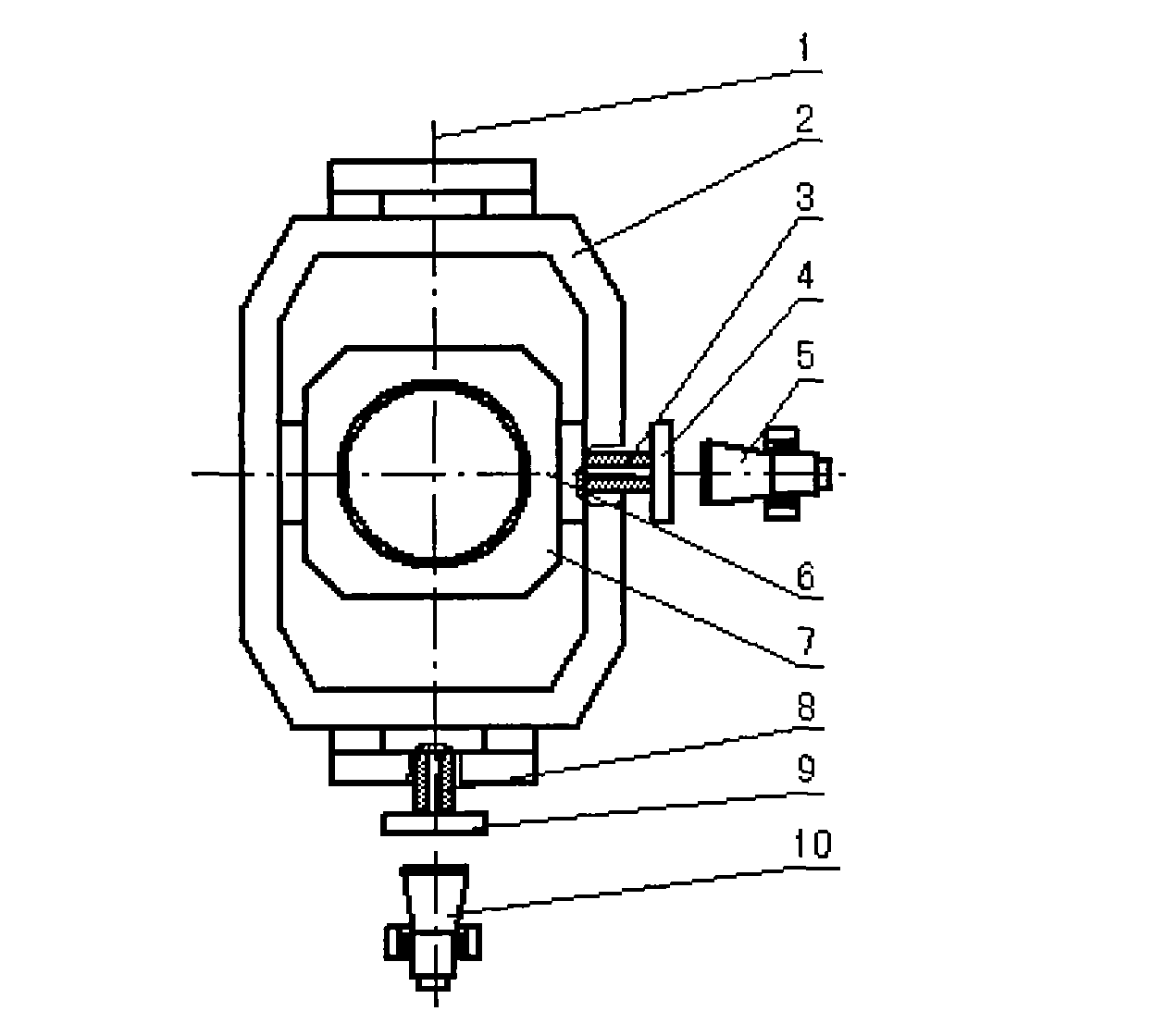
Figure 3
Abstract
Description
technical field
[0001] The invention relates to a method for detecting the verticality error of the longitude and latitude axes of a horizontal telescope. Background technique
[0002] Horizontal telescopes are characterized by two mutually perpendicular mechanical axes parallel to the horizontal plane. These two mechanical axis systems are called warp axis and weft axis respectively. According to the arrangement of the optical system, the spatial positions of the warp axis and the latitude axis are divided into two types, that is, the space is orthogonal and the vertical disjoint. Due to processing errors and assembly errors, the two axes are often not perpendicular to cause pointing errors, such as figure 1 As shown, let the perpendicularity error between the latitude axis and the warp axis be δ, θ X , θ Y represent the rotation angles of the warp and latitude axes, respectively. Since the warp axis is not perpendicular to the weft axis, the visual axis rotates along ...
Examples
Embodiment Construction
[0017] The present invention is described in further detail below in conjunction with the example given.
[0018] The present invention detects the method for the perpendicularity error of the longitude and latitude axes of the horizontal telescope, such as image 3 As shown, a plane reflector 4 is installed on the latitude axis 3 axis head of the horizontal telescope to be measured, a theodolite 5 is correspondingly placed outside the plane reflector 4, and the installation angle of the plane reflector 4 and the pendulum of theodolite 5 are adjusted. Place the position so that the optical axis of the theodolite 5 coincides with the axis of rotation 6 of the latitudinal axis; another plane reflector 9 is installed on the warp axis 8 axis head of the horizontal telescope to be measured, and another plane reflector 9 is correspondingly placed outside the plane reflector 9 Theodolite 10, adjust the installation angle of plane reflector 9 and the placement position of theodolite 1...