

Hydroprocessing method for coking kerosene distillates
A technology for hydrotreating and kerosene, which is applied in hydrotreating process, treating hydrocarbon oil, petroleum industry, etc., can solve the problem of difficulty in treating inferior naphthenic coking distillate oil, and achieve the effect of simple process flow
Patent Information
- Authority / Receiving Office
- CN · China
- Patent Type
- Patents(China)
- Current Assignee / Owner
- Publication Date
- 2015-05-13
Smart Images
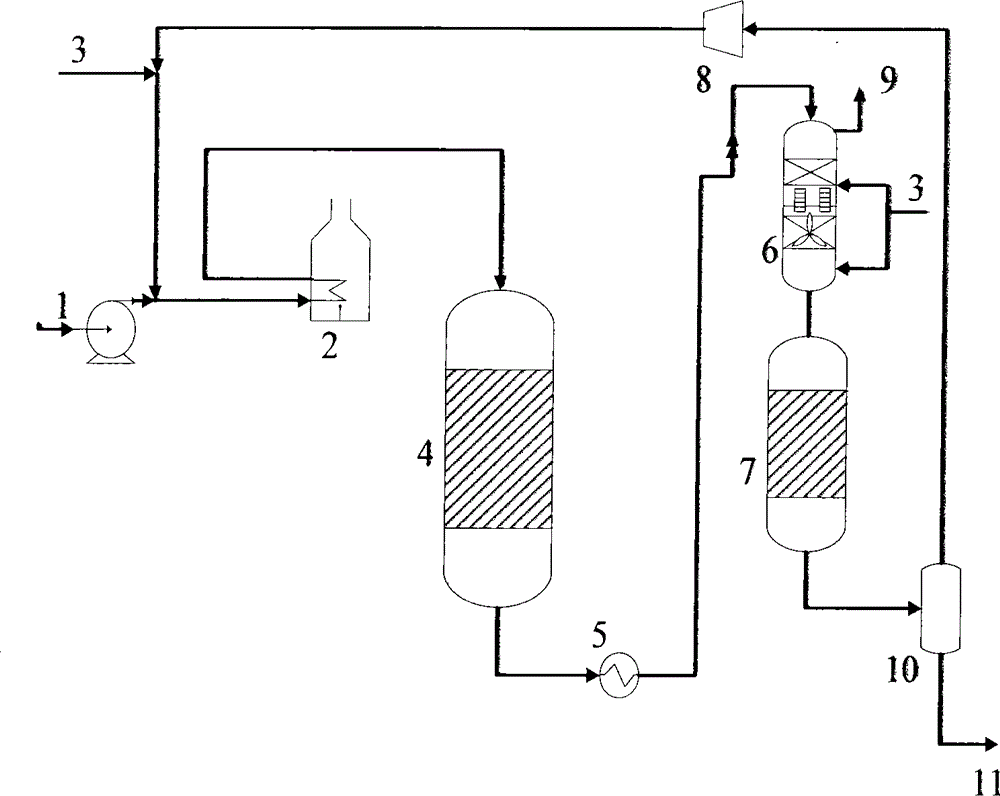
Figure 1 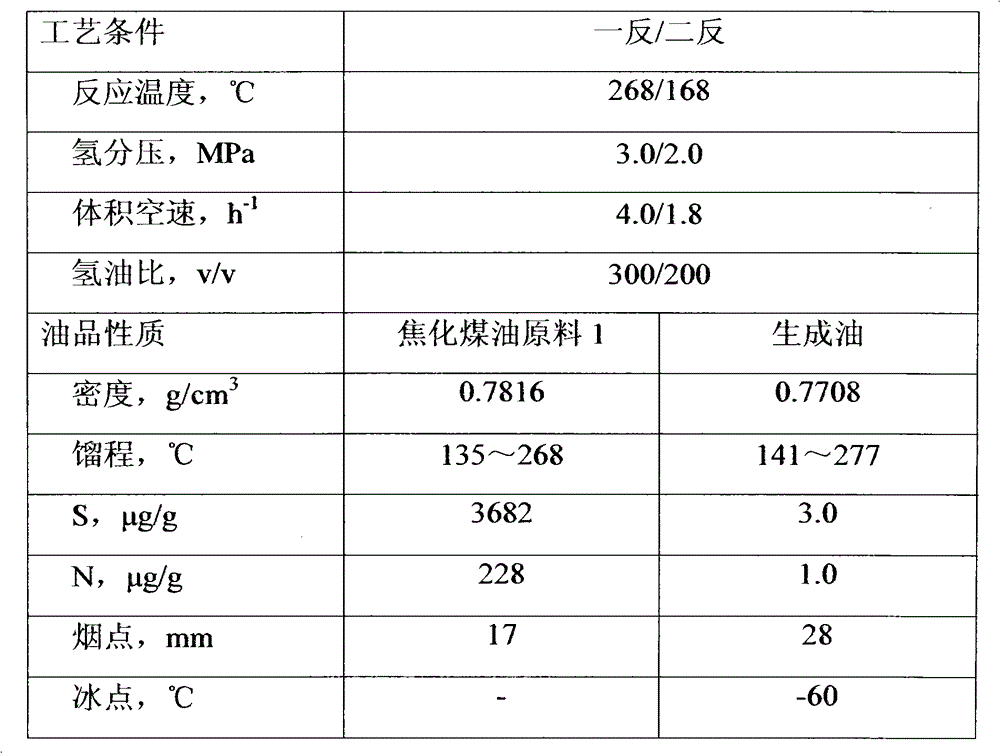
Figure 2 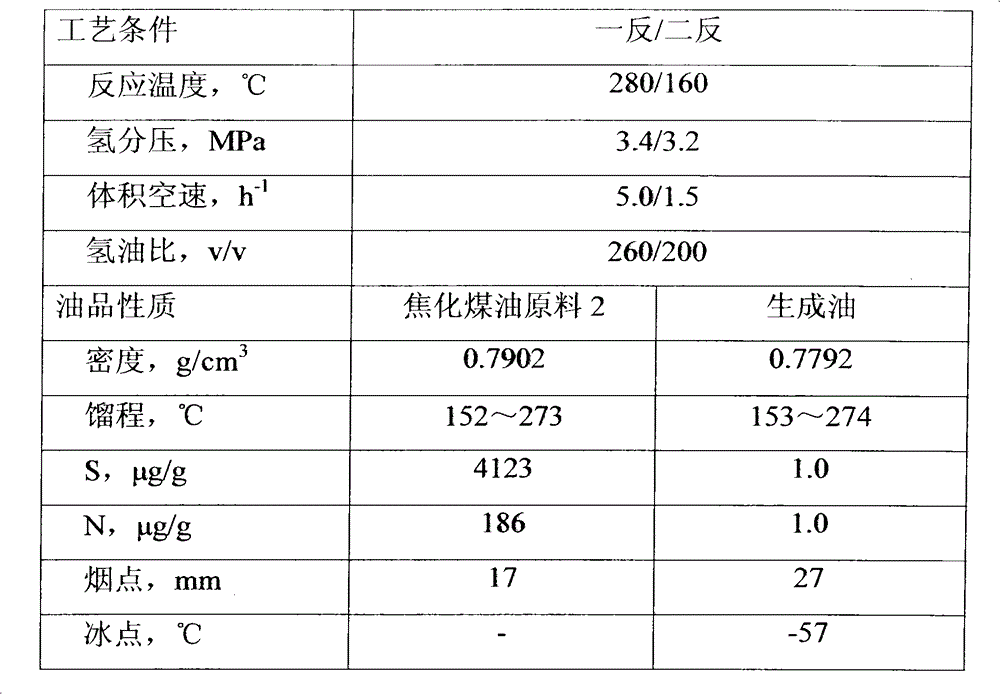
Figure 3
Abstract
Description
technical field
[0001] The invention relates to a method for hydrotreating coking kerosene fractions, in particular to a method for hydrotreating which needs to greatly increase the added value of coking kerosene fractions. Background technique
[0002] Since the Chinese government has special preferential policies for the production of aviation fuel products, compared with the production of automotive gasoline and diesel products, the production of aviation jet fuel products has the advantages of high added value and good economic benefits. Therefore, the production of 3# jet fuel can greatly improve the economic benefits of refineries. At present, there are two main methods for directly producing qualified 3# jet fuel: one is to obtain kerosene fractions from crude oil through atmospheric distillation, and then undergo hydrogenation or non-hydrogenation treatment to obtain qualified jet fuel products; the other is to obtain qualified jet fuel products by Vacuum distillate...
Examples
Embodiment 1
[0030] Coked kerosene raw material 1 enters the first hydrogenation reactor, and the reaction conditions are: hydrogen partial pressure 3.0MPa, volume space velocity 4.0h -1 , The reaction temperature is 268°C, and the volume ratio of hydrogen to oil is 300:1; the effluent enters the second hydrogenation reactor after being passed through the gas stripping hydrogen dissolver, and the reaction conditions are: hydrogen partial pressure 2.0MPa, volume space velocity 1.8h -1 , The reaction temperature is 168° C., and the volume ratio of hydrogen to oil is 200:1. The raw material oil properties and product properties are listed in Table 2.
[0031] It can be seen from Table 2 that the smoke point of kerosene products can meet the index requirements of greater than 25mm by using this process technology, and other properties can directly meet the quality requirements of the national standard 3# jet fuel.
Embodiment 2
[0033] Coking kerosene raw material 2 enters the first hydrogenation reactor, the reaction conditions are: hydrogen partial pressure 3.4MPa, volume space velocity 5.0h -1 , The reaction temperature is 280°C, and the volume ratio of hydrogen to oil is 260:1; the effluent enters the second hydrogenation reactor after being passed through the hydrogen stripping device, and the reaction conditions are: hydrogen partial pressure 1.8MPa, volume space velocity 1.5h -1 , The reaction temperature is 160°C, and the volume ratio of hydrogen to oil is 200:1. The raw material oil properties and product properties are listed in Table 3.
[0034] It can be seen from Table 3 that the smoke point of kerosene products can meet the index requirements of greater than 25mm by using this process technology, and other properties can directly meet the quality requirements of the national standard 3# jet fuel.
Embodiment 3
[0036] Coking kerosene raw material 3 enters the first hydrogenation reactor, the reaction conditions are: hydrogen partial pressure 2.6MPa, volume space velocity 3.2h -1 , The reaction temperature is 260°C, and the volume ratio of hydrogen to oil is 350:1; the effluent enters the second hydrogenation reactor after being passed through the hydrogen stripping device, and the reaction conditions are: hydrogen partial pressure 2.4MPa, volumetric space velocity 2.0h -1 , The reaction temperature is 180°C, and the volume ratio of hydrogen to oil is 300:1. The raw material oil properties and product properties are listed in Table 4.
[0037] It can be seen from Table 4 that the smoke point of kerosene products can meet the index requirements of greater than 25mm by using this process technology, and other properties can directly meet the quality requirements of the national standard 3# jet fuel.