

Non-alkali composite flooding compound based on straight-chain fatty alcohol ether carboxylic betaine
An alkali-free compound flooding, alcohol ether carboxyl group technology, applied in drilling compositions, chemical instruments and methods, etc., can solve problems such as the application of straight-chain fatty alcohol ether carboxyl betaine that is not mentioned, and improve the critical micelles. Concentration, improving solubility, and the effect of stabilizing molecular structure
Patent Information
- Authority / Receiving Office
- CN · China
- Patent Type
- Patents(China)
- Current Assignee / Owner
- Publication Date
- 2015-01-21
Smart Images
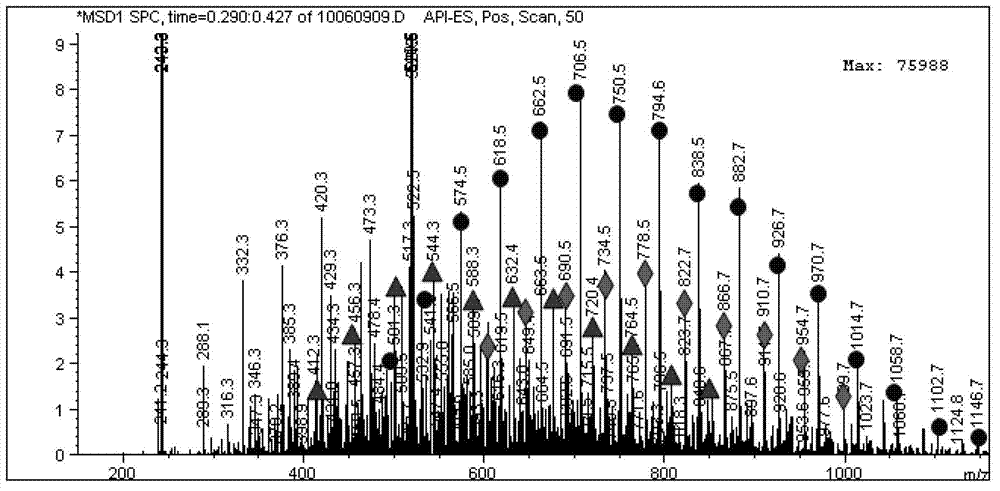
Figure 1 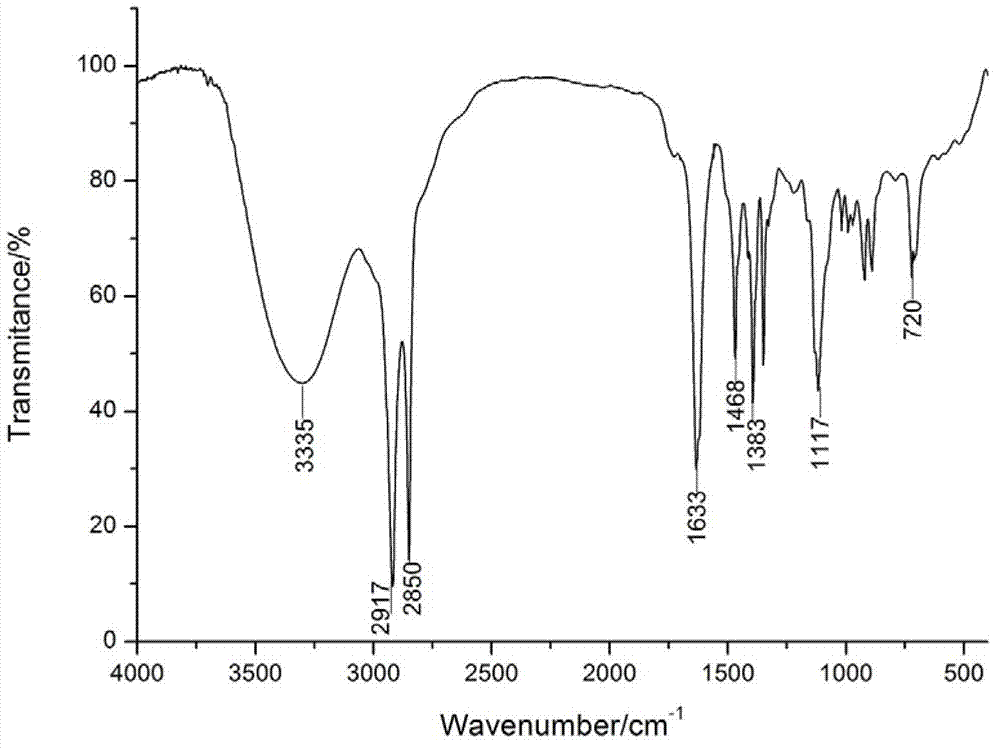
Figure 2 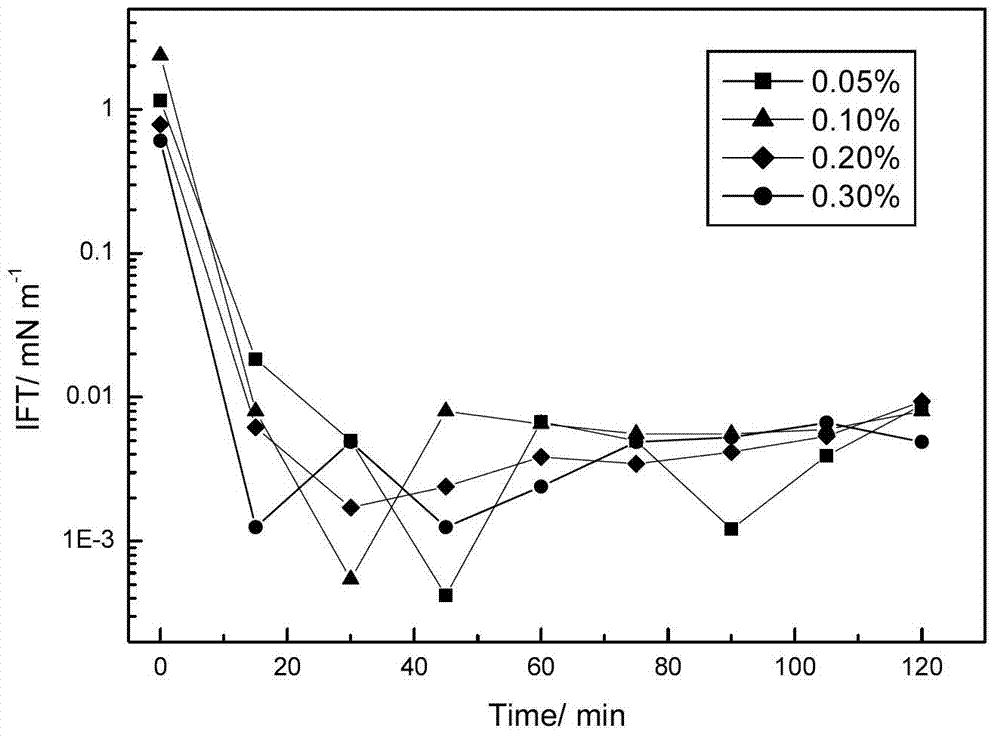
Figure 3
Abstract
Description
technical field
[0001] The invention relates to an alkali-free composite flooding composition mainly composed of a straight-chain fatty alcohol ether carboxy betaine surfactant, belonging to the technical field of petroleum exploitation. Background technique
[0002] Petroleum is a natural resource, which has dual functions of energy and chemical raw materials in the national economy, and is also an important strategic material for national defense. However, it is a non-renewable resource, so extracting more oil from existing oil reservoirs is an important strategic goal of energy development.
[0003] With the continuous development of oil production, for oil fields that have entered the middle and late stages of water flooding, the remaining oil is trapped in the reservoir rock pores as discontinuous oil droplets, and the oil-water interface can be reduced by using an appropriate surfactant system. Tension can reduce the deformation resistance of oil droplets, so that oil...
Examples
preparation example 1
[0060] This preparation example provides N-[hexadecyl polyoxyethylene ether (3)-2-hydroxypropyl]-N, N-dimethylcarboxybetaine amphoteric surfactant, and its synthetic method comprises the following steps:
[0061] (1) Etherification reaction: Add 0.10mol n-hexadecyl alcohol polyoxyethylene ether (3), 0.005mol tetrabutylammonium bromide, 0.20mol solid NaOH into a three-necked flask equipped with electric stirring, thermometer and reflux condenser , add n-hexane as a solvent, heat up to 60°C, add 0.11mol epichlorohydrin dropwise to react at constant temperature for 4 hours, then wash with water until neutral, and obtain the etherification reaction product;
[0062] (2) Amination reaction: Add 0.05mol of the above-mentioned etherification reaction product in a three-necked flask equipped with electromagnetic stirring, a thermometer, a reflux condenser and a drying tube, 10.0g of a dimethylamine aqueous solution with a mass concentration of 30-33%, add Ethanol was used as a solvent...
preparation example 2
[0066] This preparation example provides N-[octadecyloxy-2-hydroxypropyl]-N, N-dimethylcarboxybetaine, and its synthetic method comprises the following steps:
[0067] (1) etherification reaction: add 0.10mol n-octadecyl alcohol, 0.005mol tetrabutylammonium bromide, 0.20mol solid NaOH in the there-necked flask equipped with electric stirring, thermometer and reflux condenser, add n-hexane as solvent, Heating to 50°C, adding 0.11mol epichlorohydrin dropwise to react at constant temperature for 3 hours, and then washing with water until neutral to obtain an etherification reaction product;
[0068] (2) Amination reaction: Add 0.05mol of the above-mentioned etherification reaction product in a three-necked flask equipped with electromagnetic stirring, a thermometer, a reflux condenser and a drying tube, 10.0g of a dimethylamine aqueous solution with a mass concentration of 30-33%, add Ethanol was used as a solvent, the reaction was stirred at 50°C for 1 h, and the ethanol was rem...
Embodiment 1
[0073] The N-(eicosyloxy-2-hydroxypropyl)-N,N dimethylcarboxybetaine provided in this example is prepared by the similar method of Preparation Example 2, the difference is that the preparation example 2 The reactant n-stearyl alcohol is replaced by n-eicosanol.
[0074] The amphoteric surface containing N-(eicosyloxy-2-hydroxypropyl)-N,N dimethylcarboxybetaine was prepared from the produced water of Daqing No. 4 Plant (its salinity and main ion content are shown in Table 1). A series of non-alkali composite flooding compositions of active agent and polymer binary system, wherein the mass concentration of surfactant is 0.05%, 0.10%, 0.20%, and 0.30% respectively; the polymer is partially hydrolyzed polyacrylamide, its The mass concentration is 0.12%. At 45°C, the interfacial tension with crude oil from Daqing No. 4 Plant was sequentially measured, and the results are as follows image 3 shown. Under the condition of no alkali and no other additives, the oil-water interfacial...