
Method for synthesizing water phase of Mn<2+> doped CdS fluorescent quantum dots by stable acetopyruvic acid
A technology of acetylacetonate and fluorescent quantum dots, applied in chemical instruments and methods, luminescent materials, etc., to achieve the effect of low cost and simple method
Patent Information
- Authority / Receiving Office
- CN · China
- Current Assignee / Owner
- Publication Date
- 2013-04-17
- Estimated Expiration
- Not applicable · inactive patent
Smart Images
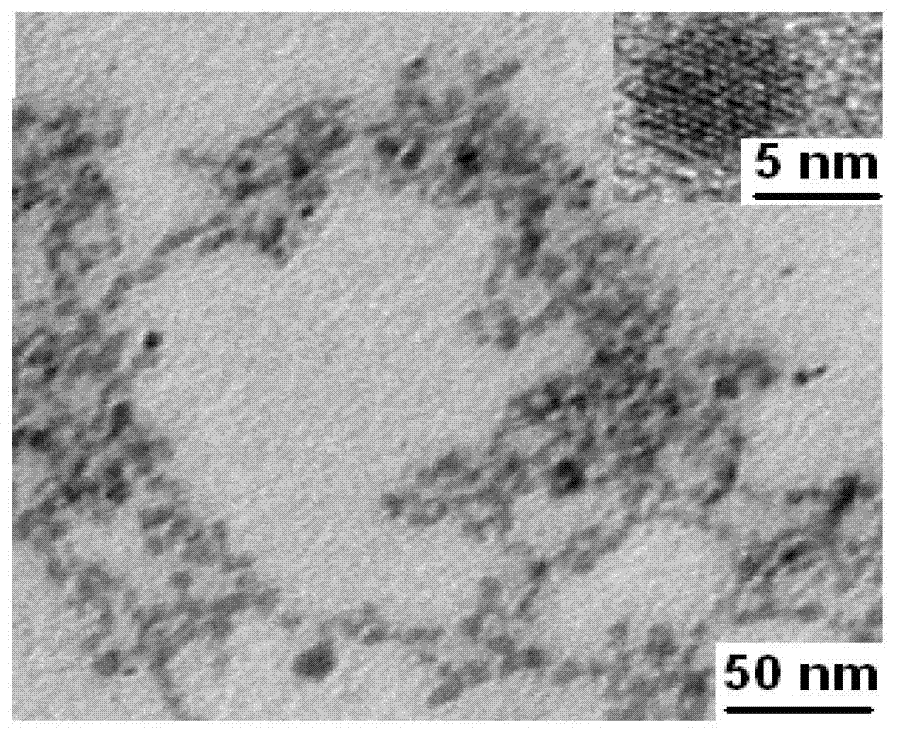
Figure 1 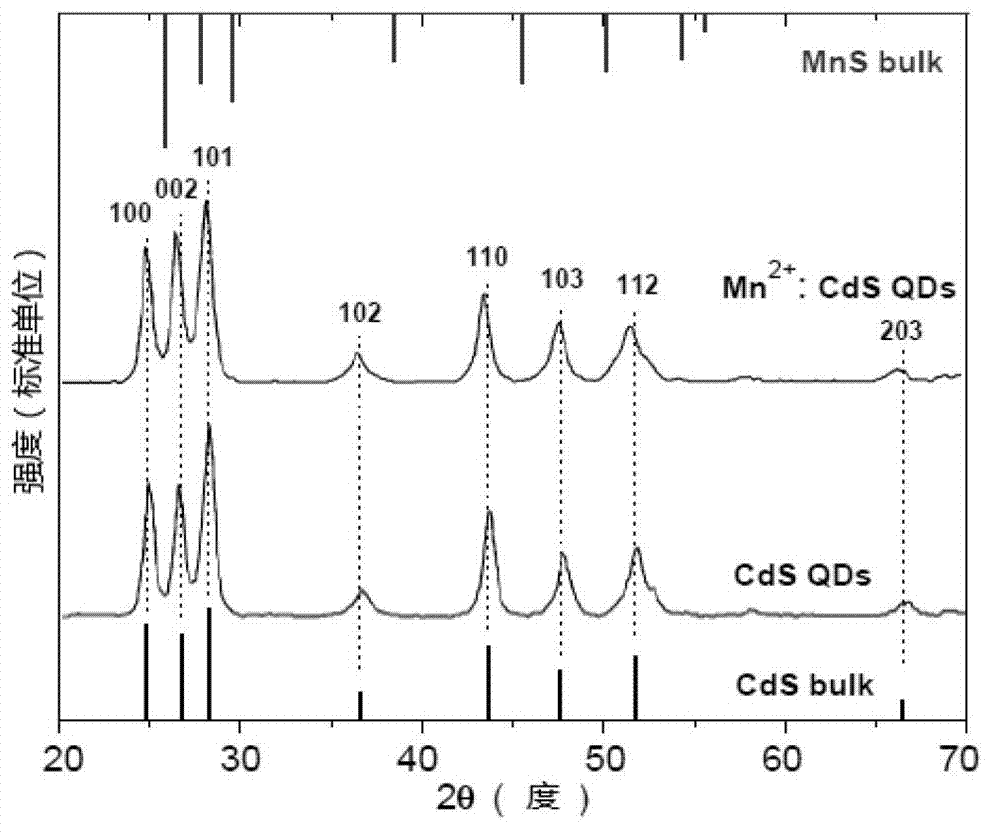
Figure 2 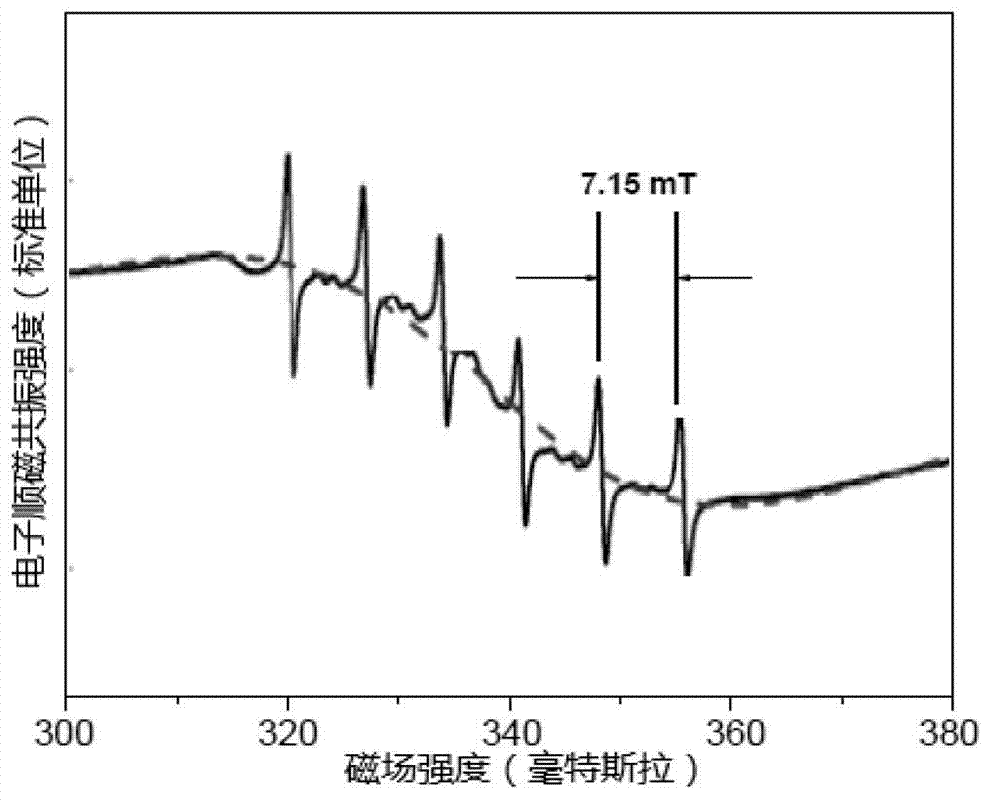
Figure 3
Abstract
Description
Technical field
[0001] The invention belongs to the technical field of fluorescent nanomaterial preparation, and specifically relates to acetylacetonate stabilized Mn 2+ Aqueous synthesis method of doped CdS fluorescent quantum dots. Background technique
[0002] Manganese doped quantum dots refer to the doping of manganese ions (Mn 2+ ), in order to improve its optical, electrical and magnetic properties, it is a new type of semiconductor nanomaterial developed in recent years. The d electronic state of the manganese ion strongly interacts with the s and p electronic excited states of the nanocrystal. When the peripheral electrons are excited to transition to the nanocrystal, it can emit orange fluorescence. Compared with traditional quantum dots, manganese doped quantum dots have lower toxicity and can maintain excellent photochemical stability and luminous efficiency in light, heat and air.
[0003] In view of the above special properties, manganese ion doped quantum dots have ...
Examples
Embodiment 1
[0026] First, add 0.1 mol of acetylacetonic acid to 50 mL of double-distilled water, raise the temperature to 80°C under magnetic stirring to completely dissolve it; then, add 0.1 mol of cadmium chloride and 0.1 mol of thiourea to make them fully dissolved to form a homogeneous Next, add 0.05mol manganese acetate to fully dissolve it to form a reaction solution system; then, place this solution system at 60°C for continuous reflux reaction for 3 hours; finally, cool the reaction solution to room temperature and centrifuge at high speed , The precipitate is washed with water, and then dispersed in water using ultrasound to prepare Mn 2+ Doped CdS quantum dot aqueous solution. Add 0.05mol potassium persulfate and 0.1mol sodium borohydride to this quantum dot solution first and then to investigate the reversible fluorescence behavior induced by the oxidation-reduction reaction.
[0027] Use (high resolution) transmission electron microscope to observe the morphology and size of the ...
Embodiment 2
[0029] First, add 0.2 mol of acetylacetonic acid to 50 mL of double distilled water, and heat to 80°C under magnetic stirring to completely dissolve; then, add 0.1 mol of cadmium acetate and 0.1 mol of thiourea to make them fully dissolved to form a homogeneous Mixed solution; Next, add 0.05mol manganese chloride to fully dissolve it to form a reaction solution system; then, place the solution system at 60°C for continuous reflux reaction for 4 hours; finally, cool the reaction solution to room temperature and centrifuge at high speed , The precipitate is washed with water, and then dispersed in water using ultrasound to prepare Mn 2+ Doped CdS quantum dot aqueous solution. Add 0.05mol potassium persulfate and 0.2mol sodium borohydride to this quantum dot solution first and then to investigate the reversible fluorescence behavior induced by the oxidation-reduction reaction. The performance characterization and fluorescence properties of the prepared product are the same as in E...
Embodiment 3
[0031] First, add 0.3 mol of acetylacetonic acid to 50 mL of double-distilled water, and heat to 80°C under magnetic stirring to completely dissolve it; then, add 0.1 mol of cadmium acetate and 0.2 mol of thiourea to make them fully dissolved to form a homogeneous Mix the solution; next, add 0.1 mol of manganese chloride to fully dissolve it to form a reaction solution system; then, place the solution system at 70°C for continuous reflux reaction for 4 hours; finally, cool the reaction solution to room temperature and centrifuge at high speed , The precipitate is washed with water, and then dispersed in water using ultrasound to prepare Mn 2+ Doped CdS quantum dot aqueous solution. To this quantum dot solution, 0.1 mol potassium persulfate and 0.2 mol sodium borohydride were added first and then to investigate the reversible fluorescence behavior induced by the oxidation-reduction reaction. The performance characterization and fluorescence properties of the prepared product are...