
Use of schisandrin B in anti-liver fibrosis
A technique for schisandra B and liver fibrosis, which is applied in the fields of inhibiting the proliferation of hepatic stellate cells or inhibiting the DNA synthesis of hepatic stellate cells, and in the field of inhibiting the proliferation of hepatic stellate cells or inhibiting the DNA synthesis of hepatic stellate cells. Compound recipes have many problems, such as unsatisfactory effects, complex ingredients, etc., to achieve strong drug efficacy, good application prospects, and the effect of improving the degree of liver fibrosis or cirrhosis
Patent Information
- Authority / Receiving Office
- CN · China
- Patent Type
- Applications(China)
- Current Assignee / Owner
- Publication Date
- 2014-06-18
- Estimated Expiration
- Not applicable · inactive patent
Smart Images
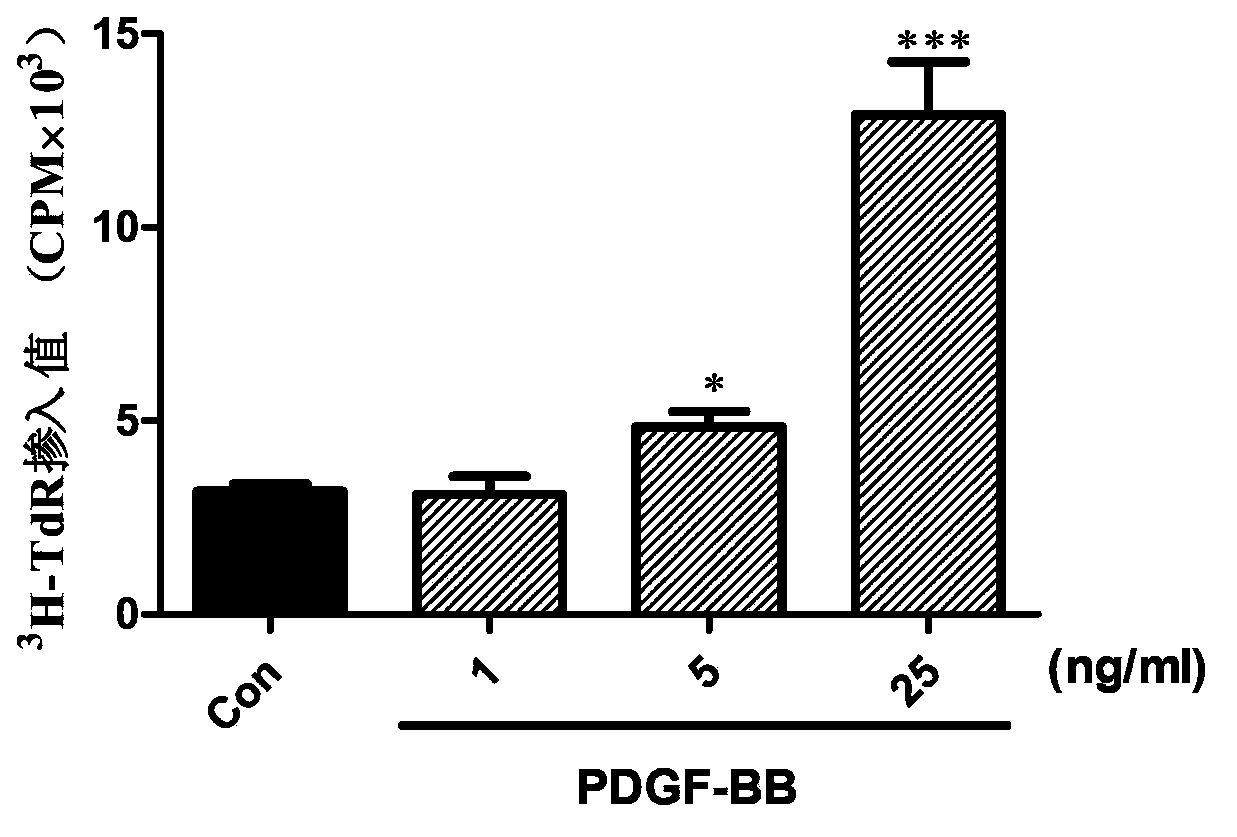
Figure 1 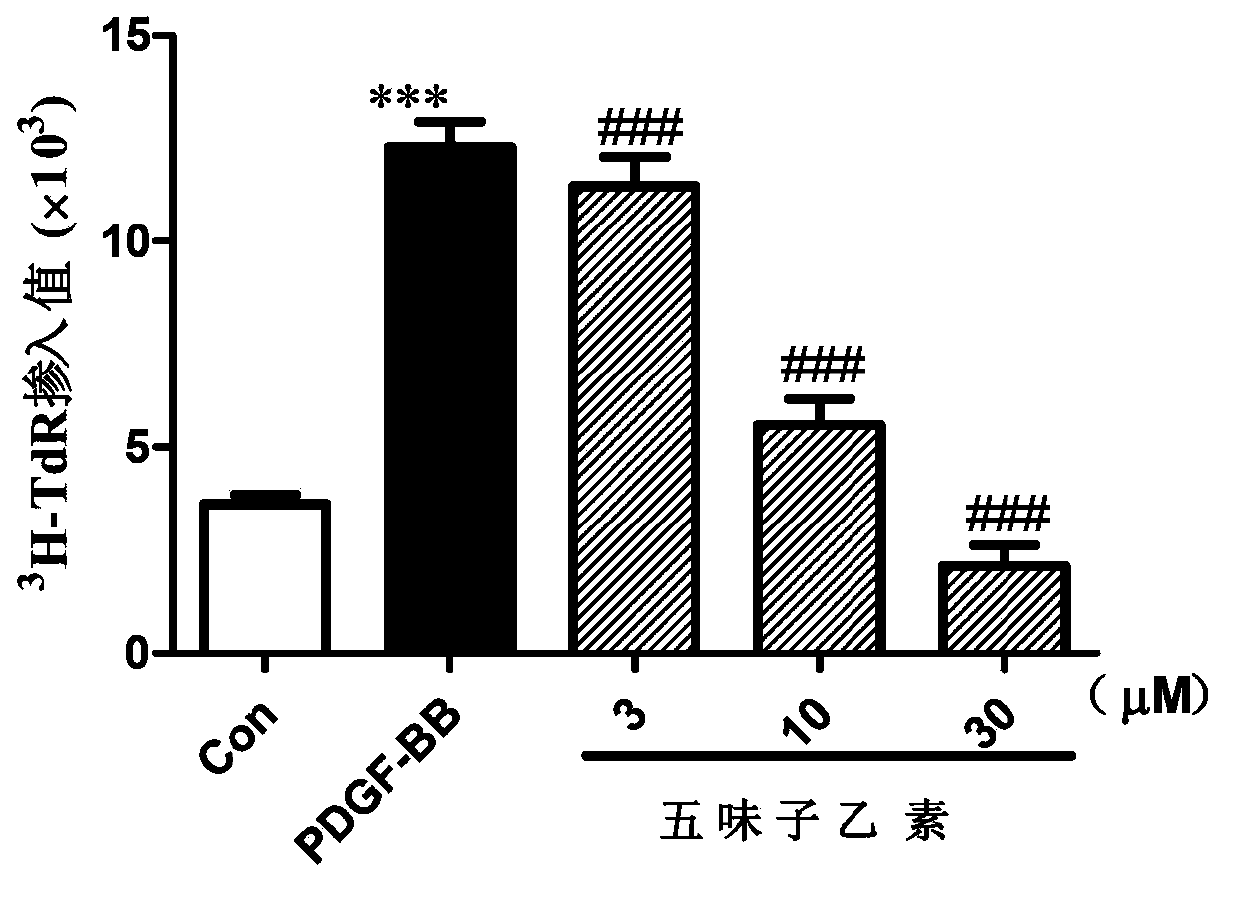
Figure 2 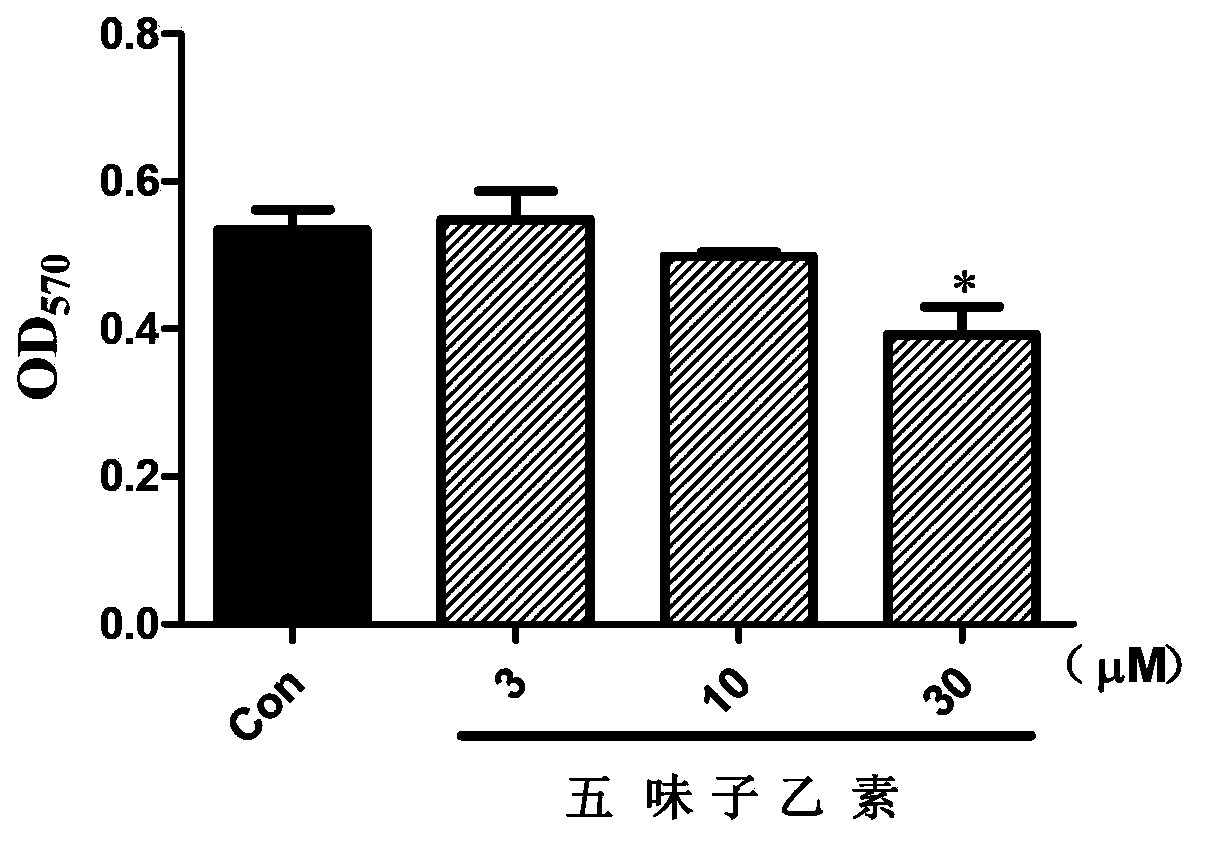
Figure 3
Abstract
Description
technical field
[0001] The invention belongs to the field of traditional Chinese medicine or medicinal chemistry, and relates to the use of a Chinese medicine monomer for anti-hepatic fibrosis, in particular, it relates to the use of a Chinese medicine monomer Schisandra B in the preparation of treatment and / or adjuvant treatment and / or prevention of liver fibrosis and Use in drugs for liver cirrhosis, or drugs for inhibiting proliferation of hepatic stellate cells, or for inhibiting DNA synthesis of hepatic stellate cells. The present invention also relates to a pharmaceutical composition containing schisandrin. The present invention also relates to a method for inhibiting proliferation of hepatic stellate cells or inhibiting DNA synthesis of hepatic stellate cells in vitro / in vivo. Background technique
[0002] Hepatic fibrosis is a pathological change in which excessive deposition of extracellular matrix in the liver leads to abnormal liver structure or (and) function. I...
Examples
Embodiment 1
[0051] Example 1: Establishment of primary rat hepatic stellate cell proliferation model
[0052] 1. Reagents and Cells
[0053] Male Wistar rats, about 400 g, were provided by the Experimental Animal Center of the Academy of Military Medical Sciences.
[0054] 96-well plate, Corning; Type Ⅳ collagenase, sigma company; Pronase E, Roche company; DNase Ⅰ, Roche company; DMEM medium, Beijing Tianrun Shanda Biotechnology Co., Ltd.; Heparin sodium, Sinopharm Chemical Reagent Co., Ltd. ; PDGF-BB, Peprotech Corporation.
[0055] Peristaltic pump, Baoding Lange Constant Flow Pump Co., Ltd.; multi-head cell sample collector, Zhejiang Shaoxing ZT-2 type; liquid scintillation counter, PerkinElmer Company, model: 1450-024.
[0056] 2. Experimental method
[0057] use 3 The effect of different concentrations of PDGF-BB on HSC DNA synthesis was observed by H-TdR incorporation method. The method is to obtain primary rat HSCs by in situ perfusion method (Jiang Tao, Liang Liwu, Guo Shun...
Embodiment 2
[0060] Embodiment 2: Schizandrin B on the synthesis of HSC proliferation model DNA of primary culture influences
[0061] 1. Reagents and Cells
[0062] Schizandrin B can be purchased commercially (purchased from Shanghai Tongtian Biotechnology Co., Ltd., product number E-0133, with a purity greater than 97%) or prepared by referring to the method in Example 7. In the following examples, Schizandrin B is commercially available.
[0063] 2. Experimental method
[0064] use 3 The H-TdR incorporation method was used to observe the effect of Schisandrin B on the DNA synthesis of the primary HSC proliferation model. The method is to obtain primary rat hepatic stellate cells by in situ perfusion method, and press 1×10 5 Cells / ml were inoculated in 96-well plates, and after culturing for 72 hours, PDGF-BB25ng / ml was used to cause the proliferation model of hepatic stellate cells, and Schizandrin B was added at the same time, so that the concentrations after adding to the reac...
Embodiment 3
[0067] Example 3: Toxic effect of Schisandrin B on primary cultured HSC
[0068] 1. Experimental materials
[0069] Thiazolyl Blue Tetrazolium Bromide (MTT), Amreaco Company; Ensipire multifunctional microplate reader, PerkinElmer, model: 2300; other reagent sources are the same as in Example 1.
[0070] 2. Experimental method
[0071] The toxic effect of schisandrin B on primary HSC was observed by MTT method. The method is to obtain primary rat hepatic stellate cells by in situ perfusion method, and press 1×10 5 cells / ml density inoculated in 96-well plates, after culturing for 72 hours, PDGF-BB 25ng / ml was used to cause the proliferation model of hepatic stellate cells, and Schizandrin B was added at the same time, so that the concentrations after adding to the reaction system were 3, 10, 30 μM, cultured for 20 hours, added 20 μl of 0.25% MTT to each well, continued to cultivate for 4 hours, added 150 μl of 10% SDS and cultivated overnight, and detected its absorbance ...