
Liquefaction method of waste polyisocyanurate foam and liquefied polyol prepared therefrom
A technology of polyisocyanurate and foam plastics, which is applied in the field of liquefied polyols, can solve the problems of low ring-opening efficiency and achieve the effects of uniform material system, good liquefaction effect, and good formability
Patent Information
- Authority / Receiving Office
- CN · China
- Patent Type
- Patents(China)
- Current Assignee / Owner
- Publication Date
- 2017-09-26
Smart Images
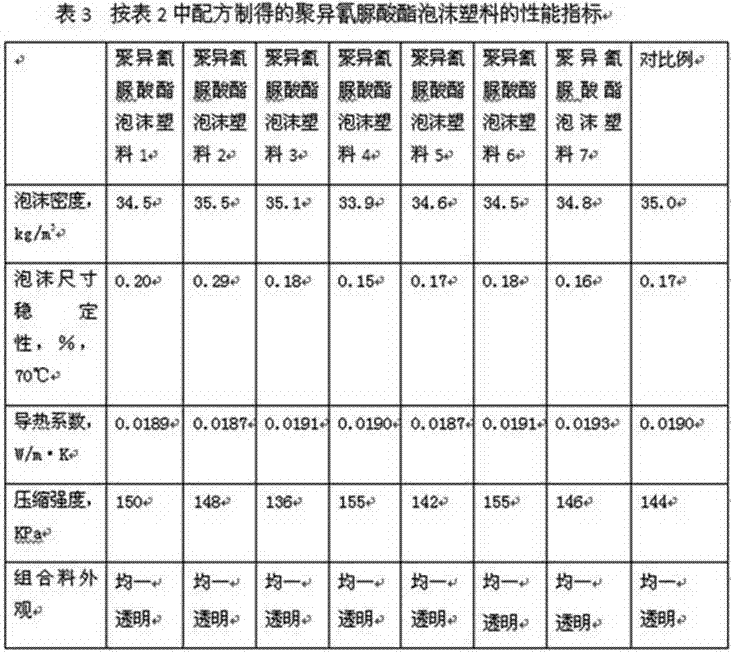
Figure 1 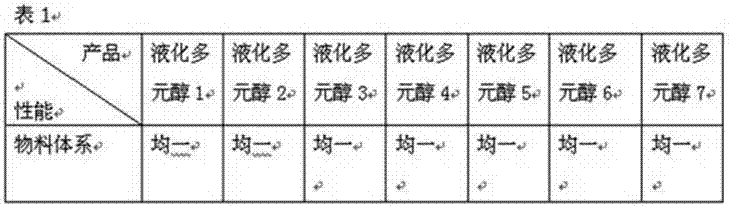
Figure 2 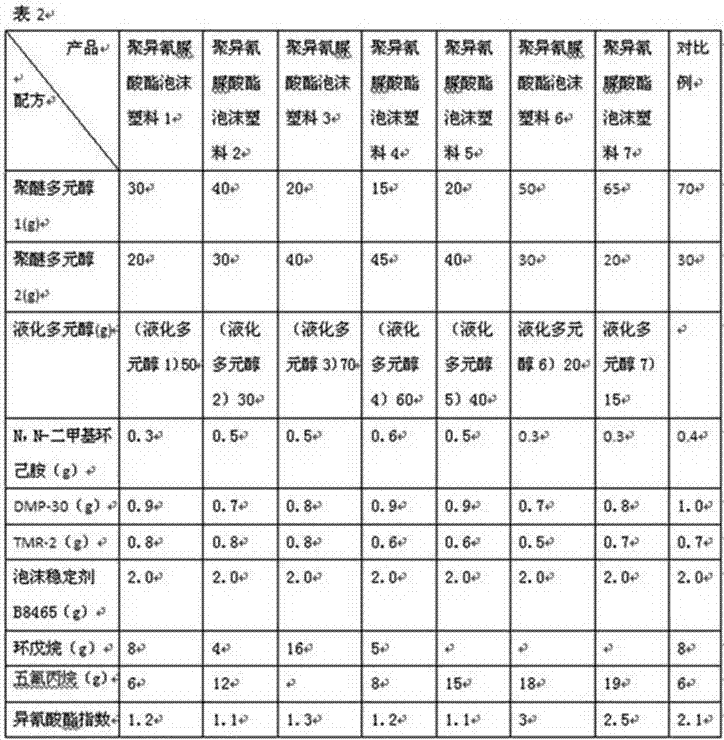
Figure 3
Abstract
Description
technical field
[0001] The invention belongs to the technical field of polymer materials, and in particular relates to a method for liquefying waste polyisocyanurate foam plastics and the liquefied polyol prepared therefrom. Background technique
[0002] Polyisocyanurate foam is an important class of polymer materials, prepared from polyether or polyester and excess polyisocyanurate under the action of a catalyst, because the material contains a large amount of isocyanate trimer The ring makes the polyisocyanurate foam more stable, has excellent heat resistance, cold resistance and flame retardancy, and is widely used in containers, building exterior walls, pipe insulation and other fields.
[0003] Products using polyisocyanurate foam have reached the end of their service life, and a large amount of polyisocyanurate foam waste will be generated after they are scrapped, which are usually disposed of by landfill and incineration, resulting in land waste and air pollution. Du...
Examples
Embodiment 1
[0032] 180 grams of ethylene glycol, H 4 SiW 12 o 40 / SiO 2 (H 4SiW 12 o 40 with SiO 2 The mass ratio is 36%) 3.3 grams, 100 grams of polyisocyanurate foam fragments are added to a 2L stainless steel reactor with a condensation reflux device, stirred and heated to 150 ° C, and then 200 grams of polyisocyanurate foam The fragments were added to the reactor twice (120 grams at a time, 80 grams at a time), nitrogen gas was introduced, and the reaction was kept at normal pressure for 5 hours; 30 grams of diethanolamine was added, and the temperature was raised to 160 °C with stirring, and the pressure of the reaction kettle was filled with nitrogen gas. 0.5MPa, heat preservation reaction for 5h, filter out the catalyst, and obtain liquefied polyol 1.
[0033] The above-mentioned liquefied polyol 1 product index: hydroxyl value 560mgKOH / g, acid value 1.4mgKOH / g, viscosity 12500mPa·s (@25℃), moisture 0.11%.
Embodiment 2
[0035] 200 grams of glycerol, H 3 PW 12 o 40 / SiO 2 (H 3 PW 12 o 40 with SiO 2 The mass ratio is 30%) 4.5 grams, 120 grams of polyisocyanurate foam fragments are added to a 2L stainless steel reactor with a condensing reflux device, stirred and heated to 170 ° C, and then 230 grams of polyisocyanurate foam Add the fragments into the reactor twice (one time 120 grams, one time 110 grams), feed nitrogen, normal pressure, keep warm for 5 hours; add 30 grams of triethanolamine, 5 grams of monoethanolamine, and 10 grams of triisopropanolamine, stir Raise the temperature to 170° C., fill the reactor with nitrogen so that the pressure of the reactor is 0.8 MPa, keep the reaction for 6 hours, filter out the catalyst, and obtain liquefied polyol 2.
[0036] The above-mentioned liquefied polyol 2 product indicators: hydroxyl value 436mgKOH / g, acid value 1.0mgKOH / g, viscosity 8500mPa·s (@25℃), moisture 0.10%.
Embodiment 3
[0038] 120 grams of dipropylene glycol, 40 grams of trimethylolpropane, H 4 SiMo 12 o 40 / C (H 4 SiMo 12 o 40 The mass ratio to activated carbon is 39%) 5.0 grams, 110 grams of polyisocyanurate foam fragments into a 2L stainless steel reactor with a condensing reflux device, stirred and heated to 150 ° C, and then 210 grams of polyisocyanurate The foam plastic fragments were added into the reactor three times (70 grams each time), nitrogen was introduced, and the pressure was maintained for 5 hours; 15 grams of diisopropanolamine was added, and the temperature was raised to 160 °C with nitrogen filling to make the pressure of the reactor 0.8MPa, keep the temperature for 7 hours, filter out the catalyst, and obtain liquefied polyol 3.
[0039] The above liquefied polyol 3 product indicators: hydroxyl value 650mgKOH / g, acid value 1.5mgKOH / g, viscosity 35500mPa·s (@25℃), moisture 0.15%.