

Novel reactive blue dye and preparation method thereof
A blue dye and reactive technology, applied in reactive dyes, dyeing methods, organic dyes, etc., can solve the problems of not bright dyeing shade, poor rubbing fastness, low color fixation rate, etc., and achieve various fastnesses Excellent, high lifting power, high solubility effect
Patent Information
- Authority / Receiving Office
- CN · China
- Patent Type
- Applications(China)
- Current Assignee / Owner
- Publication Date
- 2015-06-03
Smart Images
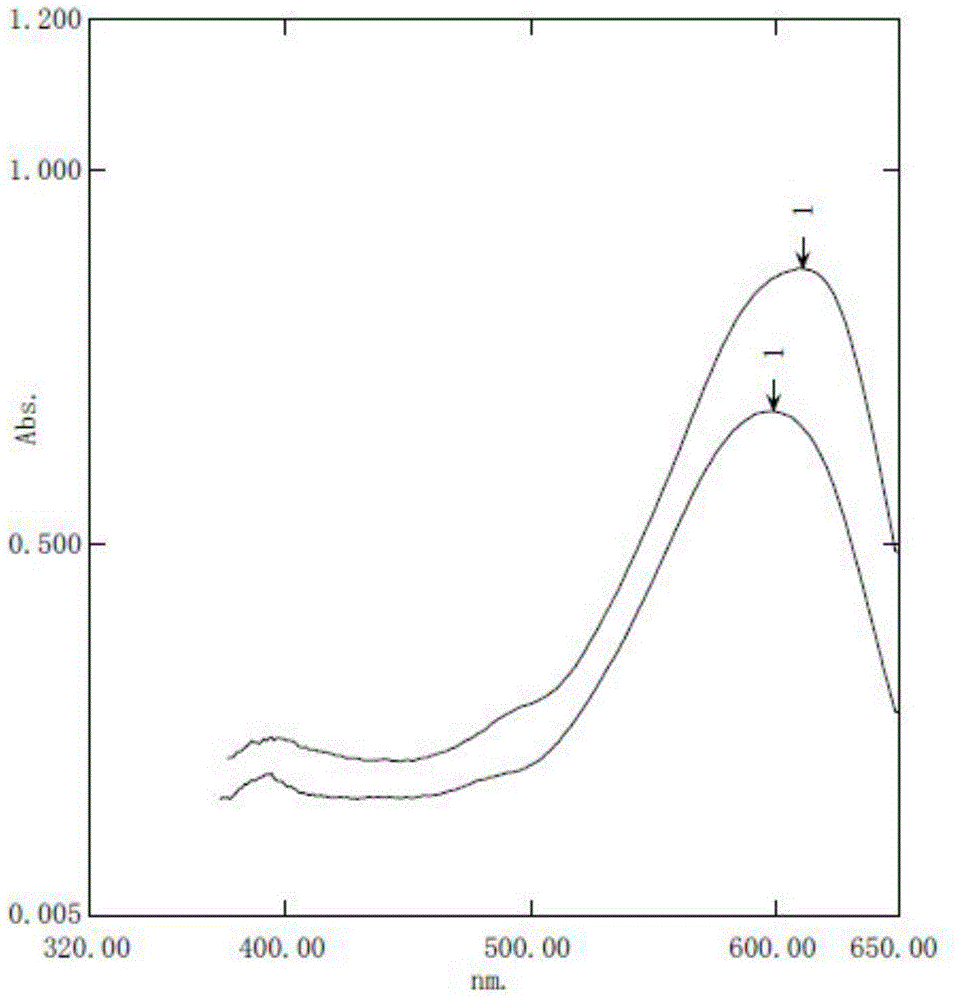
Figure 1 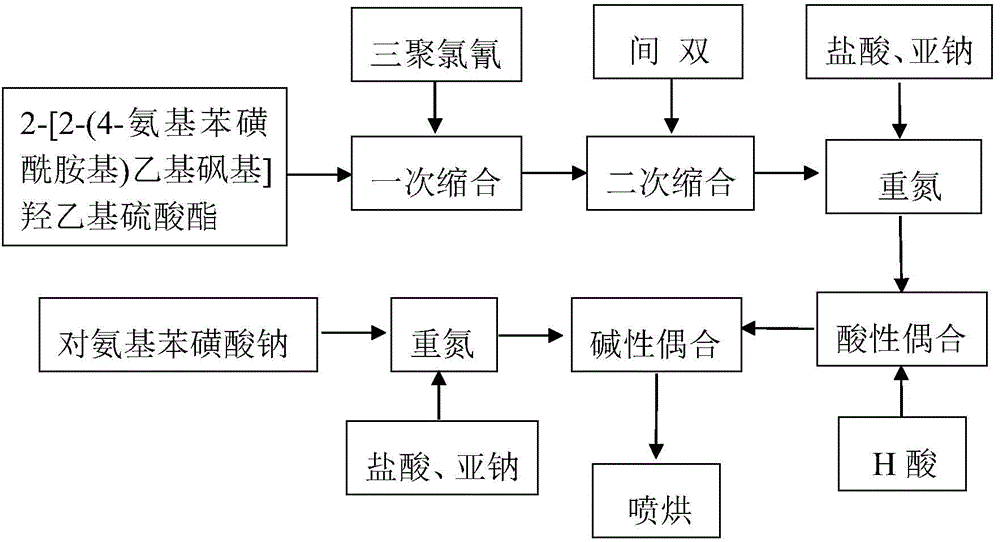
Figure 2 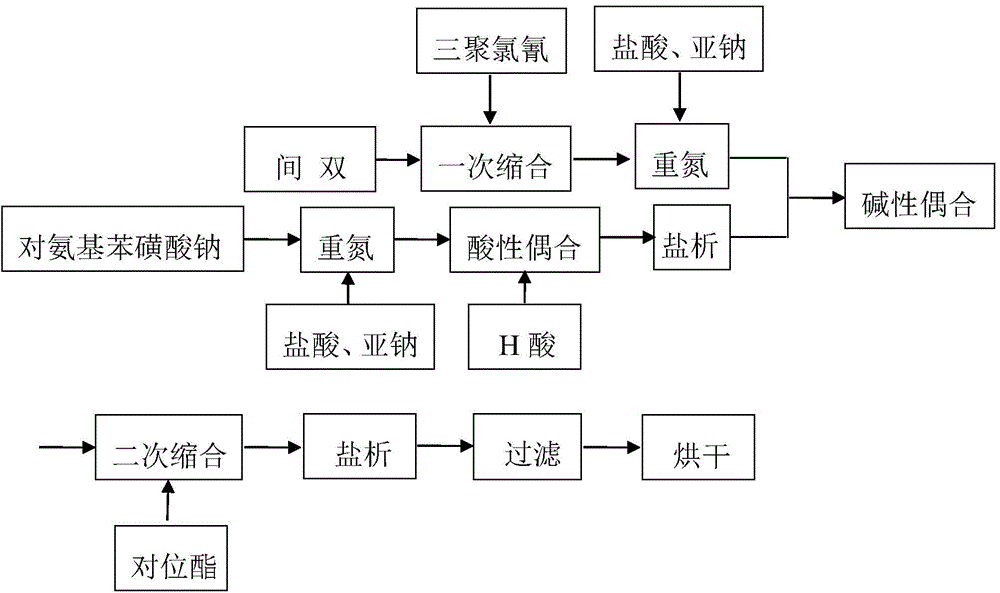
Figure 3
Abstract
Description
technical field
[0001] The invention relates to the technical field of fine chemicals, in particular to a novel reactive blue dye and a preparation method thereof. Background technique
[0002] Blue reactive dye is one of the three primary colors in reactive dyes, the main products are C.I reactive deep blue 194 (reactive deep blue M-2GE), C.I reactive brilliant blue 19 (reactive brilliant blue KN-R), C.I reactive brilliant blue 49 (Active Brilliant Blue SPR), C.I Active Brilliant Blue 74 (Active Brilliant Blue KE-R), etc. Although these blue varieties can be dyed on cellulose fibers to obtain shades of different vividness, C.I Active Brilliant Blue 74 ( Reactive Brilliant Blue KE-R) is light blue, poor dyeing depth, high energy consumption, and low color fixation rate of only 60%; C.I Reactive Brilliant Blue 49 (Reactive Brilliant Blue SPR) can only be used as printing and cannot be dyed, and the shade is partial Red, color fixation rate 62%-65%; C.I Reactive Brilliant Blu...
Examples
Embodiment 1
[0048] 1. Condensation reaction for intermediate preparation
[0049] Add 15.8g of acetanilide to 128g of chlorosulfonic acid and react at 40-65°C for 2 hours, add dropwise 26.7g of thionyl chloride and react for 2 hours, dilute and precipitate and filter to obtain 59g (40%) of wet product p-acetamidobenzenesulfonyl chloride .
[0050] Two, thioether synthesis
[0051] Add 13.5g of 2-chloroethylamine hydrochloride to 8.7g of mercaptoethanol solution under stirring, adjust pH=4.8, and react at 55°C for 4 hours to generate 13.2g of β-hydroxyethylsulfide ethylamine. Cool down to 0°C, slowly add 59g (40%) of the tide product p-acetaminobenzenesulfonyl chloride, adjust pH=3.8, control the temperature at 0-2°C for 4 hours, separate and wash to obtain 30.7g p-acetamidobenzenesulfonamide ethyl -2-Hydroxyethyl sulfide.
[0052] 3. Sulfur ether oxidation
[0053] Add 3.15g of sodium tungstate crystals and 6g of water into the three-necked flask, and add 0.45g of 30% hydrochloric aci...
Embodiment 2
[0069] Steps one to eight are the same as in Example 1.
[0070] 9. Diazotization of 2,5-diaminobenzenesulfonic acid
[0071] Add 5g of water and 60g of ice to a 500ml beaker, add 28.3g (100%) of 2,5-diaminobenzenesulfonic acid and 0.2g of accelerator and beat for 1 hour, add 30g of ice to cool down to 2°C, add 26g of 30% hydrochloric acid And 7.3g sodium nitrite (mixed into 30% sodium nitrite solution), carry out diazonium reaction, control the temperature to be 3~5 ℃ and react for 1 hour, eliminate slightly excessive nitrous acid with a small amount of sulfamic acid.
[0072] 10. Alkaline coupling
[0073] Add the prepared diazonium salt of 2,5-diaminobenzenesulfonic acid into the acid-couple solution cooled to 10°C for base couple, add 10g of ice, adjust the pH value to 7.5-8 with baking soda, and the temperature is 3-5°C React for 3 hours; the dye solution is directly spray-dried to obtain a reddish reactive blue dye, which is all concentrated to obtain 171g of a semi-fi...