
Real-time base line and denoising processing method based on distributed sensing and wavelet analyzing technologies
A technology of distributed sensing and processing methods, applied in complex mathematical operations, measuring devices, instruments, etc., can solve problems such as signal smoothness, loss of static strain signal distortion, loss of key spectrum values, etc., to improve measurement errors and high accuracy And high-precision structural dynamic and static strain measurement, the effect of improving measurement performance
Patent Information
- Authority / Receiving Office
- CN · China
- Current Assignee / Owner
- Publication Date
- 2015-10-28
Smart Images
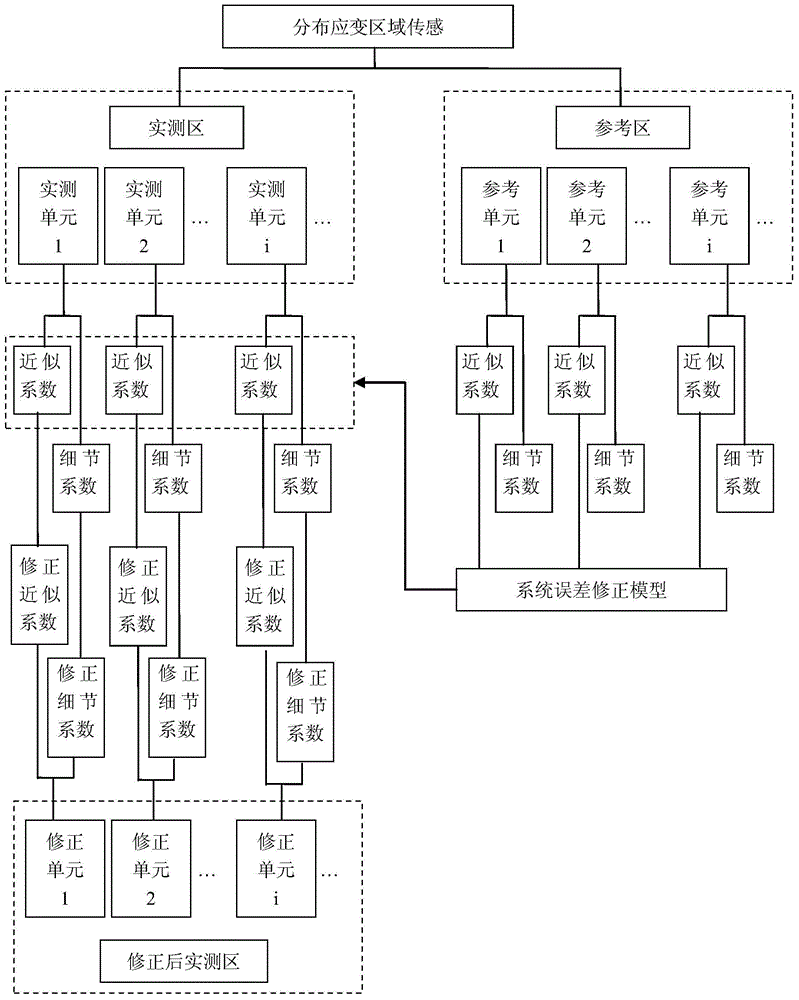
Figure 1 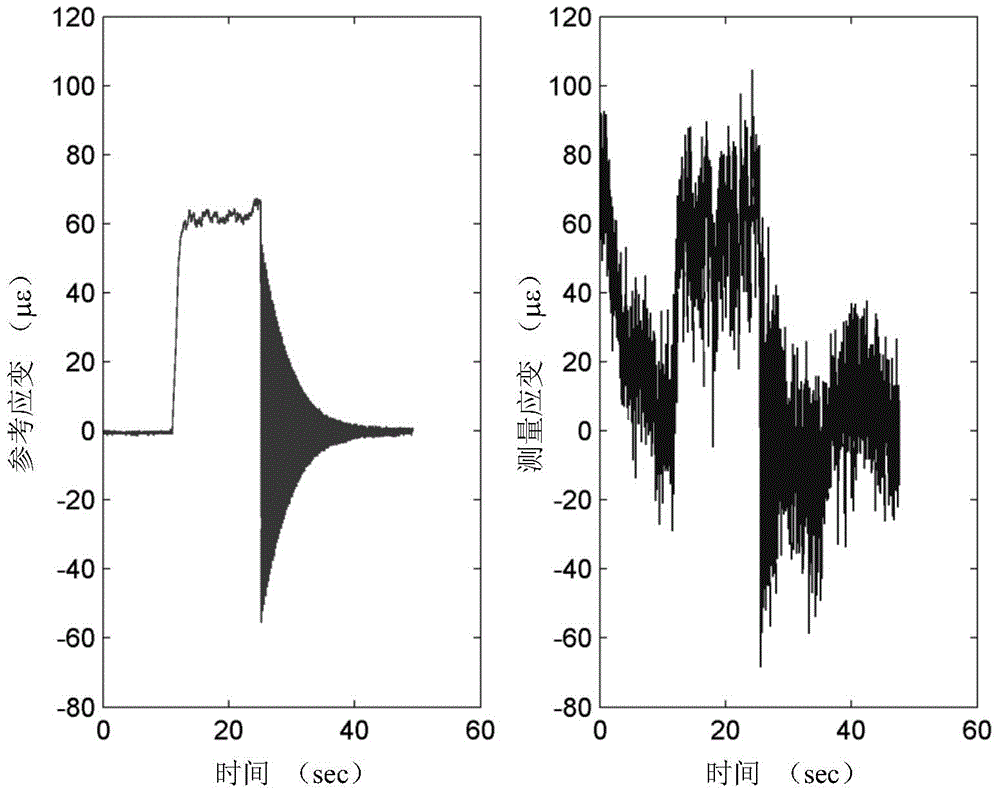
Figure 2 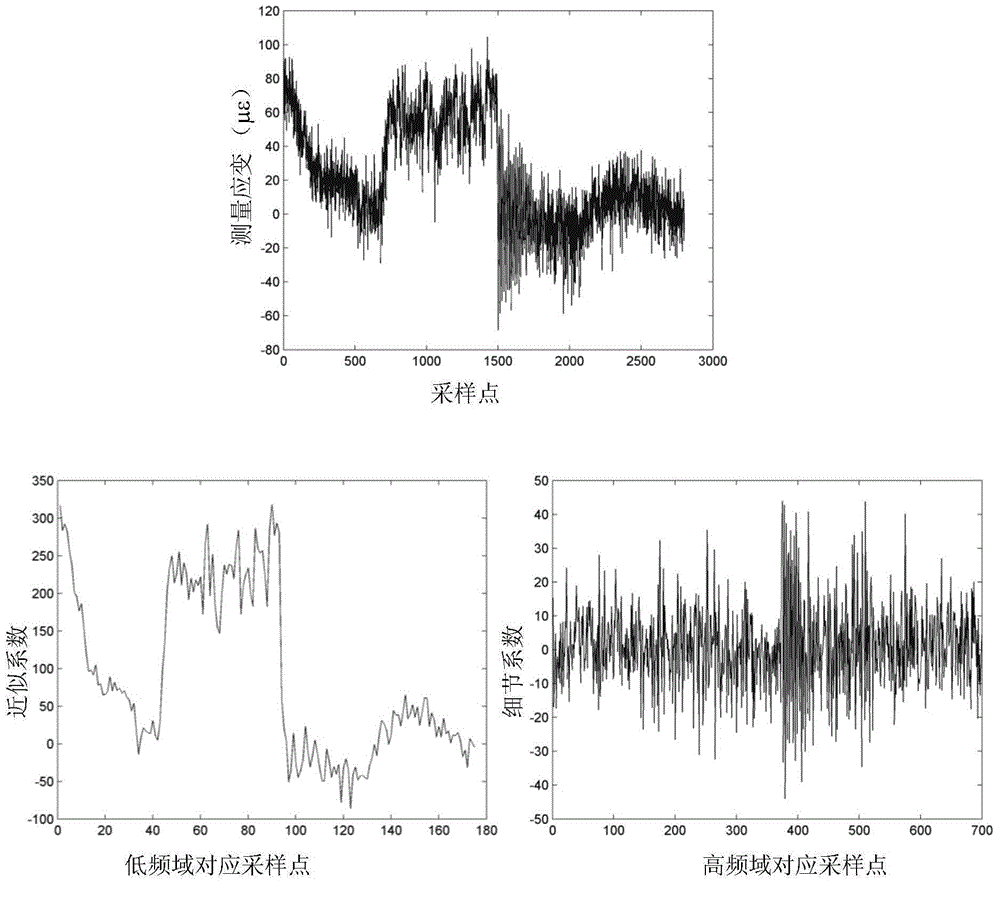
Figure 3
Abstract
Description
technical field
[0001] The invention relates to a real-time baseline and denoising processing method based on distributed sensing, in particular to a real-time baseline and denoising processing method based on optical fiber or carbon fiber strain sensing technology for civil engineering structures. Background technique
[0002] With the rapid development of urban construction in our country, the safety of engineering structures has received extensive attention from all walks of life. In order to solve the safety assessment and safe operation of engineering structures, structural health monitoring systems and related technologies are increasingly being used in major or complex civil engineering structures. Due to the characteristics of optical fiber and carbon fiber strain sensing devices that are suitable for distributed sensing layout and superior durability, more and more engineers and researchers propose to use optical fiber and carbon fiber strain sensing technology to p...
Examples
Embodiment Construction
[0025] Below in conjunction with example the technical scheme of the present invention is described in detail:
[0026] Please refer to figure 1 As shown, step 1: Based on the distributed strain sensing characteristics of optical fiber or carbon fiber, the coverage area of the sensing unit that is in direct contact with the object to be measured and undertakes the strain measurement function is defined as the actual measurement area. The range of the actual measurement area is determined by the monitoring object and the sensor The number of areas is determined; and the unit coverage area that is not in direct contact with the object to be measured and undertakes signal transmission or temperature compensation functions is defined as the reference area.
[0027] Step 2: Decompose the real-time signals of the L measurement points contained in the reference area layer by layer through tree wavelet decomposition, and stop the decomposition when the maximum frequency contained in...