
Site-specific insertional inactivation method and application mediated by agrobacterium tumefaciens and CRISPR/Cas9
A technology of Agrobacterium tumefaciens and genes, applied in biochemical equipment and methods, viruses/bacteriophages, DNA/RNA fragments, etc., can solve problems such as inability to insert precisely at specific sites
Patent Information
- Authority / Receiving Office
- CN · China
- Current Assignee / Owner
- Publication Date
- 2017-02-22
Smart Images
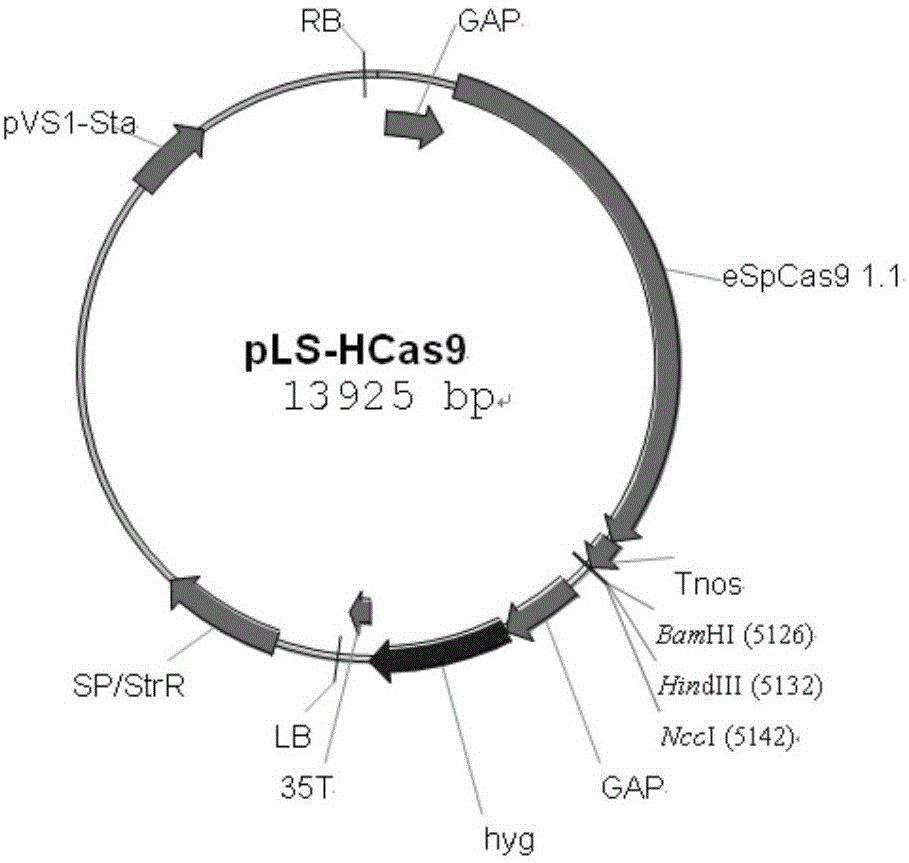
Figure 1 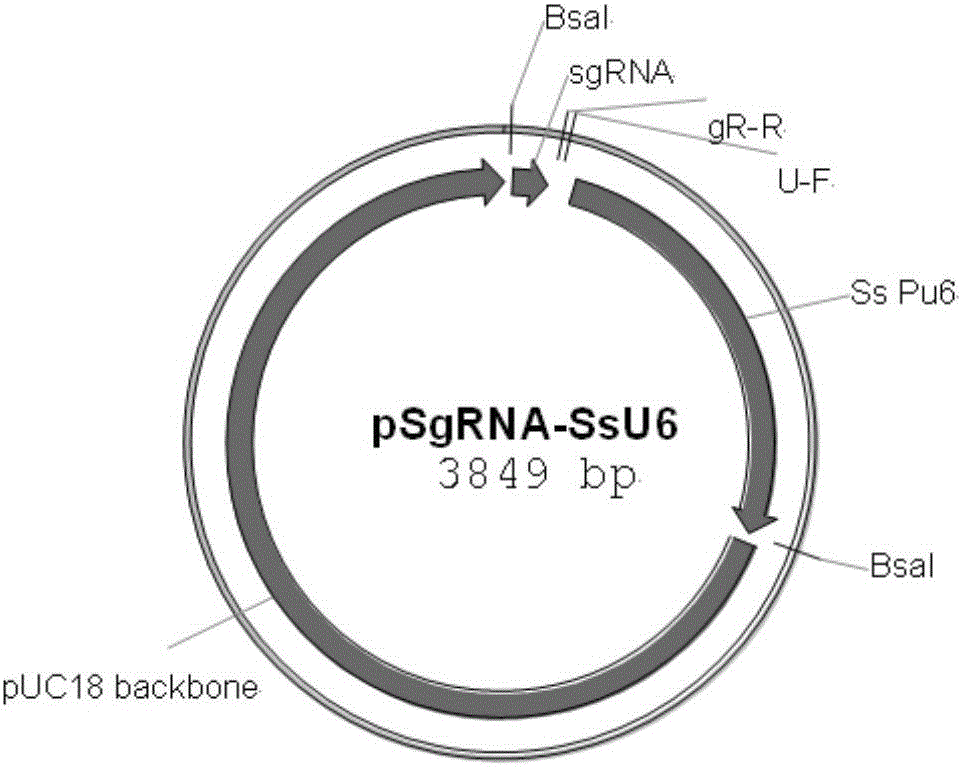
Figure 2 
Figure 3
Abstract
Description
technical field
[0001] The invention belongs to a molecular tool and an experimental system for fungal gene knockout in the field of microbial genetic engineering, and in particular relates to a gene-directed insertion inactivation method mediated by Agrobacterium tumefaciens and CRISPR-Cas9 and its application. Background technique
[0002] Sugarcane whip smut (Sporisorium scitamineum) is the pathogenic bacterium of sugarcane smut, which belongs to Basidiomycotina smut. The sugarcane smut caused by it is a global disease, which has caused great harm to sugarcane production in my country. There are three distinct stages in the life cycle of Ustilago sativa: yeast-like haploid, dikaryotic hyphae, and diploid teliospores.
[0003] Gene inactivation technology is a genetic engineering technology that changes the specific gene sequence by changing the genetic genes of organisms, resulting in gene inactivation and loss of function, and then deduces the biological function of the...
Examples
Embodiment Construction
[0025]The Agrobacterium tumefaciens and CRISPR-Cas9-mediated gene site-directed insertion inactivation method of the present invention is through the endogenous U6 gene promoter (Ss PU6, the base sequence of SEQ.ID.No.17; Ss U6RNA, the base sequence of SEQ.ID.No.18) was fused with the target sequence of the inserted site and the sgRNA sequence by Overlapping PCR, and recombined with the endogenous gapd gene of Ustilago sativa by In-fusion technology In the binary vector of the Cas9 gene and hygromycin resistance gene driven by the subunit; then Agrobacterium tumefaciens carrying the binary vector mediated the transformation of Ustilago sativa so as to achieve the site-directed insertion of the Ustilago sativa genome .
[0026] In order to further clarify the above inventive concept, the sugarcane smut pheromone gene mfa2 is taken as an example for illustration. The experimental methods in the following examples, unless otherwise specified, are conventional methods; the experi...