
Photo-responsive quaternary cationic surfactant capable of forming wormlike micelle and synthetic method thereof
A technology of surfactants and worm-like micelles, which is applied to light-responsive quaternary ammonium salt cationic surfactants. In the field of synthesis of this surfactant, it can solve the problem of few reports of worm-like micelles and achieve good light Responsiveness and bactericidal properties, mild synthesis conditions, and high yield effects
Patent Information
- Authority / Receiving Office
- CN · China
- Patent Type
- Applications(China)
- Current Assignee / Owner
- Publication Date
- 2017-06-30
Smart Images
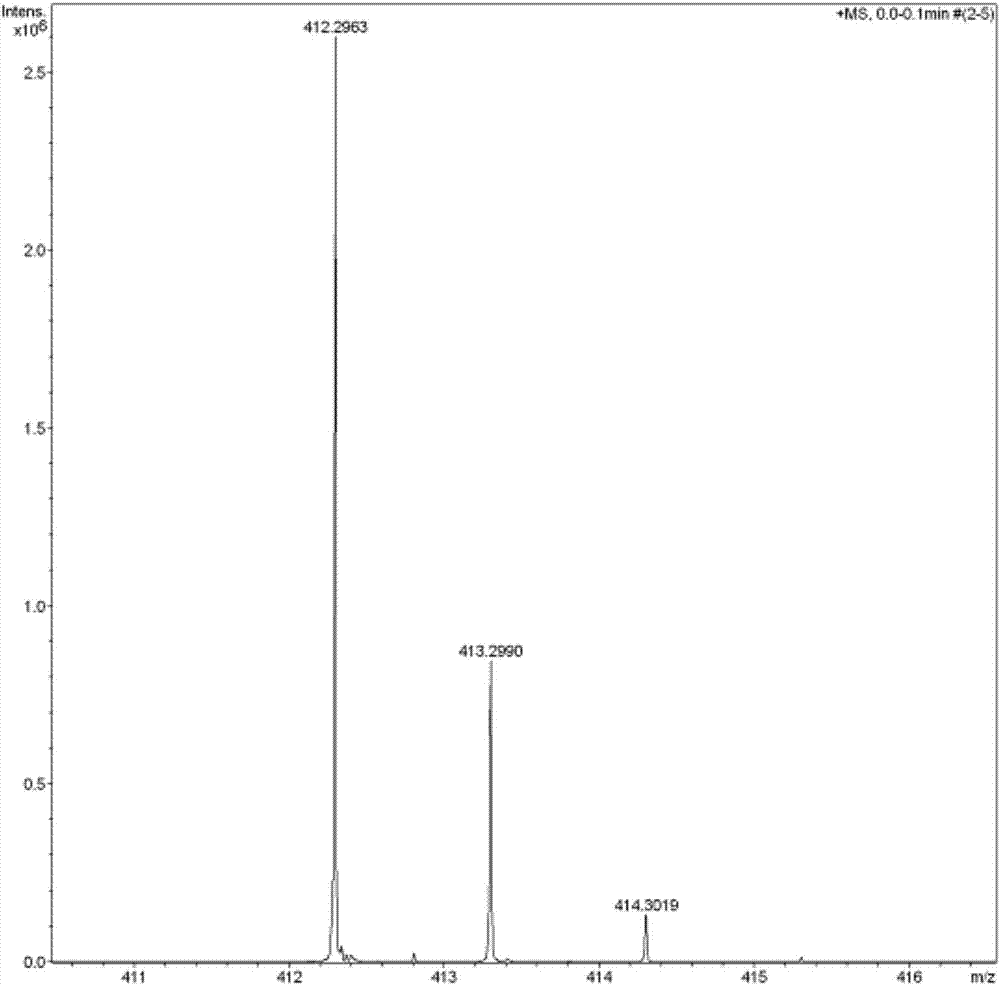
Figure 1 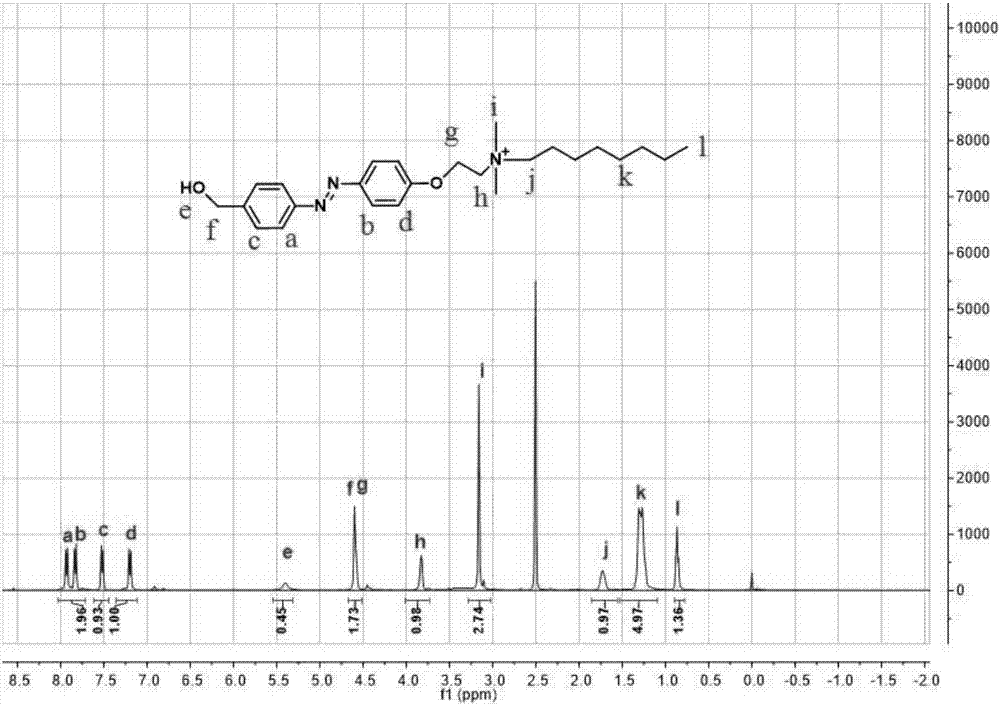
Figure 2 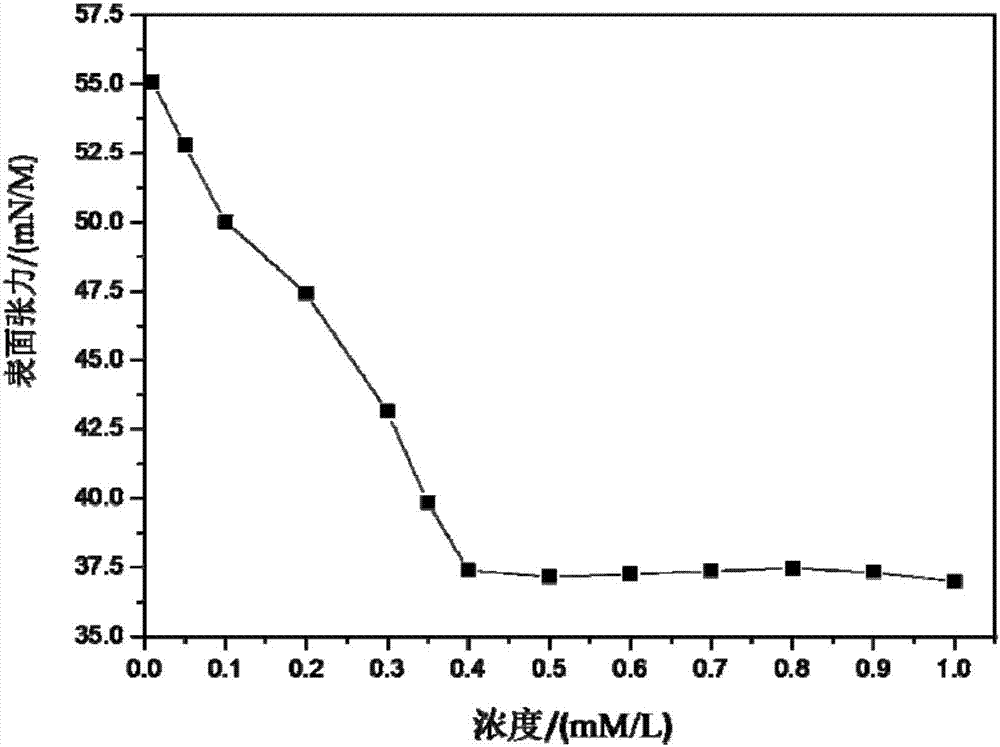
Figure 3
Abstract
Description
technical field
[0001] The invention belongs to the technical field of organic synthesis and fine chemical industry, and specifically relates to a light-responsive quaternary ammonium salt cationic surfactant capable of forming worm-like micelles and containing azophenyl groups, and a method for synthesizing the surfactant. Background technique
[0002] In recent years, more and more synthesis and properties of responsive surfactants have been studied and applied. In many environmental stimulation conditions, such as: light, pH value, temperature, ionic strength, electric field, magnetic field, solvent, etc., due to the advantages of light (visible light, ultraviolet light, infrared light) being easy to obtain, easy to carry and operate, etc. researchers concerned. Usually, there are many groups that are photoresponsive, such as azophenyl group, stilbene group, spiropyran group, etc., introducing specific photoresponsive groups into surfactant molecules or When a photoresp...
Examples
Embodiment 1
[0038] Synthesis of light-responsive quaternary ammonium salt cationic surfactants with the following structural formula
[0039]
[0040] 1. Synthesis of p-hydroxybenzoic alcohol
[0041] Dissolve 0.450g (12mmol) of sodium borohydride in 20mL of ethanol, then add the resulting solution dropwise to 1.300g (6mmol) of p-hydroxyazobenzaldehyde, stir at room temperature until no bubbles emerge, and reflux at 40°C for 12 hours. After the reaction, add 10 mL of deionized water at room temperature, stir for 10 minutes to quench the reaction, then adjust the pH to neutral with dilute hydrochloric acid, filter and dry the filter cake after stirring for 10 minutes, and the obtained shiny brown solid is p-Hydroxyazobenzyl alcohol, its yield is 91.1%.
[0042] 2. Synthesis of 4′-bromoethoxyazobenzyl alcohol
[0043] Dissolve 0.456g (2mmol) p-hydroxyazobenzyl alcohol and 0.320g (8mmol) NaOH into 8mL distilled water, then add 20mL absolute ethanol, and add the resulting mixture dropwis...
Embodiment 2
[0048] Synthesis of light-responsive quaternary ammonium salt cationic surfactants with the following structural formula
[0049]
[0050] In Example 1, N,N-dimethyl n-octylamine was replaced with equimolar N,N-dimethyldodecylamine, other steps were the same as in Example 1, and the shiny yellow solid obtained was The photoresponsive quaternary ammonium salt cationic surfactant has a yield of 72.4%.
[0051] The resulting light-responsive quaternary ammonium salt cationic surfactant was characterized by mass spectrometer and nuclear magnetic resonance spectrometer, the results are shown in Figure 7 and Figure 8 . The relative molecular weight of the compound is 548, and its mass spectrum molecular ion peak should be M + ,Depend on Figure 7 It can be seen that the molecular isotope ion peak of the synthesized compound is 469.36, and the corresponding ion peak is M + +1; Figure 8 In , each hydrogen in the compound has a one-to-one correspondence with the chemical sh...
Embodiment 3
[0053] Synthesis of light-responsive quaternary ammonium salt cationic surfactants with the following structural formula
[0054]
[0055] In Example 1, N,N-dimethyl n-octylamine was replaced with equimolar N,N-dimethylhexadecylamine, other steps were the same as in Example 1, and the shiny yellow solid obtained was The photoresponsive quaternary ammonium salt cationic surfactant has a yield of 64.2%.
[0056] The resulting light-responsive quaternary ammonium salt cationic surfactant was characterized by mass spectrometer and nuclear magnetic resonance spectrometer, the results are shown in Figure 11 and Figure 12 . The relative molecular weight of the compound is 604, and its mass spectrum molecular ion peak should be M + ,Depend on Figure 11 It can be seen that the molecular isotope ion peak of the synthesized compound is 525.42, and the corresponding ion peak is M + +1; Figure 12 In , each hydrogen in the compound has a one-to-one correspondence with the chemi...