
Disease-resistant Toll9 protein of prawns, cDNA for encoding Toll9 protein and application of Toll9 protein
A technology for shrimp and protein, applied in the direction of anti-animal/human immunoglobulins, antiviral agents, peptide/protein components, etc., can solve the problem of sharp decline in shrimp farming production
Patent Information
- Authority / Receiving Office
- CN · China
- Patent Type
- Applications(China)
- Current Assignee / Owner
- Publication Date
- 2017-11-24
Smart Images
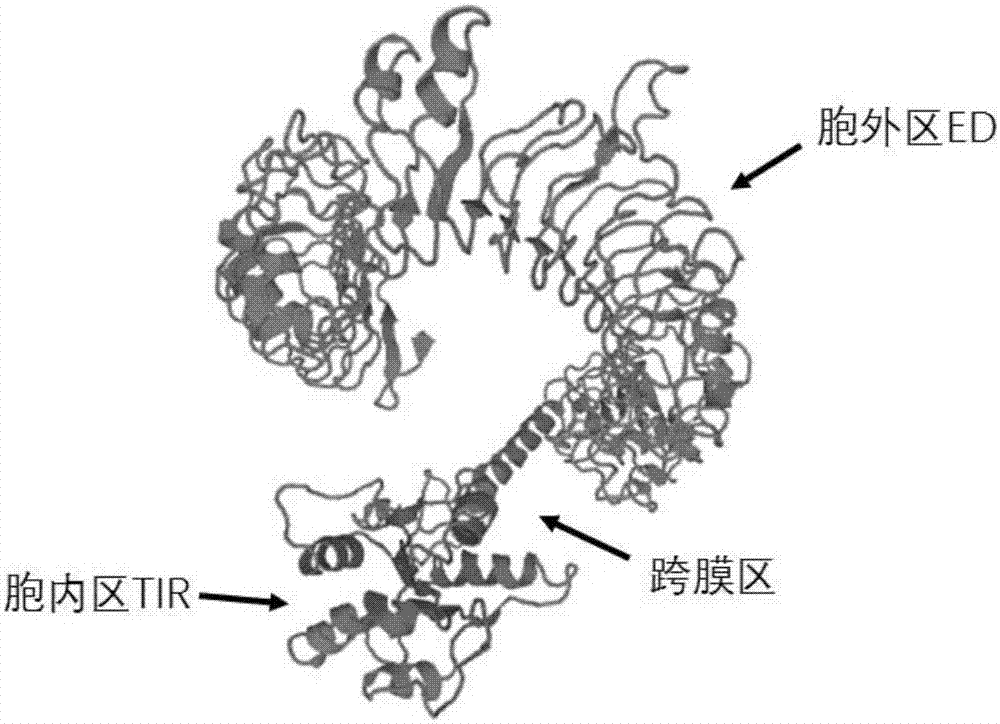
Figure 1 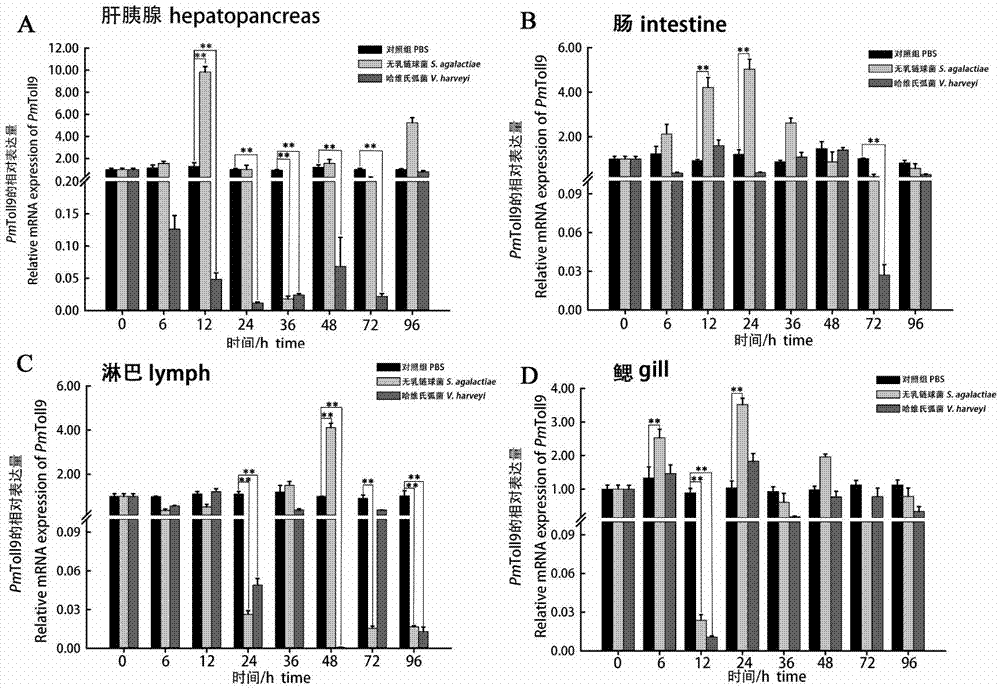
Figure 2 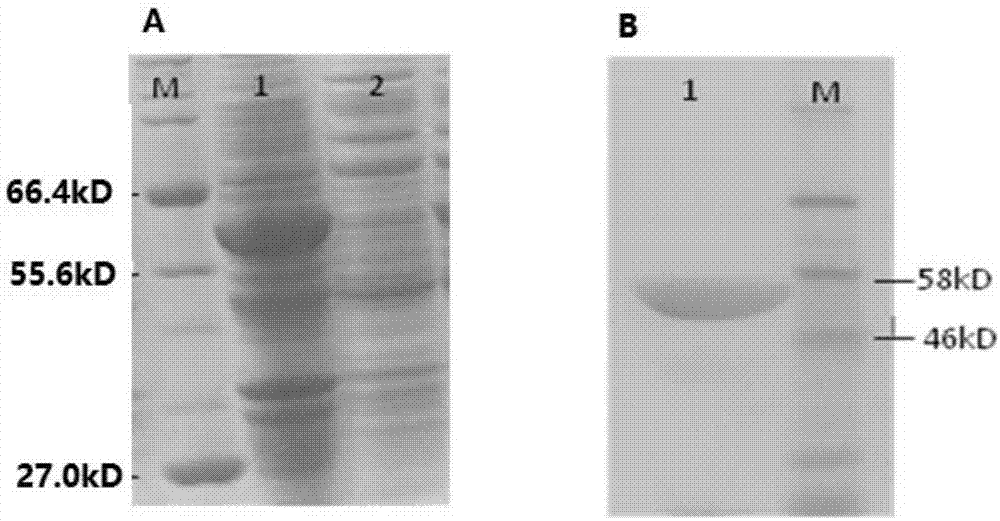
Figure 3
Abstract
Description
technical field
[0001] The invention belongs to the field of biotechnology, and in particular relates to a disease-resistant Toll9 protein and its encoded cDNA, and the use of the disease-resistant Toll9 protein of prawns and its encoded cDNA in resisting ammonia nitrogen stress, reducing the mortality rate of prawns infected by bacteria, and in the selection and breeding of prawns. use. Background technique
[0002] my country is a big country in prawn farming, and the prawn output of my country's cultivation in 2005 was more than 1,000,000 tons, accounting for 50% of the world's total prawn output. In recent years, due to a series of problems such as the deterioration of the breeding ecological environment, the frequent occurrence of non-infectious diseases and infectious diseases, the occurrence of infectious diseases (such as viral, bacterial and fungal diseases, etc.) is particularly serious, which has caused the shrimp farming industry to suffer. Considerable losses w...
Examples
Embodiment Construction
[0041] The present invention will be further elaborated below through the following specific embodiments.
[0042] 1. Extraction of total RNA and construction of full-length cDNA library of hepatopancreas
[0043] 1.1 Extraction of total RNA
[0044] Fresh and live healthy Penaeus monodon (body weight about 150g) was temporarily raised in the laboratory for 3 days (water temperature was about 24°C, air pump was inflated), and the body of the shrimp was dissected, and about 100 mg of the hepatopancreas was taken out and put into 1 mL of RLT Buffer (Qiagen, USA) Perform low-temperature grinding, extract total RNA according to the instructions of the Qiagen Mini kit, and use DNase digestion to remove the genome.
[0045] 1.2 Preparation of full-length cDNA template of hepatopancreas
[0046] A full-length cDNA template was prepared according to the GeneRacer kit (Invitrogen, USA). Take 3 μg of total RNA and remove the RNA 5' phosphate group by calf alkaline phosphatase (CIP) r...