
A kind of aqueous electrolyte and aqueous metal ion battery
A metal ion and electrolyte technology, applied in secondary batteries, circuits, electrical components, etc., can solve the problems of material dissolution, low capacity retention rate or Coulomb efficiency, achieve a large electrochemical window, inhibit hydrogen evolution/oxygen evolution, etc. The effect of reaction, good conduction effect
Patent Information
- Authority / Receiving Office
- CN · China
- Patent Type
- Patents(China)
- Current Assignee / Owner
- Publication Date
- 2020-05-26
Smart Images
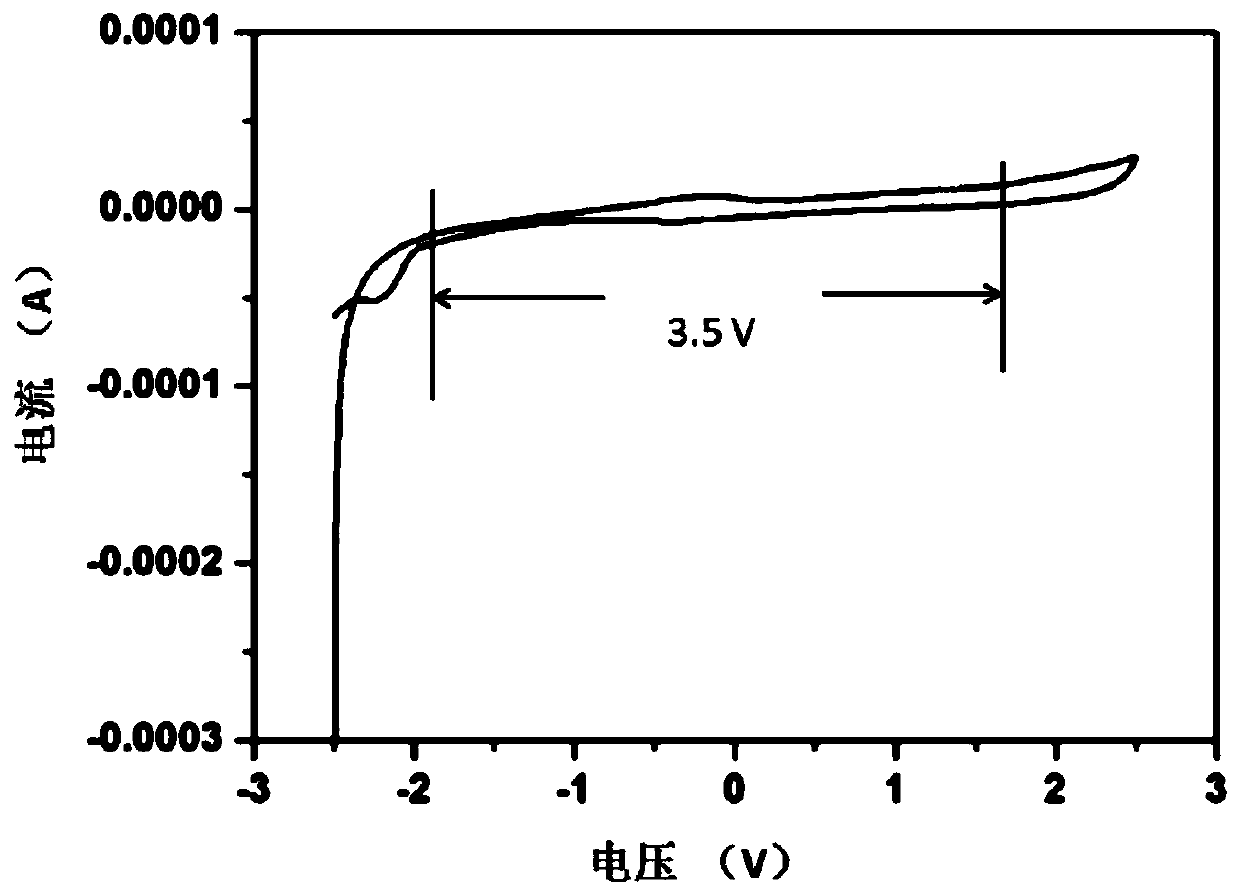
Figure 1 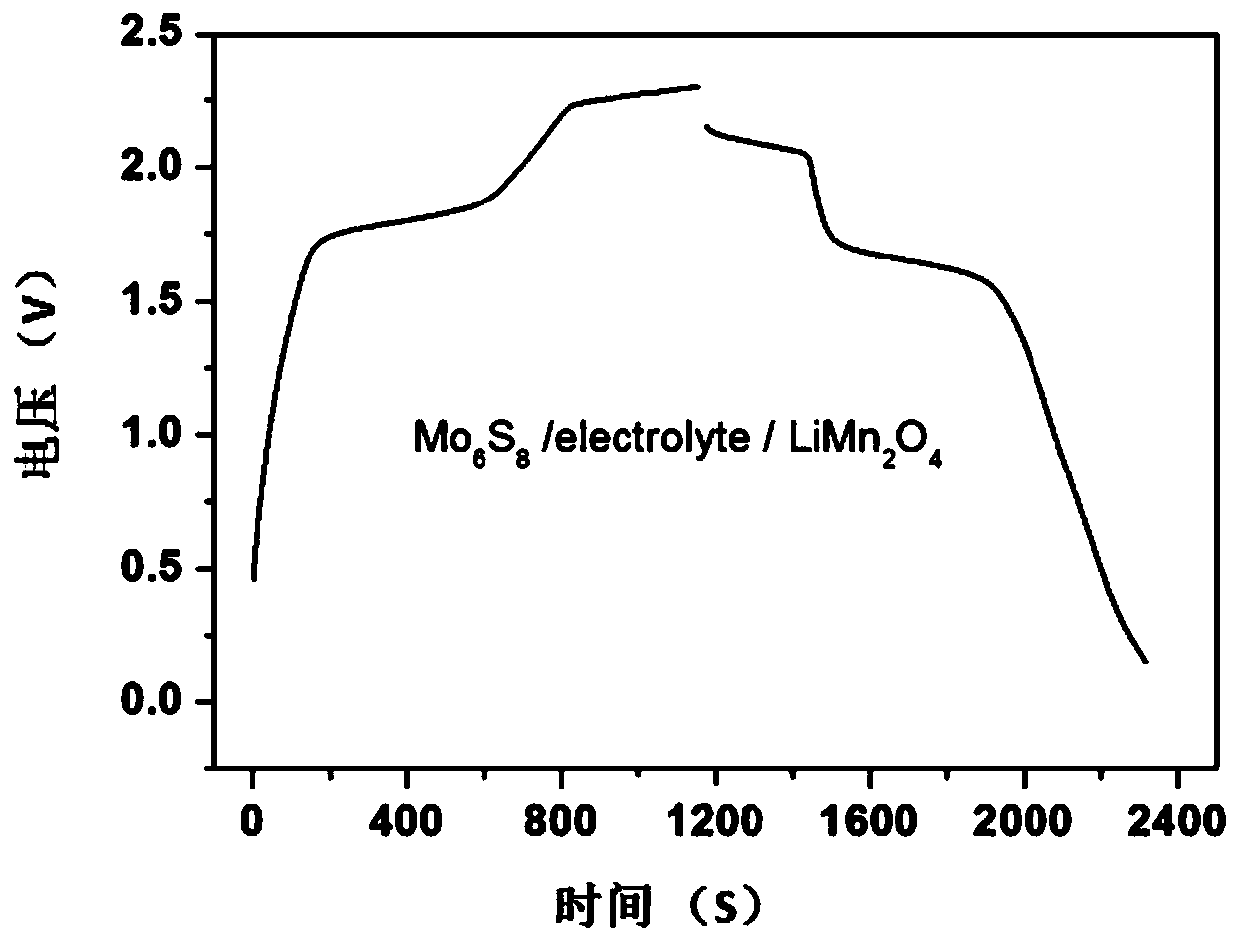
Figure 2 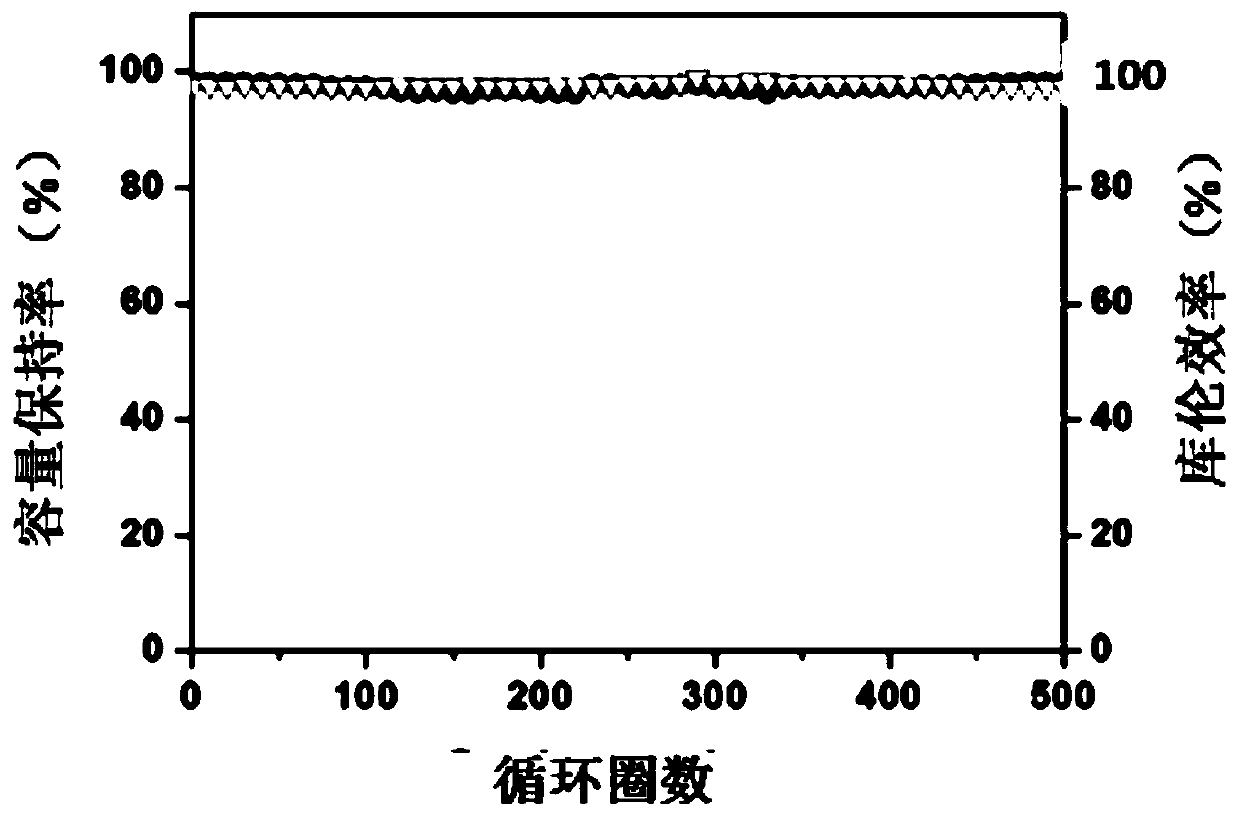
Figure 3
Abstract
Description
technical field
[0001] The invention belongs to the technical field of lithium ion batteries, in particular to an aqueous electrolyte and an aqueous metal ion battery. Background technique
[0002] With the continuous consumption of fossil energy and the increasing demand for energy for human development, it is imperative to develop renewable energy. It is imperative to develop renewable energy to transform intermittent energy such as solar energy, wind energy, and tidal energy into continuous energy supply. The key to the energy crisis and environmental pressure, so energy storage devices have become a research hotspot. Secondary batteries have attracted extensive attention due to their high energy density, long cycle life, and high voltage. However, traditional secondary batteries (nickel metal hydride batteries, lithium-ion batteries) use organic electrolytes, and the batteries have disadvantages such as flammability, toxicity, high production costs, and strict assembly ...
Examples
Embodiment 1
[0042] Dimethyl sulfone, LiClO 4 (anhydrous) and H 2 O was mixed according to the molar ratio of 1:0.5:0.25, heated and stirred at 80°C, and allowed to cool to room temperature to obtain an aqueous electrolyte.
[0043] Then, the glassy carbon electrode was used as the working electrode, the platinum wire electrode was used as the counter electrode, and the silver-silver chloride electrode was used as the reference electrode, and a three-electrode system was used for testing.
[0044] The above-mentioned three-electrode system was subjected to a cyclic voltammetry test on a strong transmission (UK strong transmission) with a voltage range of -2.5 volts to 2.5 volts and a scan rate of 20 mV / S.
[0045] figure 1 For the cyclic voltammetry curve that the embodiment of the present invention 1 obtains, by figure 1 It can be seen that the voltage window of the electrolyte solution in Example 1 of the present invention reaches 3.5V.
Embodiment 2
[0047] Dimethyl sulfone, LiClO 4 .3H 2 O, LiClO 4 (Anhydrous) Mix according to the molar ratio of 2:0.33:0.67, heat and stir at 80°C, and let it cool to room temperature to obtain an aqueous electrolyte.
[0048] Then, with Mo 6 S 8 as the negative electrode, LiMn 2 o 4 As the positive electrode, a full battery is assembled without a separator. Wherein, the positive and negative electrode slurries are prepared according to m (active material): m (polyvinylidene fluoride, PVDF): m (acetylene black) = 75:10:15, and the prepared slurry is applied to the Ti grid , the mass of the positive electrode is about 5-8mg, and the mass of the negative electrode is 30%-40% greater than that of the positive electrode. Put the coated pole pieces into an oven at 80°C, and bake in an air atmosphere for 13 hours.
[0049] The above-mentioned aqueous metal ion battery was subjected to a constant rate charge and discharge test on a Land tester (Wuhan Xinnuo Electronics Co., Ltd.), the char...
Embodiment 3
[0052] Dimethyl sulfone, LiClO 4 (anhydrous) and H 2 O was mixed according to the molar ratio of 2:1:0.5, heated and stirred at 80°C, and allowed to cool to room temperature to obtain an aqueous electrolyte.
[0053] Then, with Mo 6 S 8 as the negative electrode, LiMn 2 o 4 As the positive electrode, a full battery is assembled without a separator. Wherein, the positive and negative electrode slurries are prepared according to m (active material): m (polyvinylidene fluoride, PVDF): m (acetylene black) = 75:10:15, and the prepared slurry is applied to the Ti grid , the mass of the positive electrode is about 5-8mg, and the mass of the negative electrode is 30%-40% greater than that of the positive electrode. The coated pole pieces were placed in an oven at 80° C. and baked in an air atmosphere for 13 hours to obtain a water-based metal ion battery.
[0054] The above-mentioned aqueous metal ion battery was subjected to a constant rate charge and discharge test on a Land ...