
A method for evaluating DNA damage of plants by detecting radioactive gas radon by using Usnea
A radioactive gas, DNA damage technology, applied in the preparation of test samples, measurement devices, sampling, etc., can solve problems such as difficulty in separating cell nuclei
Patent Information
- Authority / Receiving Office
- CN · China
- Patent Type
- Patents(China)
- Current Assignee / Owner
- Publication Date
- 2020-05-26
- Estimated Expiration
- Not applicable · inactive patent
Smart Images
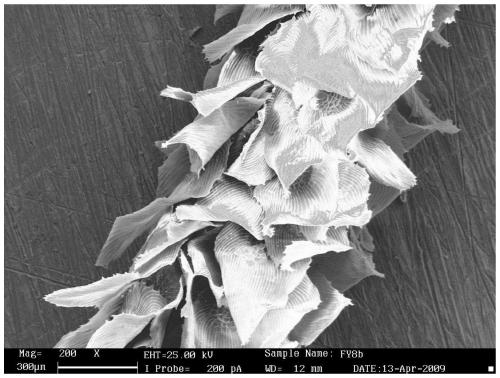
Figure 1 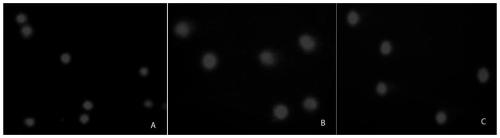
Figure 2 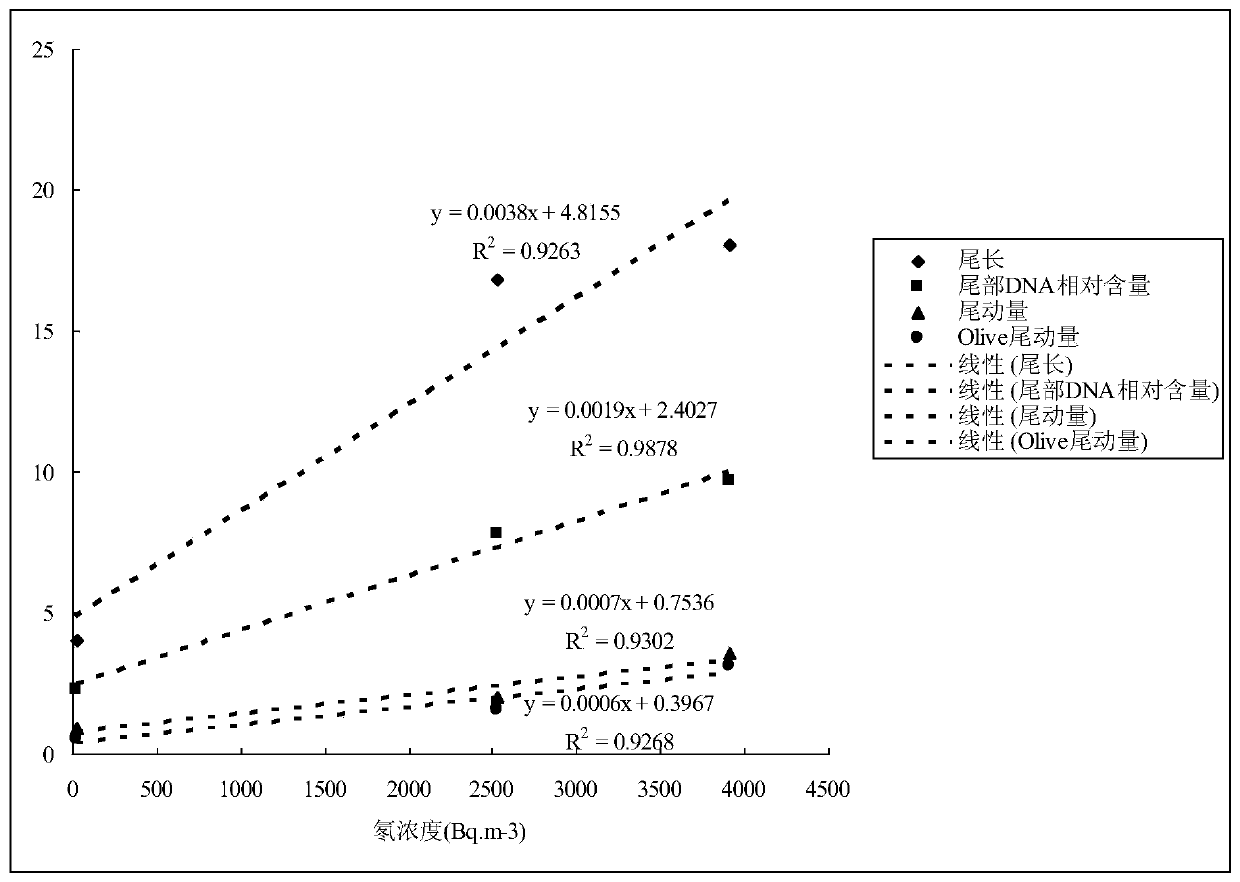
Figure 3
Abstract
Description
technical field
[0001] The invention belongs to the technical field of air pollutant toxicity evaluation, and in particular relates to an evaluation method for plant DNA damage caused by radioactive gas radon. Background technique
[0002] radon( 222 Rn) is uranium ( 238 U) in the decay chain of radium ( 226 Ra) decay product with a half-life of 3.82d. because 226 Ra widely exists in various geological environments such as rocks and soils, so radon widely exists in the atmosphere and is the most important natural radioactive gas in nature. The accumulation of radon in human lungs can easily lead to lung cancer and other cancers, which has attracted great attention from governments and people all over the world. The International Agency for Research on Cancer (IARC) has classified radon and its progeny as a class I carcinogen, and the World Health Organization (WHO) also regards radon as one of the 19 human carcinogens.
[0003] The damage of radon and other radioactive...
Examples
Embodiment
[0030] 1. Putting radon in plant samples
[0031] Choose Usnea as the experimental material. Because Usnea is an epiphyte, it does not need to grow in the soil and is in a clump shape. Therefore, weigh 3 clumps of healthy Usnea with a balance, each 200g, and divide them into a control group (the effect of the control group is shown in Table 1, and the degree of damage can be compared only if there is a control group) and two experimental groups. The control group was placed in a normal environment (the radon concentration was about 20Bq / m 3 ), the experimental group was placed at 1m 3 Treatment was carried out in the radon chamber, the initial exposure concentrations were 3910 and 2530Bq / m 3 . Evenly hang the usnea in a fixed position in the radon chamber with thin wires. Through the radon source ( 226 Ra) is charged with radon gas, the concentration of radon in the room is increased to the initial concentration, and the supply of radon is stopped, so that the plants are...