
Carbon fiber brake pad material with porous structure and preparation method of carbon fiber brake pad material
A porous structure, carbon fiber technology, used in chemical instruments and methods, friction linings, mechanical equipment, etc., can solve the problem that carbon fibers cannot effectively transmit loads, affect the strength and wear resistance of composite materials, and the friction coefficient and wear rate fluctuations are relatively high. Large and other problems, to achieve the effect of increasing the effective bonding area, improving the tensile strain capacity, and reducing damage
Patent Information
- Authority / Receiving Office
- CN · China
- Patent Type
- Applications(China)
- Current Assignee / Owner
- Publication Date
- 2018-10-16
Smart Images
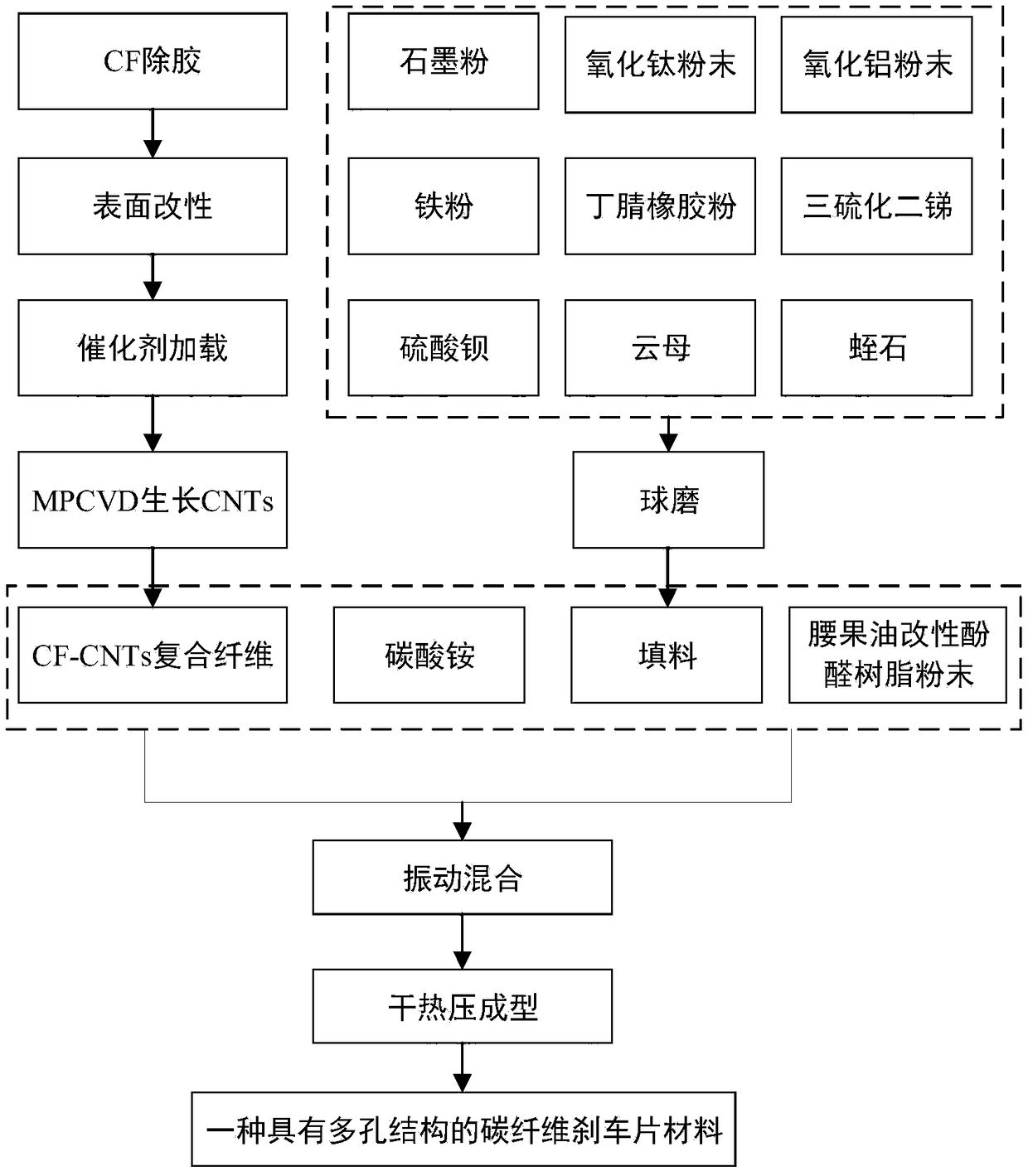
Figure 1 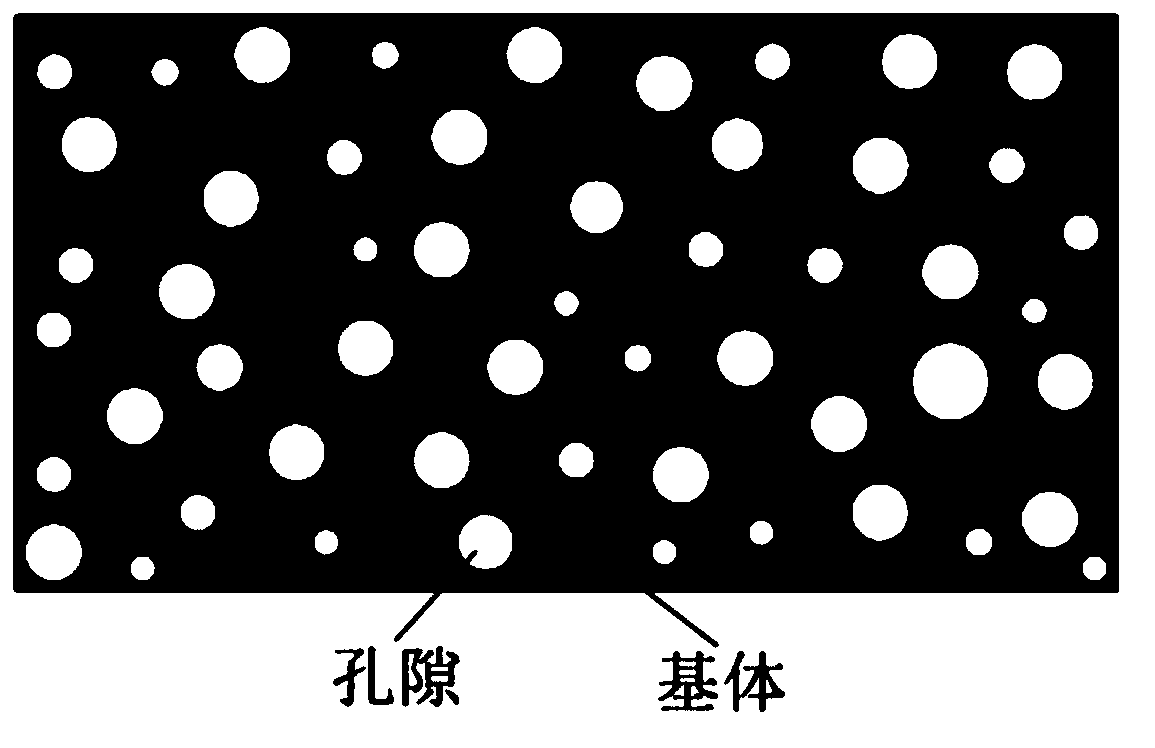
Figure 2 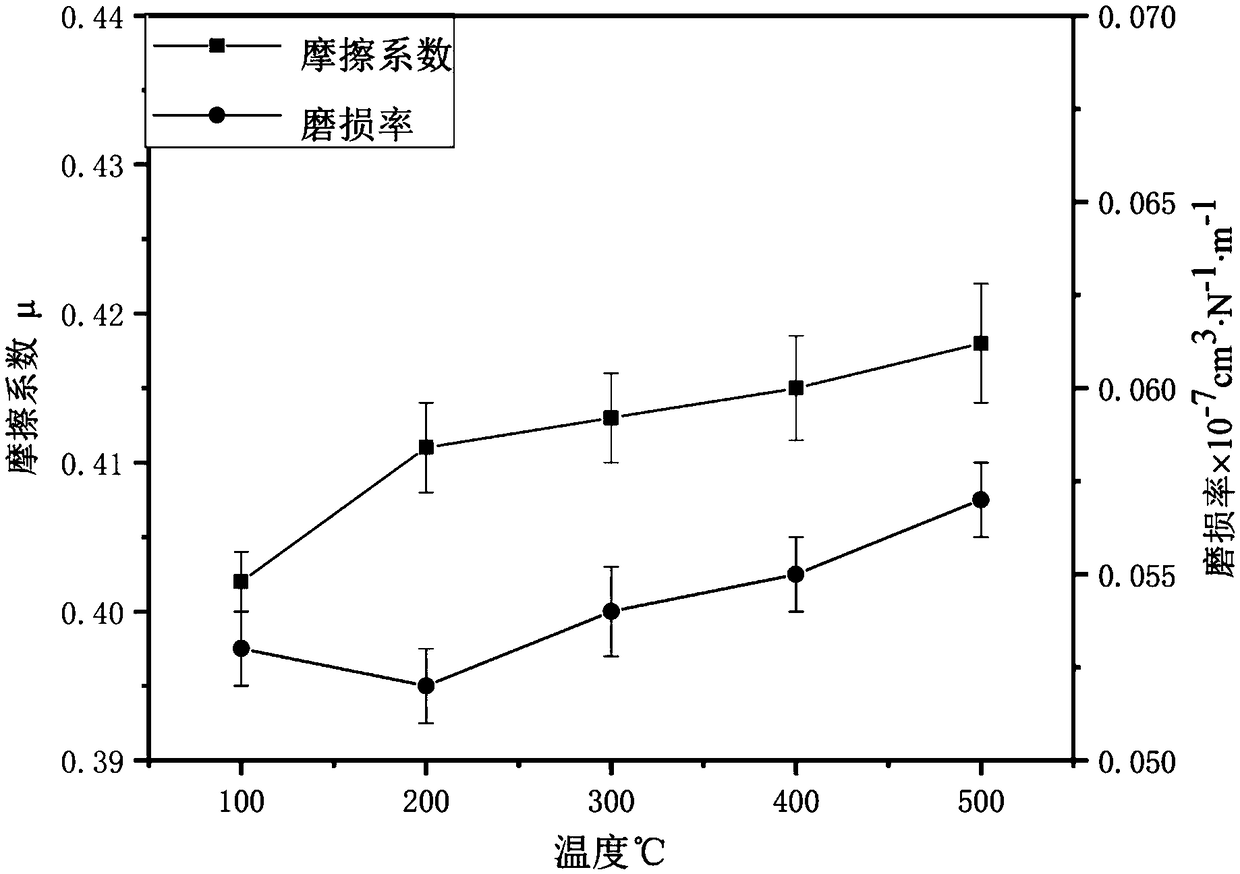
Figure 3
Abstract
Description
technical field
[0001] The invention relates to a carbon fiber brake pad material with a porous structure and a preparation method thereof, belonging to the field of the automobile industry. Background technique
[0002] Automobiles have increasingly become a means of transportation for people's daily travel, and their braking performance has attracted widespread attention. During the emergency braking process of the car, the intense friction between the brake pads and the brake disc / brake drum will not only generate a lot of heat and wear debris, but also make harsh noises. Once the heat generated cannot be dissipated in time, it will lead to local carbonization of the brake pads, reduce the braking performance of the brake pads, and affect driving safety (Bao Xiangming. Analysis of the reasons for the braking noise of automobile brake pads [J]. Theoretical research on urban construction: electronics Edition, 2013(24).). In addition, under the action of contact stress, cr...
Examples
Embodiment 1
[0034] A carbon fiber brake pad material with a porous structure, which uses carbon fiber-carbon nanotube composite fibers and fillers as a matrix, uses cashew nut oil modified phenolic resin as a binder, and is obtained by adding pore-forming agent ammonium carbonate and adopting a dry hot pressing molding process The fillers include graphite, titanium oxide, aluminum oxide, iron, nitrile rubber, antimony trisulfide, barium sulfate, mica, and vermiculite; the components and mass percentages in the adhesive and the matrix are: cashew nut oil modified phenolic 15% resin, 22% carbon fiber-carbon nanotube composite fiber, 6% graphite, 2% titanium oxide, 2% aluminum oxide, 2% iron, 15% nitrile rubber, 6% antimony trisulfide, 16% barium sulfate, 6% of mica, 8% of vermiculite; the mass percentage of the pore-forming agent ammonium carbonate is 16% of the total mass of the binder and the matrix.
[0035] The preparation method of the above-mentioned carbon fiber brake pad material wi...
Embodiment 2
[0045] A carbon fiber brake pad material with a porous structure, which uses carbon fiber-carbon nanotube composite fibers and fillers as a matrix, uses cashew nut oil modified phenolic resin as a binder, and is obtained by adding pore-forming agent ammonium carbonate and adopting a dry hot pressing molding process The fillers include graphite, titanium oxide, aluminum oxide, iron, nitrile rubber, antimony trisulfide, barium sulfate, mica, and vermiculite; the components and mass percentages in the adhesive and the matrix are: cashew nut oil modified phenolic 10% resin, 28% carbon fiber-carbon nanotube composite fiber, 5% graphite, 2% titanium oxide, 3% aluminum oxide, 3% iron, 15% nitrile rubber, 6% antimony trisulfide, 15% barium sulfate, 6% of mica, 7% of vermiculite; the mass percentage of the pore-forming agent ammonium carbonate is 18% of the total mass of the binder and the matrix.
[0046] The preparation method of the above-mentioned carbon fiber brake pad material wi...
Embodiment 3
[0056] A carbon fiber brake pad material with a porous structure, which uses carbon fiber-carbon nanotube composite fibers and fillers as a matrix, uses cashew nut oil modified phenolic resin as a binder, and is obtained by adding pore-forming agent ammonium carbonate and adopting a dry hot pressing molding process The fillers include graphite, titanium oxide, aluminum oxide, iron, nitrile rubber, antimony trisulfide, barium sulfate, mica, and vermiculite; the components and mass percentages in the adhesive and the matrix are: cashew nut oil modified phenolic 8% resin, 30% carbon fiber-carbon nanotube composite fiber, 5% graphite, 2% titanium oxide, 3% aluminum oxide, 3% iron, 15% nitrile rubber, 6% antimony trisulfide, 15% barium sulfate, 6% of mica, 7% of vermiculite; the mass percentage of the pore-forming agent ammonium carbonate is 20% of the total mass of the binder and the matrix.
[0057] The preparation method of the above-mentioned carbon fiber brake pad material wit...