
A Breeding Method of Multi-locus Aggregation Effect Analysis for Improving Lamb Size of Hu Sheep
A multi-site and site technology, applied in the field of molecular biotechnology and molecular markers, can solve the problems of long time, poor selection effect, low breeding efficiency, etc., to reduce breeding time, increase the number of lambs, and speed up the breeding process. Effect
Patent Information
- Authority / Receiving Office
- CN · China
- Patent Type
- Patents(China)
- Current Assignee / Owner
- Publication Date
- 2021-04-27
Smart Images
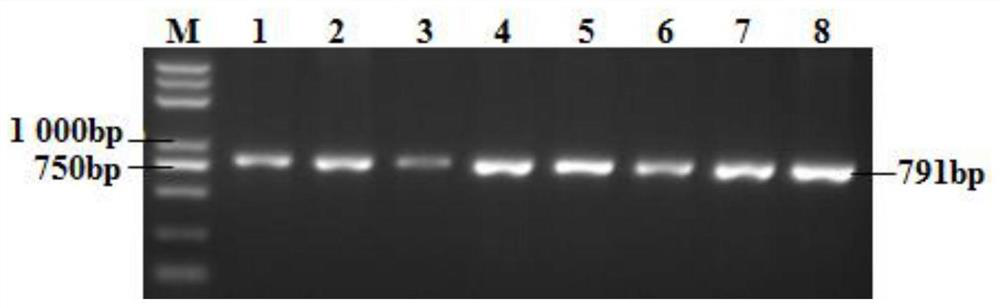
Figure 1 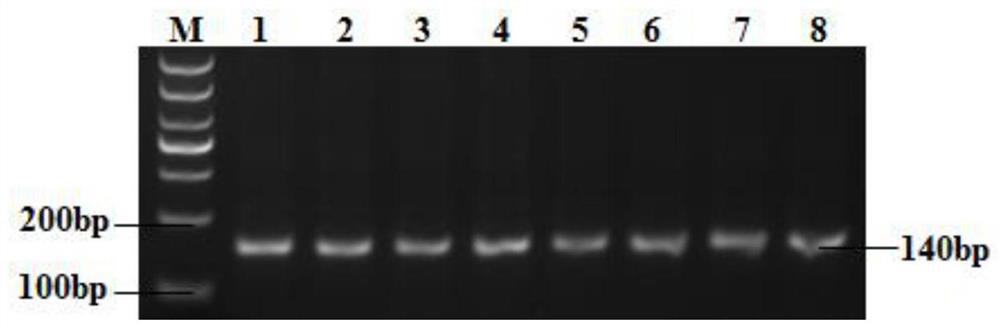
Figure 2 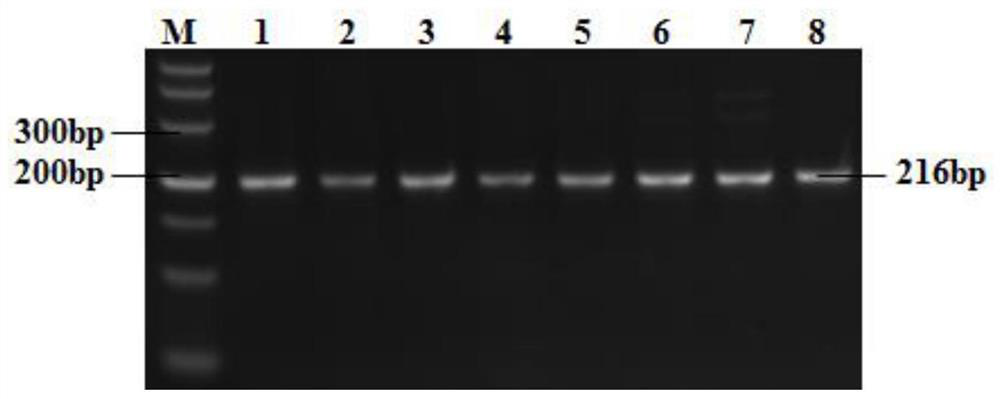
Figure 3
Abstract
Description
technical field
[0001] The invention belongs to the technical fields of molecular biotechnology and molecular markers, and in particular relates to a breeding method for analyzing multi-site aggregation effects for improving the litter size of Hu sheep. The invention uses the molecular markers in combination in the study of the litter size traits of Hu sheep and the early breeding work of Hu sheep. Background technique
[0002] Reproductive traits are important economic traits. For breeding stock, fecundity is productivity, and reproductive performance is directly related to the economic effect of mutton sheep industry. In traditional breeding methods, the selection of livestock traits mostly relies on the phenotypic selection of livestock. The breeding of large livestock often takes decades, and it is difficult to quickly improve the reproductive performance of livestock groups. Studying the breeding method to improve lambing rate from the genetic nature is a technical pro...
Examples
Embodiment 1
[0056] Application of embodiment 1 biological technology
[0057] In the embodiment, 934 Hu sheep ewes with complete lambing records were selected, and 5 mL of jugular vein blood was drawn and anticoagulated, and stored at -20°C for later use. The Hu sheep used in this research all come from the bougainvillea sheep breeding farm of Wenshi Xinwang Sheep Industry Co., Ltd., Yunfu City, Guangdong Province. The farm is raised in high-bed houses throughout the year, and fed rations according to the uniform feeding standard, and free to eat drinking water.
[0058] (1) The extraction of Hu sheep blood genomic DNA was performed with reference to the blood genomic DNA extraction kit (purchased from Guangzhou Ruiyang Biotechnology Co., Ltd.), and detected by 1% agarose gel electrophoresis, without dispersion or tailing phenomenon; An ultraviolet spectrophotometer was used to detect the quality and concentration of the extracted DNA. DNA samples with A260 / 280 ratio of 1.8 to 2.0 and A...
Embodiment 2
[0063] The establishment of embodiment 2 single-point effect analysis model
[0064] (1) Amplification of target fragments containing SNPs loci significantly related to litter size traits of Hu sheep: the target fragments are all partial nucleotide sequences on chromosome 6, and the upstream and downstream primers for sequence amplification are based on reports on GenBank The sequence of the sheep BMPR-IB gene (accession number: NC-019463.2), using the Primer Premier 5.0 software to design primers for the three SNPs of the BMPR-IB gene, amplified the partial sequence of the Hu sheep BMPR-IB gene. The primers were synthesized by Huada Biotechnology Co., Ltd., and the specific sequences are as follows:
[0065] SEQ ID NO.4:
[0066] The upstream primer PCR-F of the T-87C site: 5'-TTTTAGGGCTCCATGTACTCC-3';
[0067] SEQ ID NO.5:
[0068] Downstream primer PCR-R of T-87C site: 5'-TTTCCTCTGGGTGCTGTG-3'.
[0069] SEQ ID NO.6:
[0070] The upstream primer PCR-F of the A746G site: 5...
Embodiment 3 3
[0100] Example 3 Establishment of Three-site Polymerization Effect Analysis Model
[0101] First, the methods described in Examples 1 and 2 were used to detect the T-87C, A746G and G765A polymorphic sites of the BMPR-IB gene, and the single-site effect analysis was carried out with the litter size of Hu sheep. The above results showed that BMPR-IB The three polymorphic sites of the IB gene all had a significant impact on the litter size of Hu sheep. In order to study the interaction between the above three loci and further improve the breeding efficiency of the litter size traits of Hu sheep, the present invention established a multi-site aggregation effect analysis model for the litter size traits of Hu sheep.
[0102] (1) Three-site aggregation effect analysis model
[0103] A total of 934 Hu sheep were tested, the T-87C / A746G / G765A combined genotype was determined by PCR-RFLP method, and the correlation analysis between the combined genotype and litter size was carried out...