
Dynorphin A (1-8) and neurotensin (8-13) coupled cyclic hybrid peptide, as well as synthesizing method and application thereof
A technology of neurotensin and its synthesis method, which is applied in the field of cyclized hybrid peptide and its synthesis, which can solve the problems of poor biological stability and poor anti-neuropathic pain effect, reduce analgesic tolerance and enhance anti-enzyme The effect of improving the solution ability and enhancing the transportation ability
Patent Information
- Authority / Receiving Office
- CN · China
- Patent Type
- Applications(China)
- Current Assignee / Owner
- Publication Date
- 2019-01-18
Smart Images
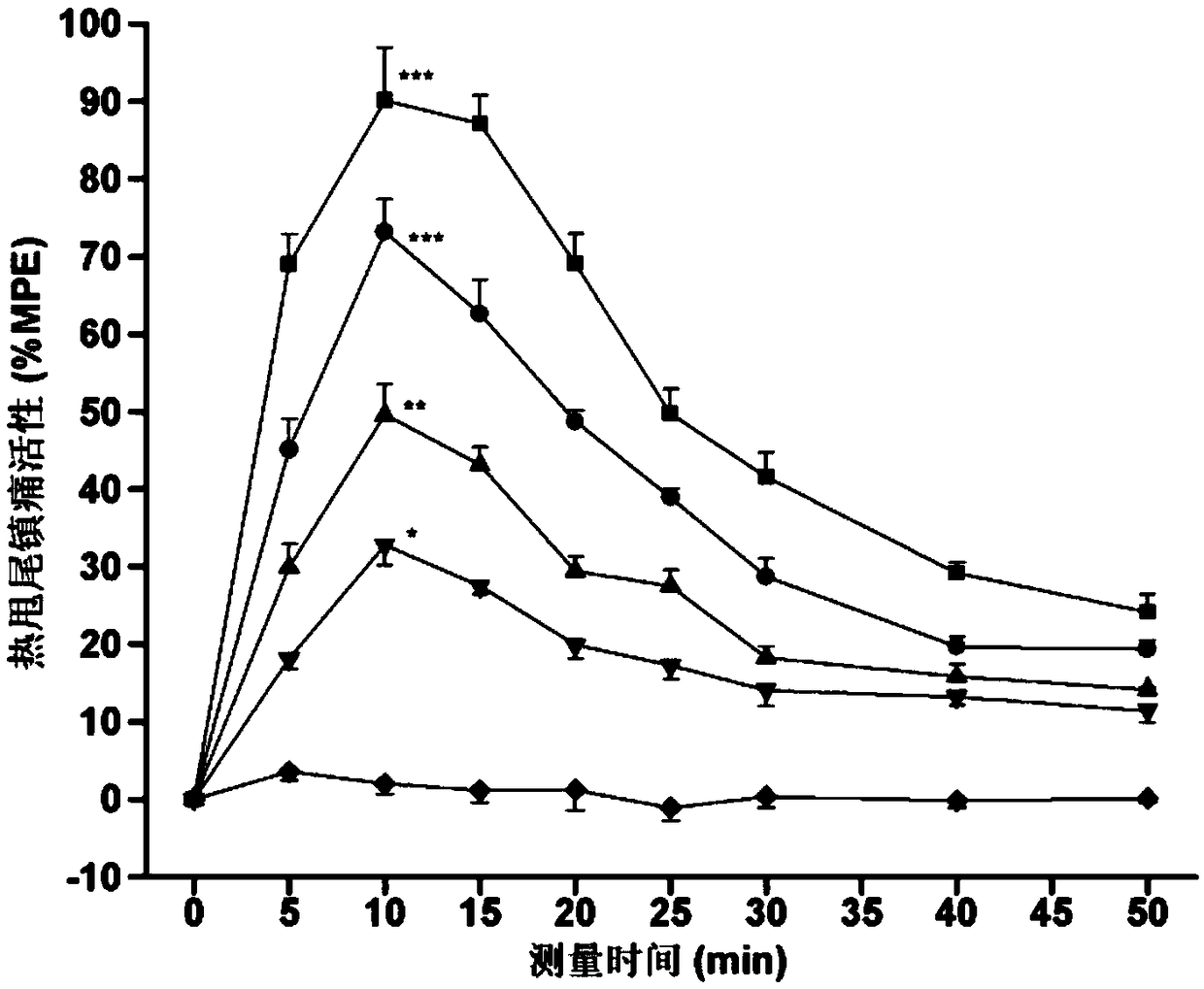
Figure 1 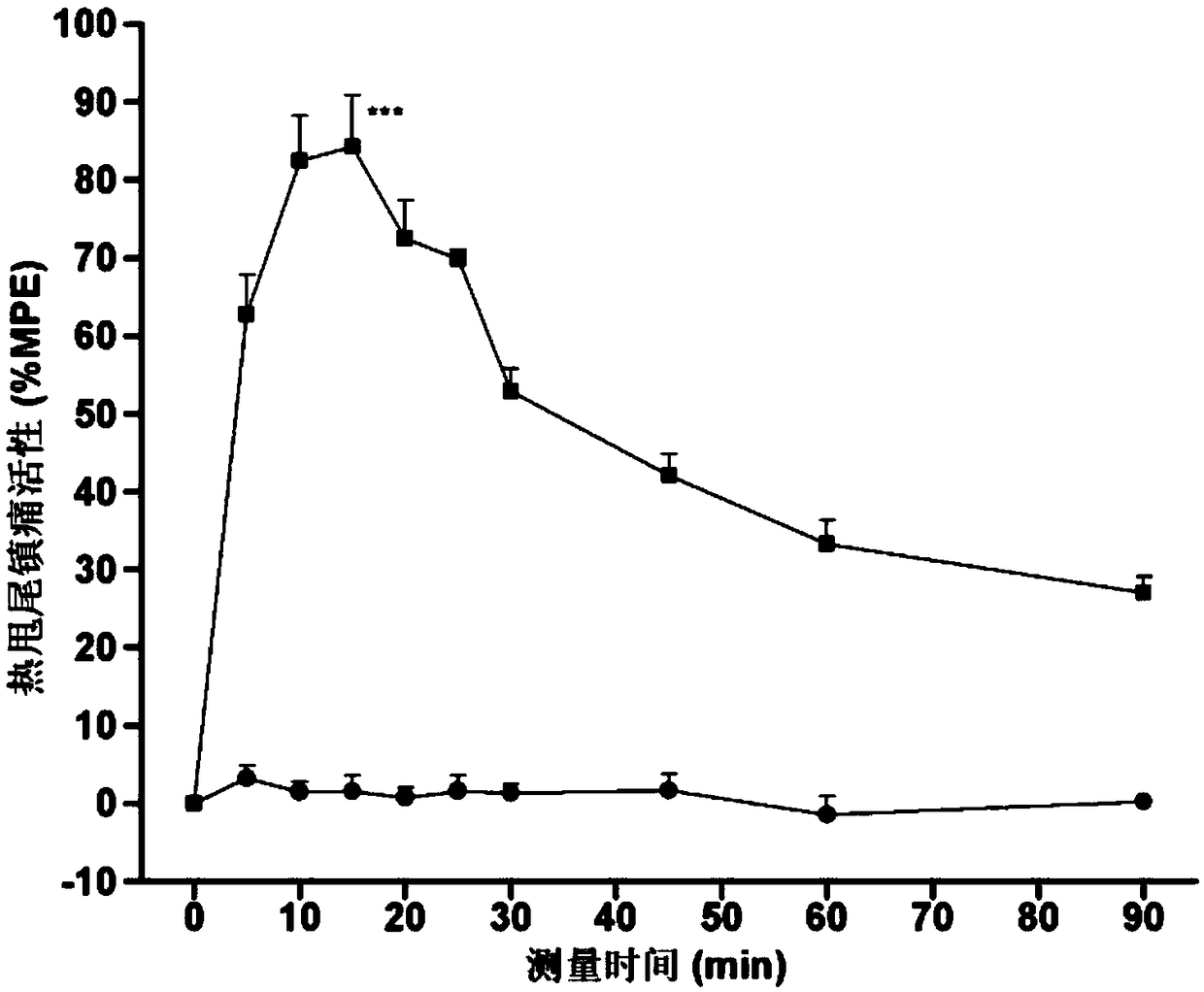
Figure 2 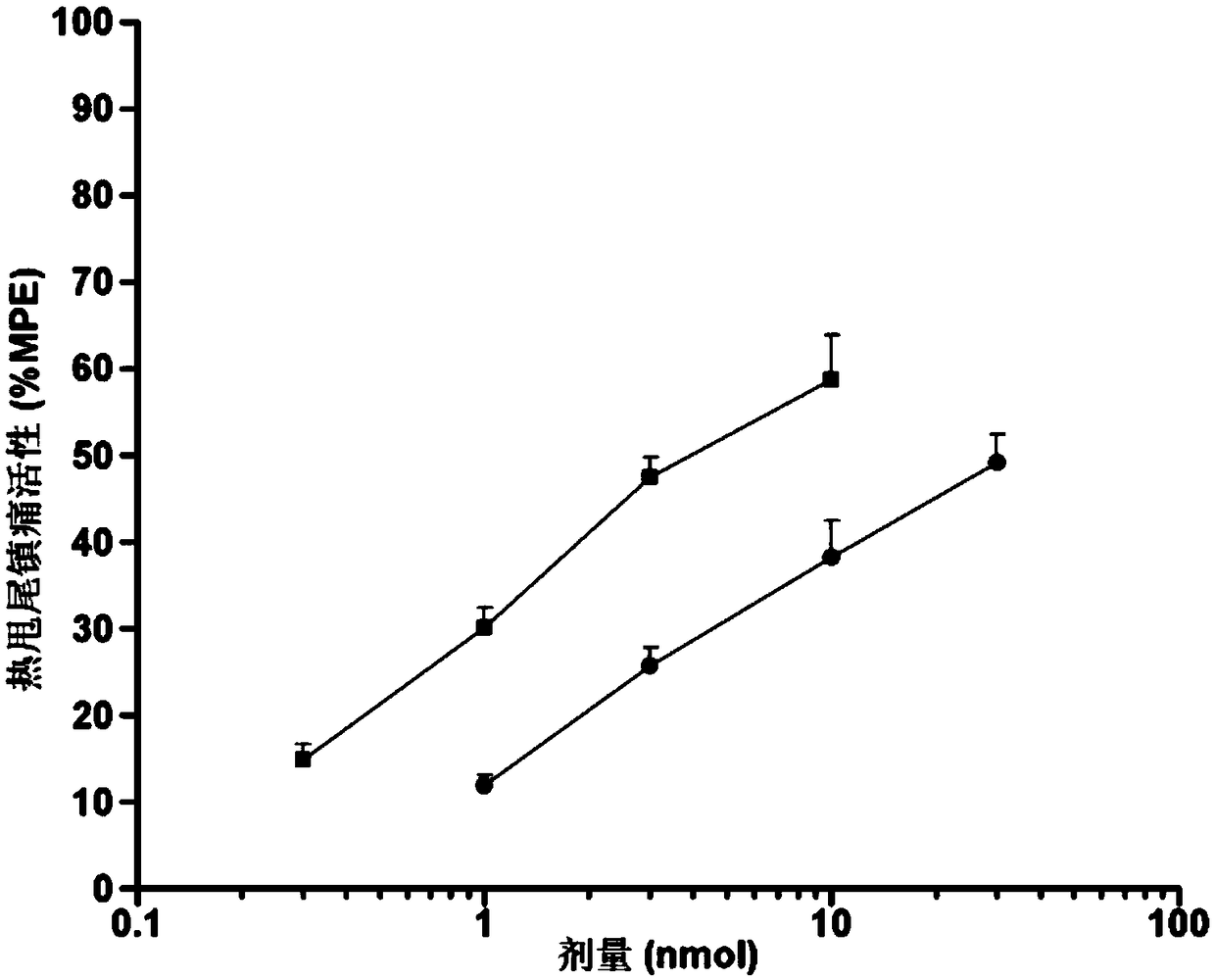
Figure 3
Abstract
Description
technical field
[0001] The invention relates to a cyclized hybrid peptide and its synthesis method and application. Background technique
[0002] It is well known that opioids and their extracts have been used in analgesic therapy. Morphine, isolated from opioids, is one of the most widely used analgesic drugs in clinical practice. However, morphine and other drugs have many defects in safe clinical use, such as inhibiting breathing, causing blood pressure drop and bradycardia, constipation, easy to cause mental dependence, addiction and analgesic tolerance. Furthermore, morphine is less effective in the treatment of chronic pain such as neuropathic pain. Studies have shown that opioid peptides play an important role in the transmission and modulation of pain information. Following the discovery of enkephalin and endorphin, in 1979, researchers discovered an endogenous seventeen peptide with opioid activity from pig pituitary gland, and named it dynorphin. Dynorphin (dyn...
Examples
specific Embodiment approach 1
[0046] Specific embodiment 1: The amino acid sequence of the cyclized hybrid peptide coupled with dynorphin A (1-8) and neurotensin (8-13) in this embodiment is as follows:
[0047] Dmt-Gly-c(Cys-NMePhe-Leu-Arg-Arg-Ile-Cys)-Gly-NMeArg-Lys-Pro-Trp-Tle-Leu.
[0048] In this embodiment, the amino acid sequence "Tyr-Gly-Gly-Phe-Leu-Arg-Arg-Ile" of dynorphin A (1-8) is obtained through multi-site modification and Cys disulfide bond cyclization to obtain "Dmt- Gly-c (Cys-NMePhe-Leu-Arg-Arg-Ile-Cys)" amino acid residue sequence, the amino acid sequence "Arg-Arg-Pro-Tyr-Ile-Leu" of neurotensin (8-13) The "NMeArg-Lys-Pro-Trp-Tle-Leu" amino acid residue sequence was obtained through multi-site modification, and the two parts of the amino acid residue sequence were coupled using the intermediate linker "Gly" to construct a highly efficient hybrid peptide .
[0049] Multi-site non-natural amino acid substitution can enhance the anti-enzymatic ability of polypeptides, and cyclization mod...
specific Embodiment approach 2
[0050] Specific embodiment two: The synthesis method of the cyclization hybrid peptide coupled with dynorphin A (1-8) and neurotensin (8-13) in this embodiment comprises the following steps:
[0051] 1. Pretreatment of Wang resin protected by "Fmoc": check the air tightness of the solid phase synthesizer, put the Fmoc-Leu-Wang resin with one amino acid residue into the synthesizer, add dichloromethane and stir for 30-40min, After the resin is fully soaked and swollen, filter the solvent under reduced pressure; the mass ratio of the Fmoc-Leu-Wang resin with one amino acid residue to the volume ratio of dichloromethane is 1g: (7-12)mL;
[0052] 2. Remove the "Fmoc" protecting group: wash the swelled resin with DMF for 3 to 5 minutes, dry it, repeat 3 to 5 times, and then add 20% to 25% vol. Piperidine / DMF deprotection solution, stirred for 5-10 minutes, drained, repeated 2-3 times, then added piperidine / DMF deprotection solution with volume percentage concentration of 20%-25%, s...
specific Embodiment approach 3
[0060] Embodiment 3: The difference between this embodiment and Embodiment 2 is that the molar weight of N-hydroxybenzotriazole in step 3 is 2.5-3 times that of the Fmoc-Leu-Wang resin. Others are the same as in the second embodiment.