
Electron beam partition scanning forming method for porous tungsten material
A porous tungsten and electron beam technology, which is applied in the direction of additive processing, process efficiency improvement, additive manufacturing, etc., can solve the problem of inability to directly shape special-shaped porous materials, difficulty in controlling the distribution and depth of porous tungsten pores, and difficulty in ensuring pore connectivity, etc. Problems, to achieve the effect of improving strength and purity, low cost, and improving purity
Patent Information
- Authority / Receiving Office
- CN · China
- Patent Type
- Patents(China)
- Current Assignee / Owner
- Publication Date
- 2020-04-24
Smart Images
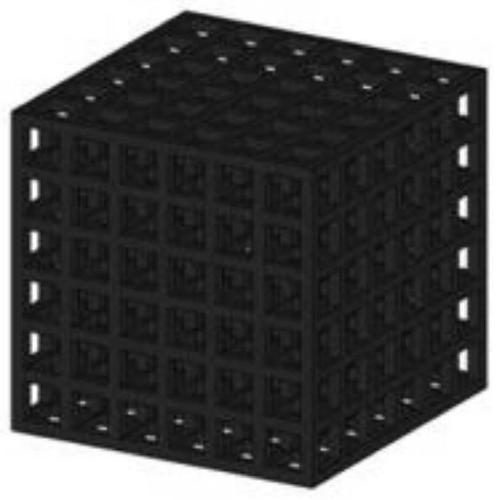
Figure 1 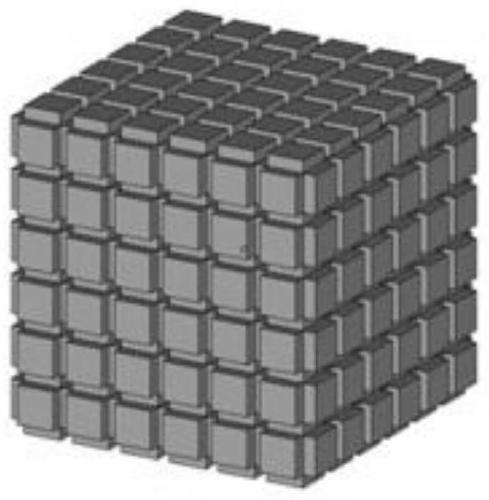
Figure 2 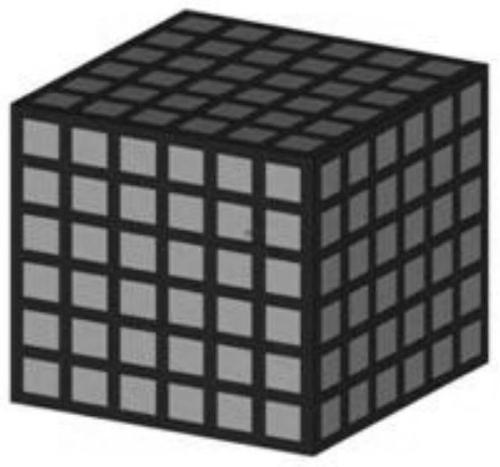
Figure 3
Abstract
Description
technical field
[0001] The invention belongs to the technical field of material preparation, and in particular relates to an electron beam partition scanning forming method for a porous tungsten material. Background technique
[0002] Porous materials have the characteristics of low density and high specific surface, and have important applications in many technical fields such as catalysts, filtration, and composite materials. Porous tungsten materials are widely used in aerospace, power electronics, metallurgical industries and other extreme environment fields because of their high melting point and boiling point, low vapor pressure and other characteristics of tungsten. For example, it can be used for porous cathode substrates with high current density, filters for high-temperature fluids, high-temperature gas purifiers, skeletons of sweating materials, and gas distribution materials at high temperatures. At the same time, the porous tungsten matrix can also be used to m...
Examples
Embodiment 1
[0031]The porous tungsten material of this embodiment is composed of a three-dimensional lattice structure and a porous body filled in the pores of the three-dimensional lattice structure. The size of the porous tungsten material is 20mm × 20mm × 20mm, and the porosity is 30%. The electrons of the porous tungsten material The beam partition scanning shaping method includes the following steps:
[0032] Step 1, using three-dimensional modeling software to establish a three-dimensional lattice structure model; the size of the three-dimensional lattice structure model is 20mm * 20mm * 20mm, and the porosity is 90%;
[0033] Step 2, establishing a porous body model according to the internal pore area of the three-dimensional lattice structure model established in step 1;
[0034] Step 3. Merge the three-dimensional lattice structure model established in step 1 with the porous body model established in step 2 to obtain a porous tungsten material model, and then perform layered pr...
Embodiment 2
[0041] The porous tungsten material of this embodiment is composed of a three-dimensional lattice structure and a porous body filled in the pores of the three-dimensional lattice structure. The size of the porous tungsten material is 20mm × 20mm × 20mm, and the porosity is 22%. The beam partition scanning shaping method includes the following steps:
[0042] Step 1, using three-dimensional modeling software to establish a three-dimensional lattice structure model; the size of the three-dimensional lattice structure model is 20mm * 20mm * 20mm, and the porosity is 90%;
[0043] Step 2, establishing a porous body model according to the internal pore area of the three-dimensional lattice structure model established in step 1;
[0044] Step 3. Merge the three-dimensional lattice structure model established in step 1 with the porous body model established in step 2 to obtain a porous tungsten material model, and then perform layered processing along the height direction of the po...
Embodiment 3
[0050] The porous tungsten material of this embodiment is composed of a three-dimensional lattice structure and a porous body filled in the pores of the three-dimensional lattice structure. The size of the porous tungsten material is 20mm × 20mm × 20mm, and the porosity is 20%. The electrons of the porous tungsten material The beam partition scanning shaping method includes the following steps:
[0051] Step 1, using three-dimensional modeling software to establish a three-dimensional lattice structure model; the size of the three-dimensional lattice structure model is 20mm * 20mm * 20mm, and the porosity is 80%;
[0052] Step 2, establishing a porous body model according to the internal pore area of the three-dimensional lattice structure model established in step 1;
[0053] Step 3. Merge the three-dimensional lattice structure model established in step 1 with the porous body model established in step 2 to obtain a porous tungsten material model, and then perform layered p...