
Preparation, product and application of tubular lithium titanate/titanium dioxide composites with regular defects
A composite material, titanium dioxide technology, applied in the direction of secondary batteries, electrochemical generators, structural parts, etc., can solve the problems of unstable electrode capacity density, uneven material mixing, etc.
Patent Information
- Authority / Receiving Office
- CN · China
- Patent Type
- Patents(China)
- Current Assignee / Owner
- Publication Date
- 2022-07-05
Smart Images
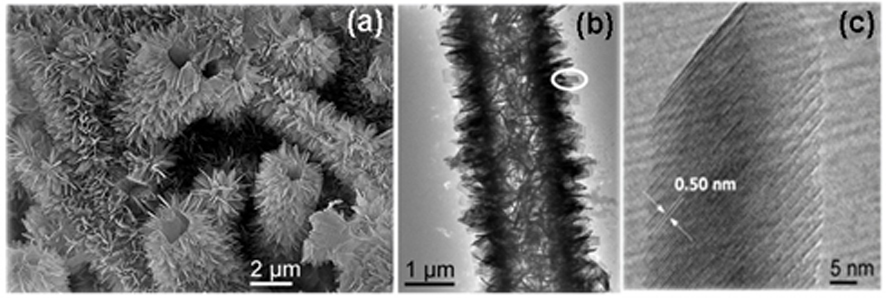
Figure 1 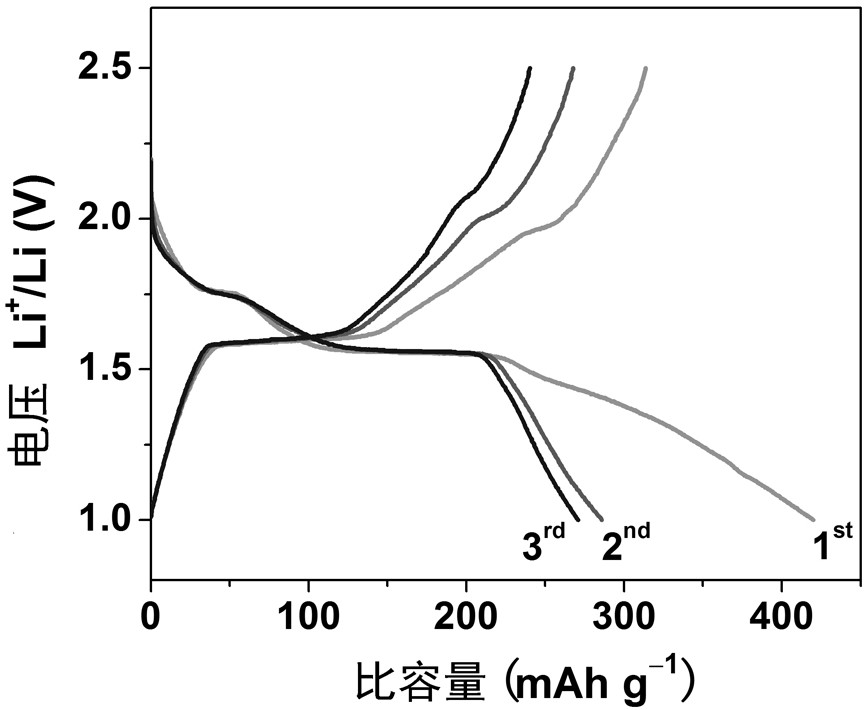
Figure 2
Abstract
Description
technical field
[0001] The invention relates to the technical field of electrode materials for lithium ion batteries, in particular to a preparation method, product and application of a tubular lithium titanate / titanium dioxide composite material with regular defects. Background technique
[0002] In solid-state science, the study of crystal defects is an active and rapidly developing field. For crystalline materials, defects can lead to rich chemical structures and unexpected properties. For example, in solid-phase reactions, mass transfer can be achieved only when the reactants have a certain concentration of defects. Oxygen-deficient ferrite with spinel structure can effectively decompose carbon dioxide into carbon through the transfer of oxygen vacancies. The presence of defects in the crystal structure can improve the mobility of lithium ions and electrons in electrode materials. Therefore, by introducing defects in electrode materials, it is expected to greatly impr...
Examples
Embodiment 1
[0023] A method for preparing a tubular lithium titanate / titanium dioxide composite material containing regular defects, using ultraviolet light excitation and hydrothermal method as a technical path, and synthesizing regular-containing nanosheets through the hydrolysis conversion and calcination of ethylene glycol titanium Defective tubular Li 4 Ti 5 O 12 / TiO 2 For composite materials, follow these steps:
[0024] a. Porous amorphous TiO 2 Preparation of rods: Measure 5 ml of n-tetrabutyl titanate dropwise into 200 ml of ethylene glycol, stir at 160 oReflux for 2 h at C temperature to obtain a white ethylene glycol titanium precipitate. The obtained white ethylene glycol titanium was washed several times with ethanol, dispersed in an aqueous solution, and irradiated with ultraviolet light of a 150 W mercury lamp for 4 hours to obtain porous amorphous TiO 2 Great.
[0025] b. Li 4 Ti 5 O 12 / TiO 2 Preparation of tubes: Weigh 0.24 g of the porous amorphous TiO obtai...
Embodiment 2
[0028] A preparation method of a tubular lithium titanate / titanium dioxide composite material containing regular defects, similar to Example 1, is as follows:
[0029] a. Porous amorphous TiO 2 Preparation of rods: Measure 5 ml of n-tetrabutyl titanate dropwise into 300 ml of ethylene glycol, stir at 160 o Reflux for 2 h at C temperature to obtain a white ethylene glycol titanium precipitate. The obtained white ethylene glycol titanium was washed several times with ethanol, dispersed in an aqueous solution, and irradiated with ultraviolet light of a 300 W mercury lamp for 4 hours to obtain porous amorphous TiO 2 Great.
[0030] b. Li 4 Ti 5 O 12 / TiO 2 Preparation of tubes: Weigh 0.36 g of the porous amorphous TiO obtained in step a 2 rod, disperse it into 50 ml of deionized water, and at the same time add 0.18 g of lithium hydroxide, and after stirring for half an hour, transfer the resulting suspension to a stainless steel autoclave containing a teflon lining, at 140 ...
Embodiment 3
[0032] A preparation method of a tubular lithium titanate / titanium dioxide composite material containing regular defects, similar to Example 1, is as follows:
[0033] a. Porous amorphous TiO 2 Preparation of rods: measure 10 ml of n-tetrabutyl titanate dropwise into 400 ml of ethylene glycol, stir at 160 o Reflux for 2 h at C temperature to obtain a white ethylene glycol titanium precipitate. The obtained white ethylene glycol titanium was washed several times with ethanol, dispersed in an aqueous solution, and irradiated with ultraviolet light of a 300 W mercury lamp for 4 hours to obtain porous amorphous TiO 2 Great.
[0034] b. Li 4 Ti 5 O 12 / TiO 2 Preparation of tubes: Weigh 0.72 g of the porous amorphous TiO obtained in step a 2 rod, disperse it into 200 ml of deionized water, and at the same time add 0.14 g of lithium hydroxide, and after stirring for half an hour, transfer the resulting suspension to a stainless steel autoclave containing a teflon lining, at 13...