
Method for preparing mixed-valent-state iron doped zeolite imidazate skeleton nano-material
A zeolite imidazolate and mixed valence technology, which is applied in the field of preparation of mixed valence iron-doped metal organic framework nanomaterials, can solve problems such as difficulty in regulating the concentration of iron ions, and achieves fewer synthesis regulation parameters, mild conditions, and high production efficiency. simple method effect
Patent Information
- Authority / Receiving Office
- CN · China
- Patent Type
- Applications(China)
- Current Assignee / Owner
- Publication Date
- 2020-01-24
- Estimated Expiration
- Not applicable · inactive patent
Smart Images
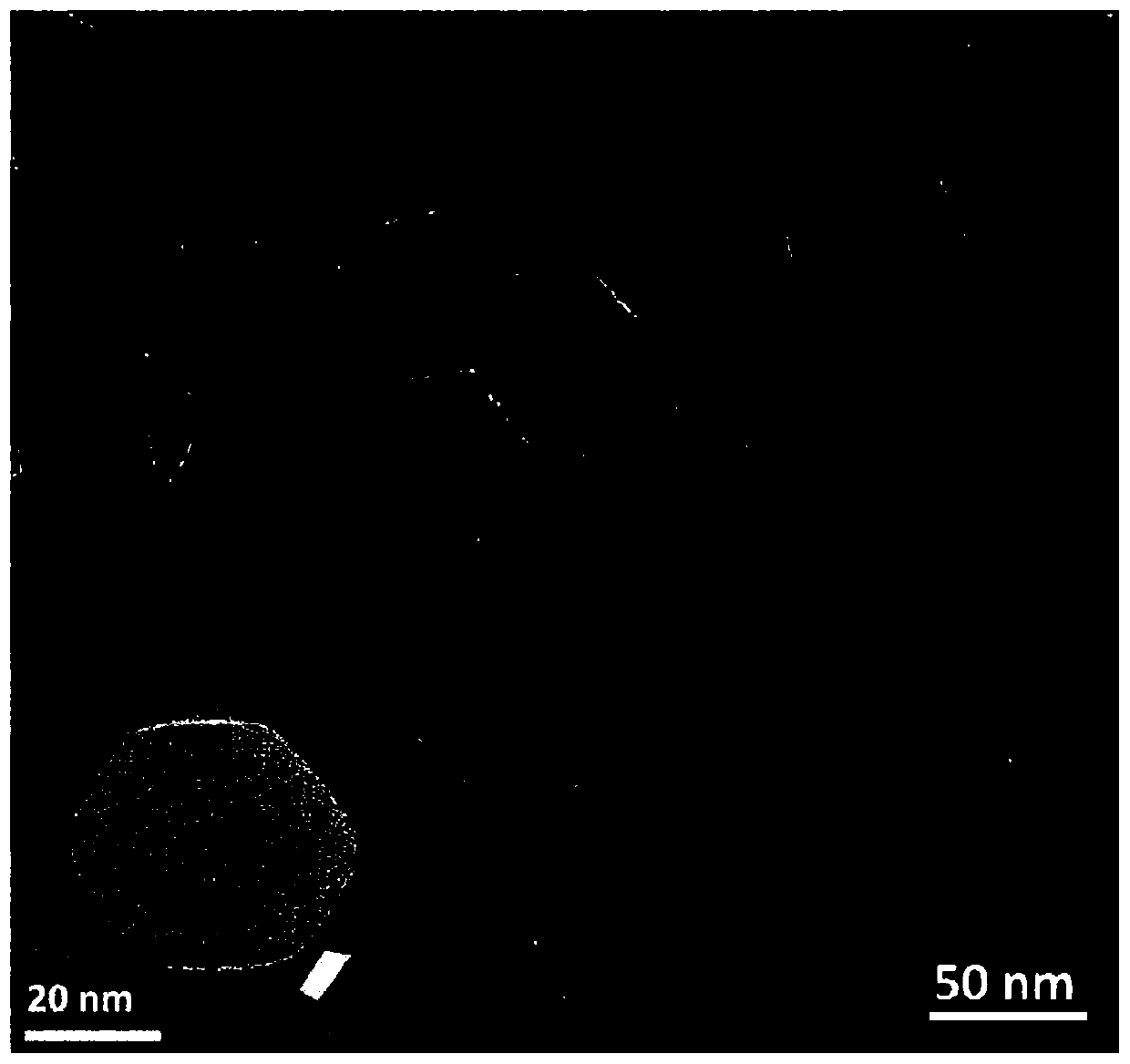
Figure 1 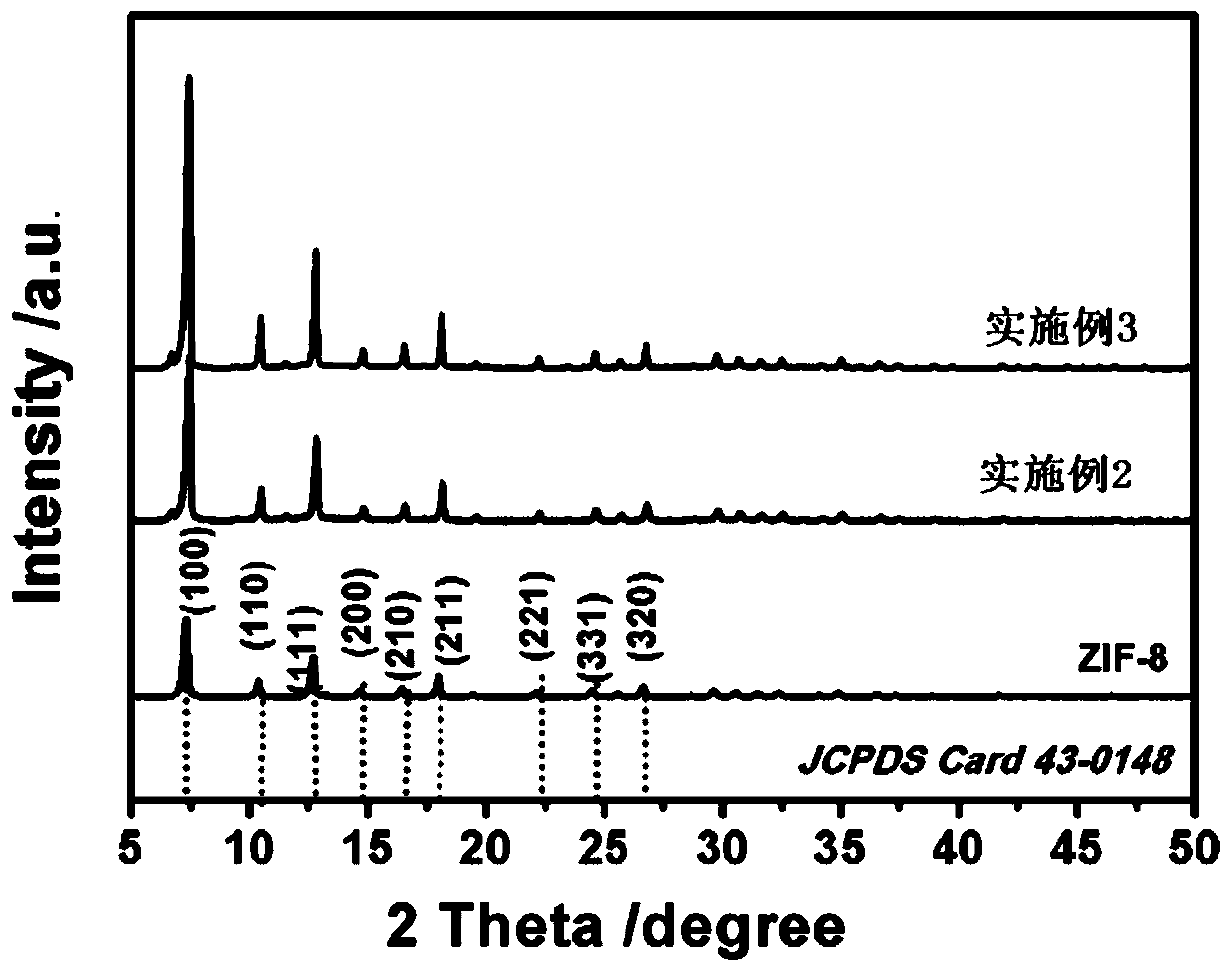
Figure 2 
Figure 3
Abstract
Description
Technical field:
[0001] The invention belongs to the technical field of functional nanometer materials, and in particular relates to a preparation method of mixed valence iron doped metal organic framework nanomaterials. Background technique:
[0002] Metal-organic frameworks (MOFs) are porous materials with a three-dimensional spatial network structure formed by transition metal ions and organic ligands through coordination self-assembly, and the formed porous structure materials exhibit unique physical properties of nanomaterials at the nanoscale. Chemical properties (such as controllable size, large specific surface area, high chemical stability, etc.). In particular, using the space confinement effect of metal-organic frameworks, transition metal single-atom carbon-based nanomaterials with high catalytic activity can be prepared under high-temperature pyrolysis conditions, showing broad applications in the fields of energy, catalysis, and biomedicine. Value. For exampl...
Examples
Embodiment 1
[0034] Weigh 11.65mmol zinc nitrate, 0.124mmol ferrous ammonium sulfate and 0.124mmol ferric ammonium sulfate and disperse in 600mL methanol solvent to form zinc-iron metal cation precursor A solution; weigh 56mmol 2-methylimidazole ligand and disperse in 600mL methanol A solution B is formed in a solvent; the two solutions A and B are mixed, and placed in an oil bath at 60°C, and after 24 hours of magnetic stirring at 300 rpm, the formed product is centrifuged, washed, and vacuum-dried to prepare The final mixed valence iron doping-ZIF-8 nanomaterial, the prepared sample TEM picture is shown in figure 1 . Compared with other embodiments, two metal salts with similar properties are used in this example to obtain a higher iron doping amount. Quantitative analysis of elemental indications shows that the total iron doping amount is calculated to be 50%.
Embodiment 2
[0036] Weigh 11.65mmol zinc nitrate, 0.124mmol ferrous sulfate and 0.062mmol ferric nitrate and disperse in 300mL methanol solvent to form zinc-iron metal cation precursor A solution; weigh 56mmol 2-methylimidazole ligand and disperse in 300mL methanol solvent Form B solution; mix A and B solutions, place them in an oil bath at 40°C, and react with magnetic stirring at 400 rpm for 36 hours, then centrifuge, wash, and vacuum-dry the formed product to prepare the final Mixed valence iron-doped-ZIF-8 nanomaterial, the XRD pattern of the obtained sample is shown in figure 2 .
Embodiment 3
[0038] Weigh 11.65mmol zinc nitrate, 0.124mmol ferrous sulfate and 0.248mmol ferric chloride and disperse in 200mL methanol solvent to form zinc-iron metal cation precursor A solution; weigh 56mmol 2-methylimidazole ligand and disperse in 200mL methanol solvent Form B solution; mix A and B solutions, put them in an oil bath at 100°C, and react with magnetic stirring at 200 rpm for 16 hours, then centrifuge, wash, and vacuum-dry the formed product to prepare the final product The mixed valence state iron-doped-ZIF-8 nanometer material, the XRD pattern of the obtained sample is shown in figure 2 .