
Synthesis method of 3,5-dihalogenated-2-pentanone
A synthetic method, a dihalogenated technology, applied in the field of synthesis of 3,5-dihalogenated-2-pentanone, which can solve the problems of high production safety risks, achieve high atom utilization, less waste, and simple reaction conditions Effect
Patent Information
- Authority / Receiving Office
- CN · China
- Patent Type
- Applications(China)
- Current Assignee / Owner
- Publication Date
- 2020-05-29
Smart Images

Figure 1 
Figure 2 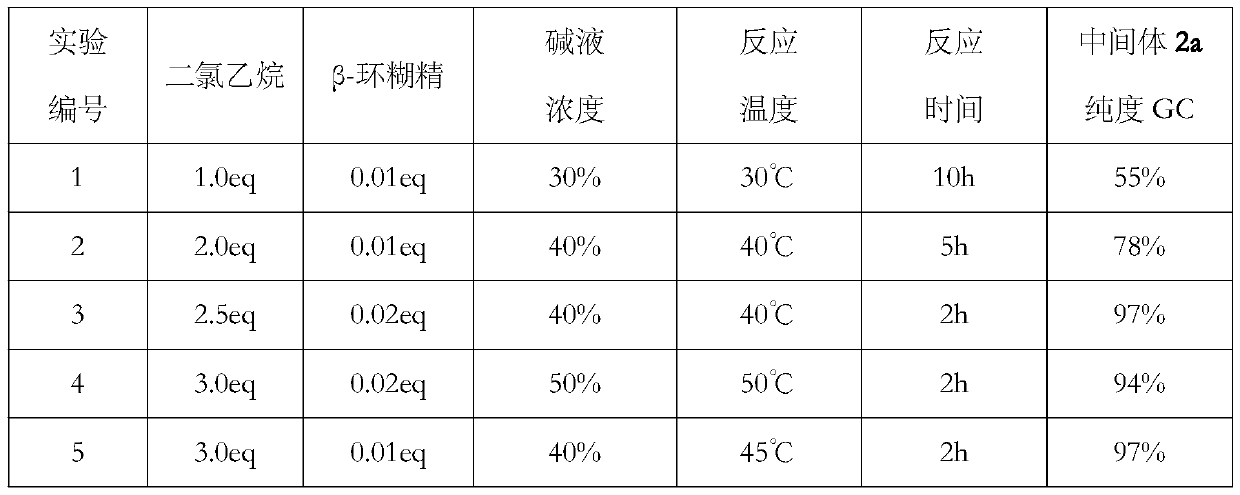
Figure 3
Abstract
Description
Technical field:
[0001] The invention belongs to the field of organic chemistry, and in particular relates to a synthesis method of 3,5-dihalo-2-pentanone. Background technique:
[0002] 3,5-Dihalo-2-pentanone is widely used in the fields of medicine and pesticide. For example, further intramolecular cyclization of this compound can prepare 1-acetyl-1-chlorocyclopropane, which is an important intermediate for the synthesis of fungicide prothioconazole (see: CN106278850); further cyclization with potassium thiocyanate The sedative-hypnotic drug clomethiazole can be prepared (see: Chinese Journal of Pharmaceutical Industry, 2006, 37, 441).
[0003] The synthetic method that has been reported in the existing literature: 1) using acetyl-γ-butyrolactone as raw material, after chlorination and esterification, and further decarboxylation reaction under the action of concentrated hydrochloric acid to obtain the target product 3,5-dihalogen On behalf of -2-pentanone. This route ha...
Examples
Embodiment 1
[0022] In the first step, add methyl acetoacetate 1a (116.1g, 1.0mol), dichloroethane (247.4g, 2.5eq) and β-cyclodextrin (22.7g, 0.02eq) into a 2L reaction flask, heat and stir To 40°C, slowly add 40% sodium hydroxide solution (400.0g, 4.0eq) from the dropping funnel, it takes 1.0h to finish dropping, control the temperature during the dropping process at 40-45°C, continue to keep stirring for 2.0 h.
[0023] Stop heating and drop to room temperature, separate the lye layer containing β-cyclodextrin for recycling, then separate the dichloroethane layer, add water to wash until neutral and directly use for ring-opening halogenation reaction, intermediate ( 2a) GC purity 97% (minus dichloroethane).
[0024] In the second step, chlorine gas (85.1 g, 1.2 mol) was introduced into the dichloroethane solution of the intermediate (2a) obtained above, and it took 2.0 hours to pass through. The temperature during the ventilation process was controlled at 0-5 ° C. After the ventilation ...
Embodiment 2
[0028] The first step is the same as in Example 1.
[0029] In the second step, bromine (175.8g, 1.1mol) was added dropwise to the dichloroethane solution of the intermediate (2a) obtained in the first step, and it took 2.0h to complete the dropwise addition, and the dropping process controlled the temperature at 0-5 ℃, after the drop is completed, continue to keep stirring for 1.0h. The dichloroethane solution of the obtained intermediate (3b) was directly used in the hydrolysis decarboxylation reaction, and the gas chromatography purity of the intermediate (3b) was 93% (deducting dichloroethane).
[0030] In the third step, the ethylene dichloride solution of the intermediate (3b) is transferred to the dropping funnel, and slowly added dropwise to a reaction flask preheated to 80° C. with 20% hydrochloric acid (182.5g, 1.0eq), which takes time After 1.0h of dripping, the mixture was kept stirring for 2.0h.
[0031] Stop heating and cool down to room temperature, separate d...
Embodiment 3
[0033] The first step is the same as in Example 1.
[0034] In the second step, a solution prepared from iodine (279.2 g, 1.1 mol) and 300 g of dichloroethane was added dropwise to the dichloroethane solution of the intermediate (2a) obtained in the first step, and it took about 2.0 hours to complete the dropwise addition. During the dropping process, the temperature was controlled at 0-5°C, and the stirring was continued for 1.0 h after the dropping was completed. The dichloroethane solution of the obtained intermediate (3c) was directly used in the hydrolysis decarboxylation reaction, and the gas chromatography purity of the intermediate (3c) was 81% (dichloroethane was deducted).
[0035] In the third step, the ethylene dichloride solution of the intermediate (3c) is transferred to the dropping funnel, and slowly added dropwise to a reaction flask preheated to 80° C. with 20% hydrochloric acid (182.5g, 1.0eq), which takes time After 1.0h of dripping, the mixture was kept s...