
Room-temperature phosphorescent material based on synergistic effect of polymer and cucurbituril and preparation method thereof
A room-temperature phosphorescent and synergistic technology, applied in the field of pure organic room-temperature luminescent materials, can solve the problems of scarce resources, limited source channels, toxicity, etc., achieve great application potential, simple preparation method, and easy mass production and quantification
Patent Information
- Authority / Receiving Office
- CN · China
- Patent Type
- Applications(China)
- Current Assignee / Owner
- Publication Date
- 2020-09-04
Smart Images
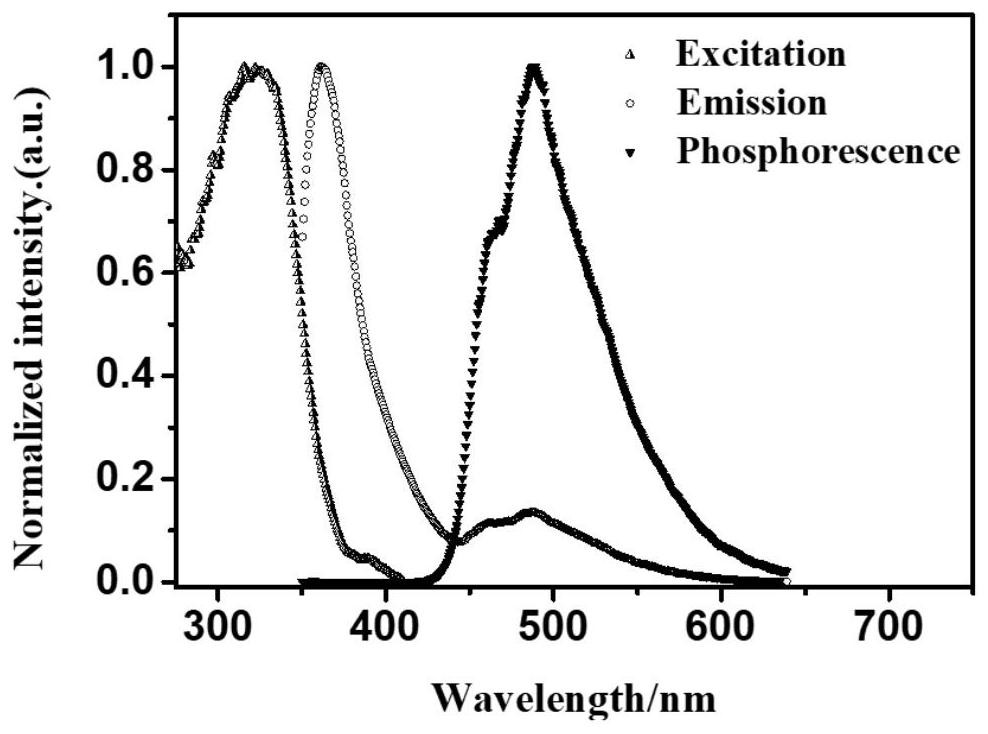
Figure 1 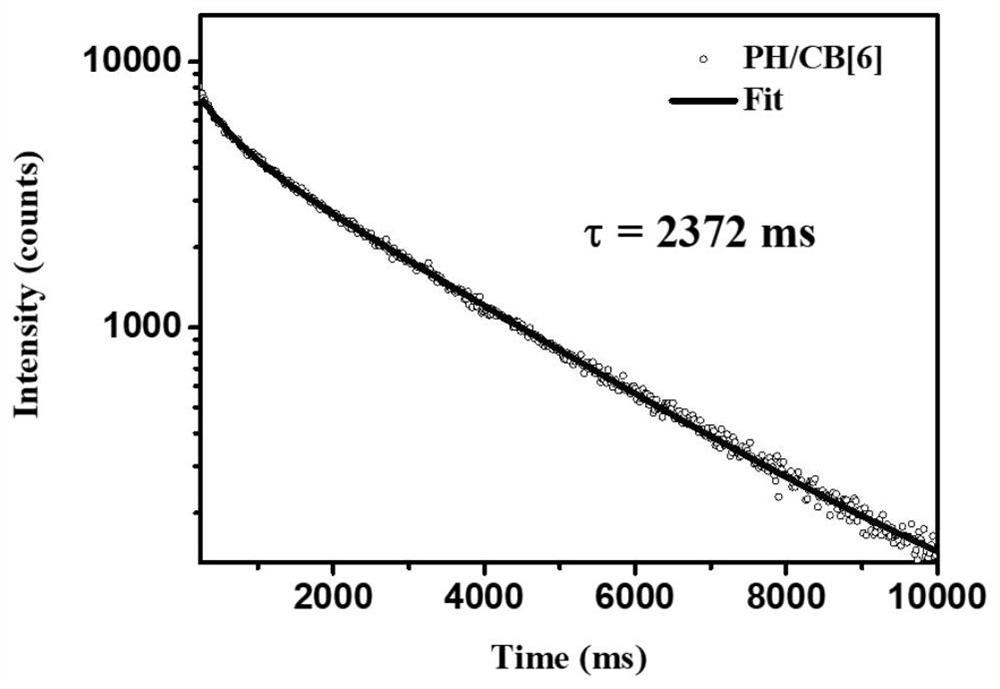
Figure 2 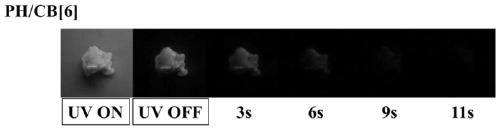
Figure 3
Abstract
Description
technical field
[0001] The invention relates to the field of pure organic room temperature luminescent materials, in particular to pure organic room temperature phosphorescence technology. Background technique
[0002] In real life, luminescent materials have made indelible contributions to human's daily life due to their unique luminescent properties and superior practical characteristics, and their development has attracted the attention of many relevant scientific researchers. Among them, room temperature phosphorescent materials are one of many types of luminescent materials. They have the advantages of stability, use at room temperature, and long life, and can be widely used in biosensing, cell imaging, and optoelectronic fields. However, most of the existing room-temperature phosphorescent materials are inorganic materials, and most of them contain heavy metal ions or lanthanides and actinides. These heavy metals are not only toxic, but also harmful to the human body, ...
Examples
Embodiment 2
[0056] Preparation method of PH / CB[7] room temperature phosphorescent material;
[0057] A certain amount of polymer PH (1.15% substitution degree of phosphorescent group) (179.5mg, 1.0eq phosphorescent group) and cucurbitacin CB[7] (32.53mg, 1.0eq) were placed in a 250mL beaker, and the stoichiometric ratio was based on the polymerization Phosphor group in the substance: CB[7]=1:1 as a reference, add 100mL of secondary water to ultrasonically dissolve and disperse, let it stand for 2 hours after completely dissolving, put the obtained host-guest complex solution into a lyophilizer, and dry it under vacuum conditions. Freeze-dried to remove solvent water, the remaining solid is the solid supramolecular complex formed by polymer PH and cucurbituril CB[7] through host-guest inclusion interaction, and then placed in a vacuum drying oven to dry, the drying temperature PH / CB[7] room temperature phosphorescent material is obtained after complete drying.
Embodiment 3
[0059] Preparation method of PH / CB[8] room temperature phosphorescent material;
[0060] A certain amount of polymer PH (1.15% substitution degree of phosphorescent group) (177.6mg, 1.0eq phosphorescent group) and cucurbitacin CB[8] (18.38mg, 0.5eq) were placed in a 250mL beaker, and the stoichiometric ratio was based on the polymerization Phosphor group in the substance: CB[8]=2:1 as a reference, add 150mL of secondary water to ultrasonically dissolve and disperse, then let it stand for 2 hours, put the obtained host-guest complex solution into a lyophilizer, and freeze under vacuum conditions Dry to remove the solvent water, the remaining solid is the solid supramolecular complex formed by polymer PH and cucurbituril CB[8] through host-guest inclusion interaction, and then place it in a vacuum drying oven to dry at 40 ℃, the desiccant is phosphorus pentoxide, and the PH / CB[8] room temperature phosphorescent material can be obtained after complete drying.
Embodiment 4
[0062] Preparation method of PBr / CB[6] room temperature phosphorescent material;
[0063] A certain amount of polymer PBr (1.09% phosphorescent group substitution) (86.2mg, 1.0eq phosphorescent group) and cucurbitacin CB[6] (12.60mg, 1.0eq) were placed in an agate mortar, and the stoichiometric ratio was Phosphor group in the polymer: CB[6]=1:1 as a reference, then add a few drops of secondary water, grind until the mixture in the mortar is almost dry, loosen the solid sticking to the wall of the mortar with a spoon, Then add a few drops of secondary water and continue grinding, repeating this for more than 4 to 5 times, so that cucurbituril CB[6] and the phosphorescent groups in the polymer PBr are fully contacted and encapsulated. After grinding, add about 5mL of secondary water to Obtain a suspension, put the suspension in a lyophilizer to freeze-dry to remove the solvent water, and obtain a fluffy solid, place it in a vacuum drying oven for drying, the drying temperature i...