
Method for modifying polyaniline polymer
A technology of polyaniline and polymer, which is applied in the field of polyaniline polymer modification, and can solve problems such as the electrical conductivity not meeting the requirements
Patent Information
- Authority / Receiving Office
- CN · China
- Current Assignee / Owner
- Publication Date
- 2021-04-02
Smart Images
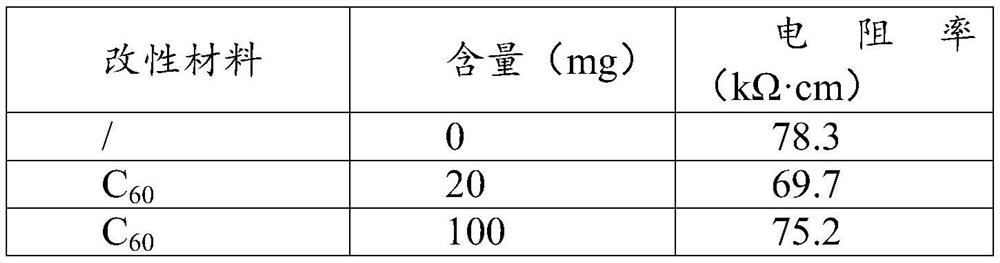
Figure 1 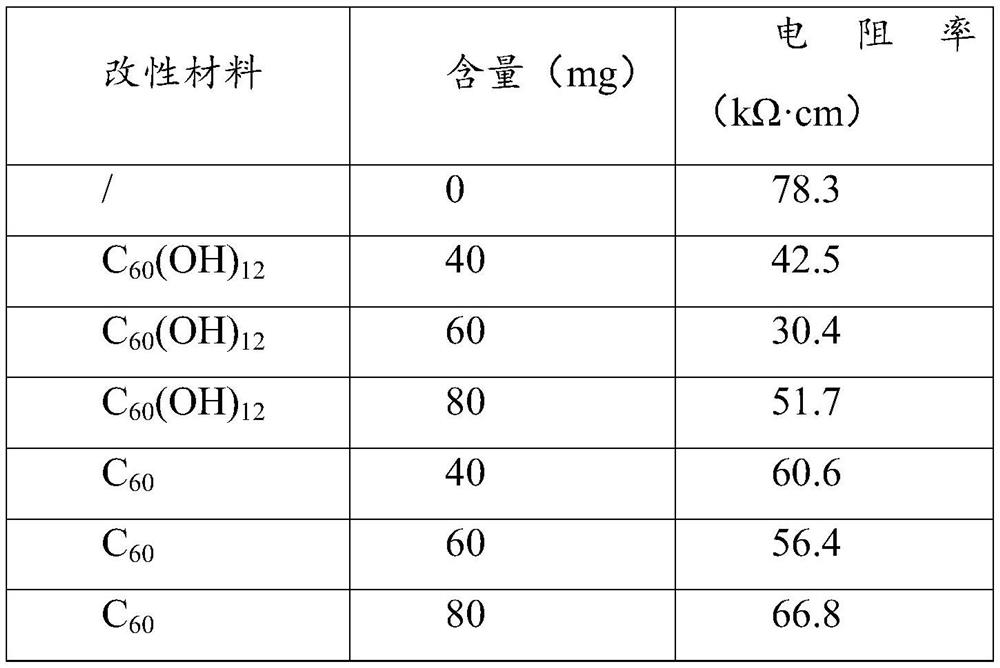
Figure 2
Abstract
Description
technical field
[0001] The invention belongs to the technical field of polyaniline modification, and in particular relates to a method for modifying polyaniline polymers. Background technique
[0002] Conductive polymers have shown potential application prospects in the fields of optoelectronics and biomedicine, and have been widely used in high-end smart fabrics in recent years. In conductive polymers, polyaniline monomer has been widely used because of its low price, simple synthesis process, high conductivity, stability in air and solution, unique doping phenomenon and good electrochemical reversibility. Applications. However, when it is used as a raw material for technical products, its conductivity cannot meet the requirements, so it is necessary to improve the conductivity of polyaniline. Contents of the invention
[0003] The invention provides a method for modifying polyaniline polymers, which can improve the conductivity of polyaniline.
[0004] To achieve the ...
Examples
Embodiment 1
[0021] Take a 25mL two-necked flask, add 300mg of C in sequence 60 and 3mL of fuming sulfuric acid, heated to 55°C, and reacted for 70h under nitrogen protection to obtain a suspension; after cooling to room temperature, add the suspension dropwise to absolute ethanol in an ice bath, and centrifuge After standing still, the intermediate product can be obtained; take a 50mL round bottom flask, add ultrapure water to the intermediate product for hydrolysis reaction, N 2 Heat to 85°C and react for 8 hours; use a sand core filter device to obtain a brown solid, and wash it repeatedly with ultrapure water for 3 times, and finally place it in a vacuum drying oven to obtain a fullerene derivative C 60 (OH) 12 .
[0022] 170mg of aniline was added to a two-necked flask, followed by 100mg of sodium dodecylsulfonate (as an emulsifier), 4mL of 2mol / L hydrochloric acid and 15mL of ultrapure water, and finally (0mg, 20mg, 100mg) of Fullerene Derivative C 60 (OH) 12 , stirred vigorousl...
Embodiment 2
[0029] 170mg of aniline was added to a two-necked flask, followed by 100mg of sodium dodecylsulfonate (as an emulsifier), 4mL of 2mol / L hydrochloric acid and 15mL of ultrapure water, and finally (0mg, 20mg, 100mg) of Fullerene C 60 , stirred vigorously for 2 h under ice-water bath conditions.
[0030] Dissolve 0.4g of ammonium persulfate in 15mL of ultrapure water, add dropwise into the reaction flask to control the temperature at 80-90°C and continue the reaction for 3h; finally add polylactic acid solution (a solution formed by dissolving 1.2g of polylactic acid solid in chloroform solvent) ), 90-95 ° C vigorously stirred and reacted for 3 hours, the reaction product was washed with ethanol and ultrapure water until the water phase was colorless, to remove remaining monomers and ammonium persulfate, etc.; use a rotary evaporator to extract the obtained oil The phase product was spin-dried to obtain the target product, which was placed in a vacuum drying oven for 12 hours to...
Embodiment 3
[0036] 170mg of aniline was added to a two-necked flask, followed by 100mg of sodium dodecylsulfonate (as an emulsifier), 4mL of 2mol / L hydrochloric acid and 15mL of ultrapure water, and finally (40mg, 60mg, 80mg) of Fullerene C 60 or fullerene derivative C 60 (OH) 12 , stirred vigorously for 2 h under ice-water bath conditions.
[0037] Dissolve 0.4g of ammonium persulfate in 15mL of ultrapure water, add dropwise into the reaction flask to control the temperature at 80-90°C and continue the reaction for 3h; finally add polylactic acid solution (a solution formed by dissolving 1.2g of polylactic acid solid in chloroform solvent) ), 90-95 ° C vigorously stirred and reacted for 3 hours, the reaction product was washed with ethanol and ultrapure water until the water phase was colorless, to remove remaining monomers and ammonium persulfate, etc.; use a rotary evaporator to extract the obtained oil The phase product was spin-dried to obtain the target product, which was placed ...