
Method for splitting nucleoside compound
A technology for compounds and nucleosides, which is applied in the field of cleaving nucleoside compounds by using acidic calcium sulfate, can solve the problems of complicated separation process, inability to directly obtain D-ribose, long reaction time, etc. The effect of excellent product quality
Patent Information
- Authority / Receiving Office
- CN · China
- Current Assignee / Owner
- Publication Date
- 2022-08-02
Smart Images
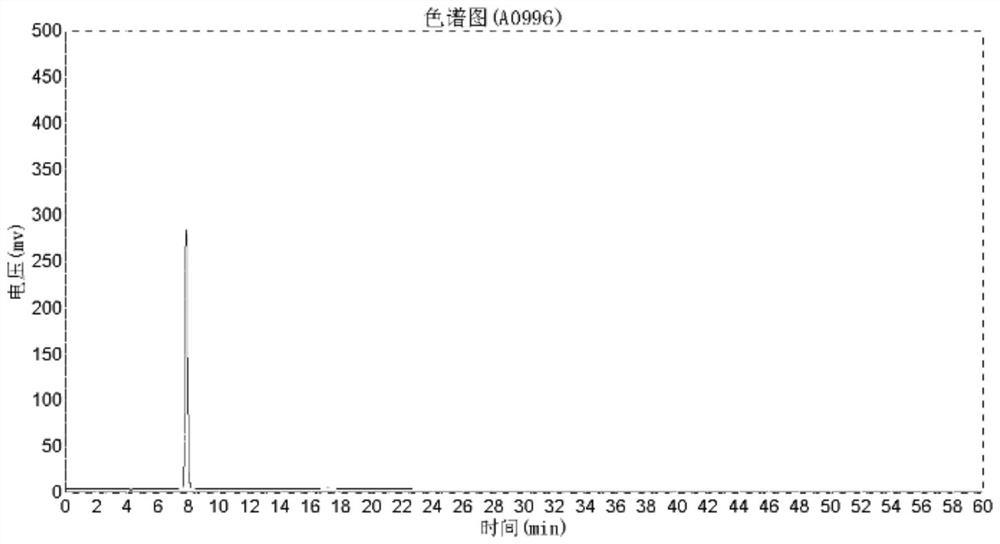
Figure 1 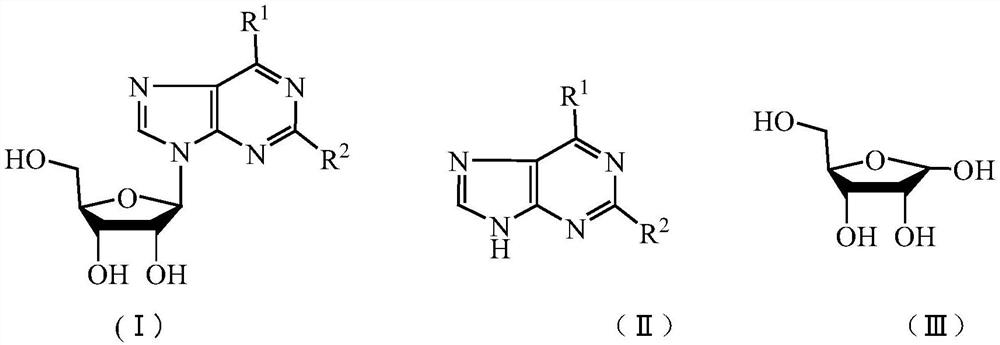
Figure 2 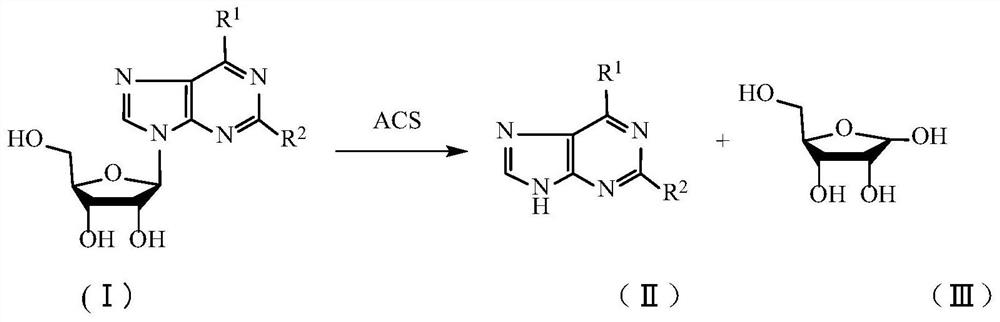
Figure 3
Abstract
Description
(1) Technical field
[0001] The invention relates to a method for splitting nucleoside compounds, in particular to a method for splitting nucleoside compounds by using acidic calcium sulfate. (2) Background technology
[0002] D-ribose is a functional five-carbon monosaccharide. D-ribose is an important part of ribonucleic acid (RNA), the genetic material in organisms, and plays a key role in the metabolism of organisms. D-ribose itself has a certain sweetness and can be added to food to increase food flavor. D-ribose and its derivatives can be used as synthetic intermediates of various nucleoside drugs, such as zalcitabine, stavudine, lamivudine, cytidine, etc.
[0003] Adenine is an important intermediate in the preparation of adefovir and tenofovir, guanine is an important intermediate in the synthesis of acyclovir, ganciclovir and other drugs, and hypoxanthine can be used to prepare 6-chloropurine and other products. All of them can be obtained by catalytic cleavage of...
Examples
Embodiment 1
[0022] The preparation of embodiment 1 acid calcium sulfate (ACS)
[0023] 435mL of concentrated sulfuric acid with a concentration of 98% was added dropwise to a 2-liter flask containing 285mL of deionized water, stirred, cooled to 8°C in an ice bath, and 5g of calcium sulfate was added, and the temperature was controlled between 8 and 12°C. Mix 140 g of calcium hydroxide powder (food grade, with a purity of more than 98%) and 210 g of deionized water, stir, add to the flask in batches, and complete the addition. Continue to keep stirring for 4 hours. Filtration, the filtrate is acid calcium sulfate (ACS).
Embodiment 2A
[0024] Example 2 ACS cleavage of adenosine
[0025] (1) 10g adenosine was added successively in a 100mL three-necked flask, the acid calcium sulfate prepared by the 20g embodiment 1 method was stirred, and the mixture was heated to 55 ° C and reacted for 5 hours, and sampling was performed with high performance liquid chromatography to detect adenosine conversion rate is 99.5%. After the completion of the reaction, the heating was stopped, cooled to room temperature, and filtered to obtain a filtrate (a brown-yellow aqueous solution containing D-ribose) and a filter cake;
[0026] (2) adding the filter cake of step (1) into a 250mL round-bottomed flask, adding 150mL distilled water, adjusting the pH value of the solution to neutrality (pH is 7) with an aqueous sodium hydroxide solution with a mass concentration of 10%, heating to boiling, and waiting for After the filter cake was completely dissolved in water, the heating was stopped, cooled to room temperature, and left to s...
Embodiment 3A
[0031] Example 3 ACS cleavage of guanosine
[0032] The adenosine in Example 2 was changed to guanosine, and other reaction conditions remained unchanged. 5.07 g of guanine was obtained, the yield was 94.9% (calculated as guanosine), the purity was 99.1%, and the chromatographic detection conditions were the same as those of adenine. 3.2 g of D-ribose solid was obtained. Melting point: 79-81°C.