
Spacers for ion-exchange device
a technology of spacers and ion exchange devices, which is applied in the direction of cation exchanger materials, membranes, separation processes, etc., can solve the problems of increasing the complexity of the system, increasing the mechanical component, and affecting the sealing effect of the ion exchange device, so as to improve the internal seal, improve the external seal, and improve the internal seal
Patent Information
- Authority / Receiving Office
- US · United States
- Patent Type
- Patents(United States)
- Current Assignee / Owner
- Publication Date
- 2022-04-26
Smart Images
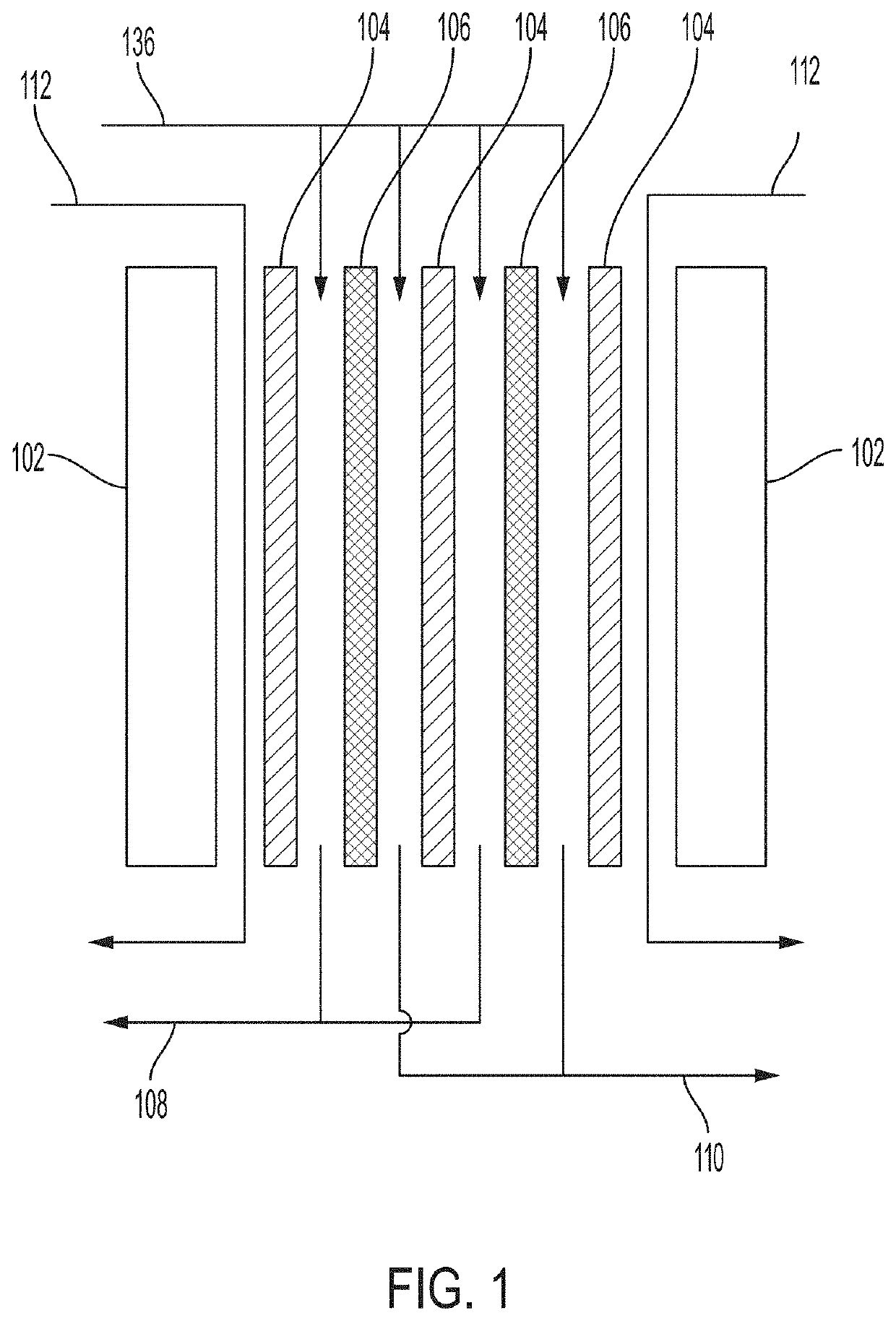
Figure 1 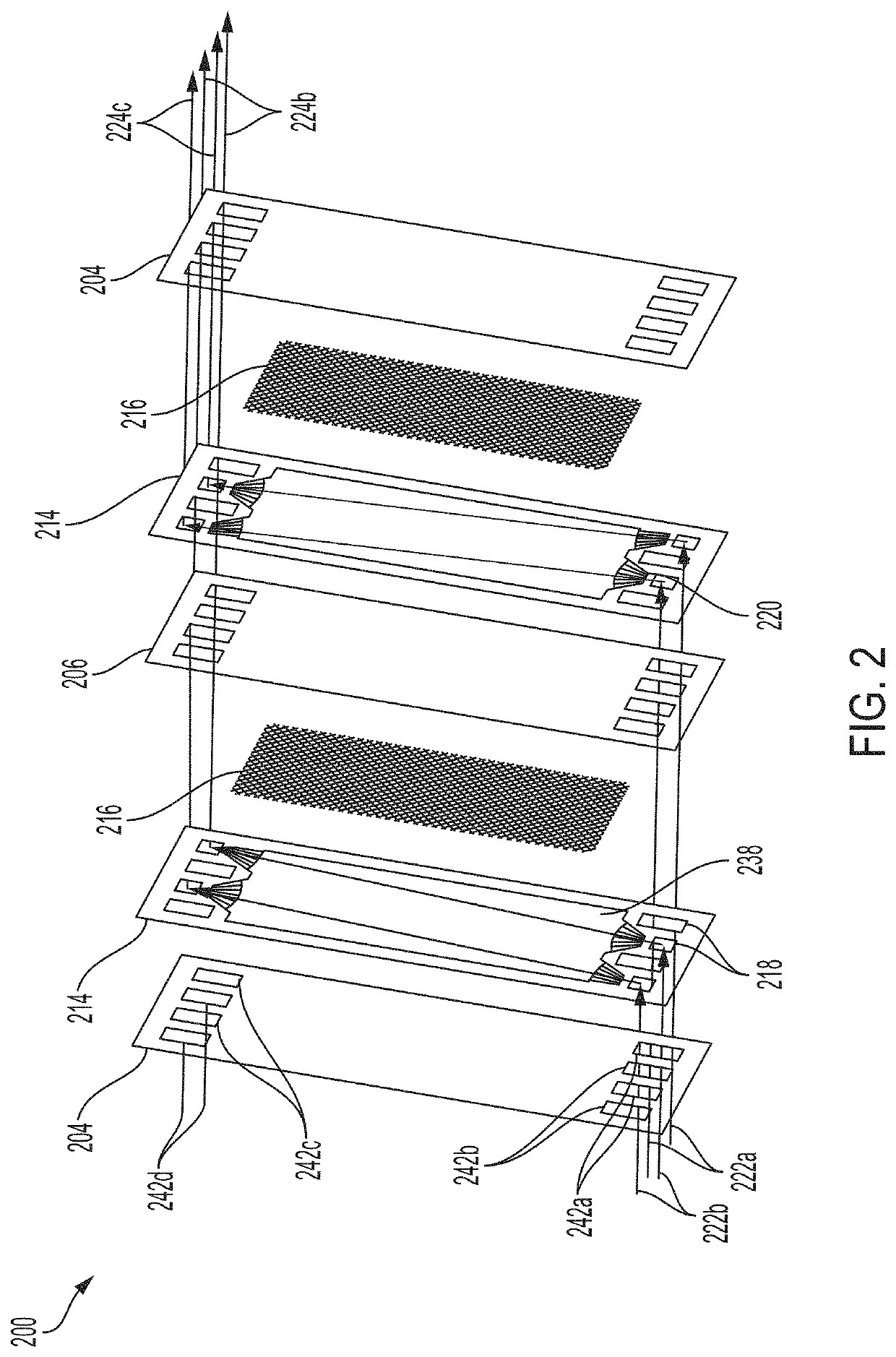
Figure 2 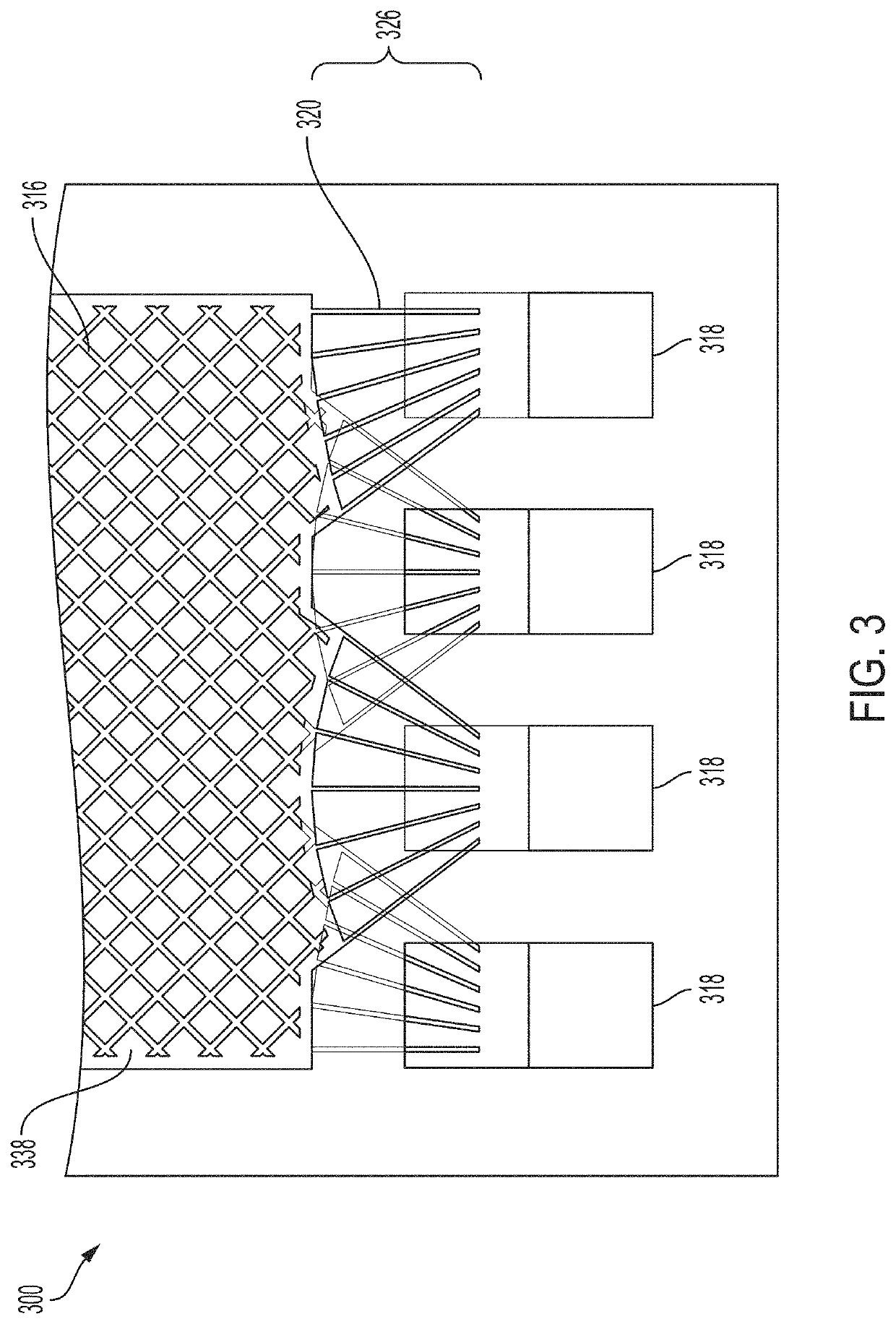
Figure 3
Abstract
Description
REFERENCE TO RELATED APPLICATIONS
[0001] This application claims the benefit of U.S. Provisional Application No. 62 / 768,644, filed Nov. 16, 2018, the entire contents of which are incorporated herein by reference.FIELD OF THE INVENTION
[0002] This disclosure relates to spacers for a membrane-based desalination device. More particularly, this disclosure relates to spacers for improved flow distribution through an intermembrane chamber and across an ion-exchange membrane of an ion-exchange device, as well as improved external and internal seals of an ion-exchange device.BACKGROUND OF THE INVENTION
[0003] Electrodialysis is one example of a membrane-based large scale desalination method. Specifically, electrodialysis can be used in an ion-exchange device to selectively remove positive and negative ions from a water source (e.g., brackish water or brine solution produced in reverse osmosis units) by transporting salt ions from one solution to another by way of ion-exchange membranes. For optim...
Examples
Embodiment Construction
[0055]Described are spacer borders and ion-exchange devices and methods for fabricating spacer borders for use in an ion-exchange device. As described above, the performance of an ion-exchange device relies on the distribution of fluid flow across the ion-exchange membranes of the device, as well as the reliability and effectiveness of the internal seals (i.e., seals between adjacent intermembrane chambers) and external seals (i.e., seals between an interior space and an exterior space of the device) of the device. Poor flow distribution decreases the capacity, production rate, and efficacy of an ion-exchange device. Poor internal seals introduce leaks and cross-contamination from one intermembrane chamber to an adjacent intermembrane chamber. Poor external seals introduce safety hazards, leaks from an interior of the device to an exterior of the device, and contamination from the external environment. Accordingly, embodiments provided herein can improve fluid flow distribution thro...