
Turbochanger system for internal combustion engine comprising two compressor stages of the radial type provided with compressor wheels having backswept blades
a technology of internal combustion engine and compressor wheel, which is applied in the direction of liquid fuel engine, machine/engine, electric control, etc., can solve the problems of poor utilization of fuel energy resources and poor efficiency, and achieve the effect of improving efficiency and better use of engine energy in the exhaust flow
Patent Information
- Authority / Receiving Office
- US · United States
- Patent Type
- Applications(United States)
- Current Assignee / Owner
- Publication Date
- 2006-06-15
- Estimated Expiration
- Not applicable · inactive patent
Smart Images
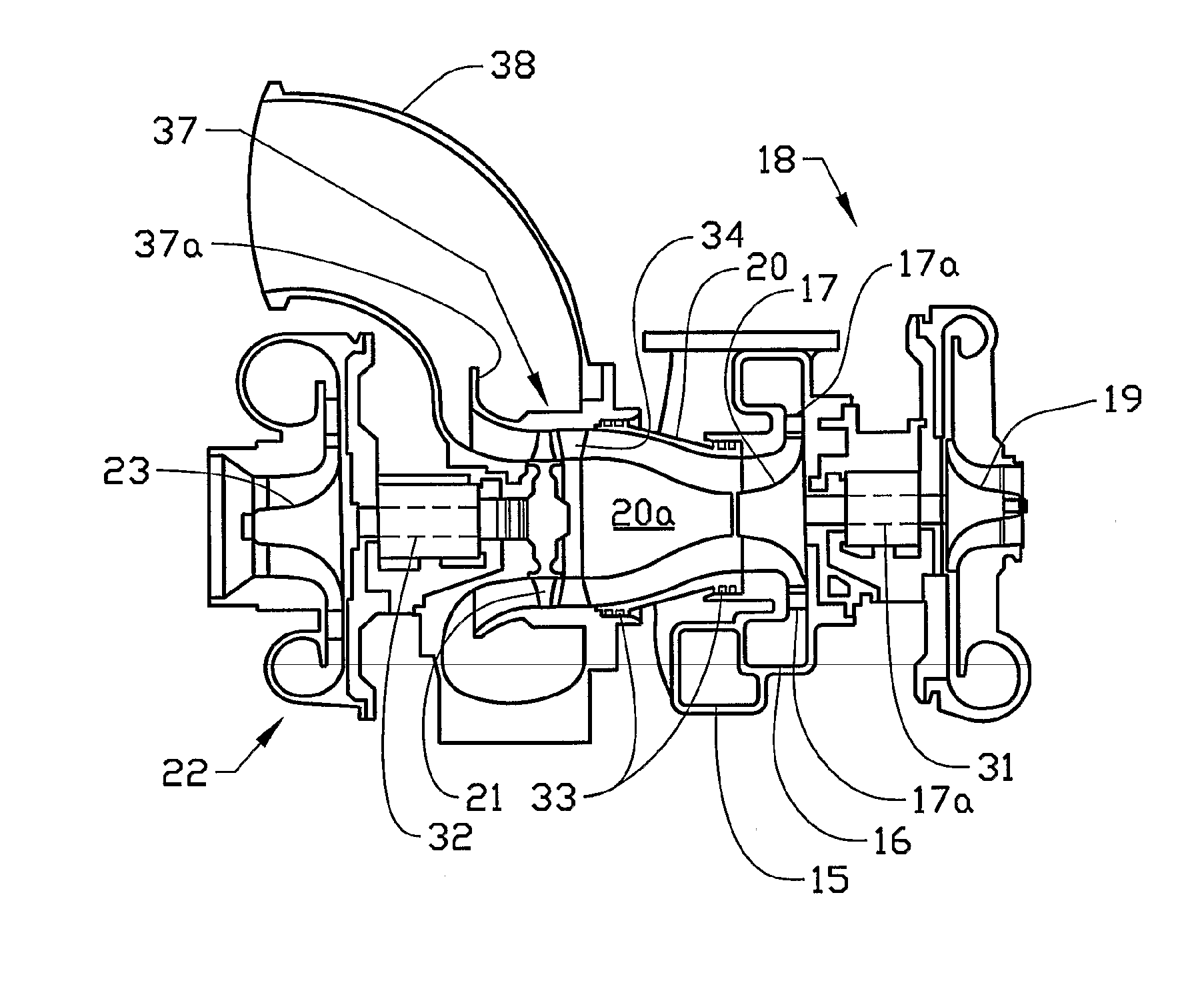
Figure 1 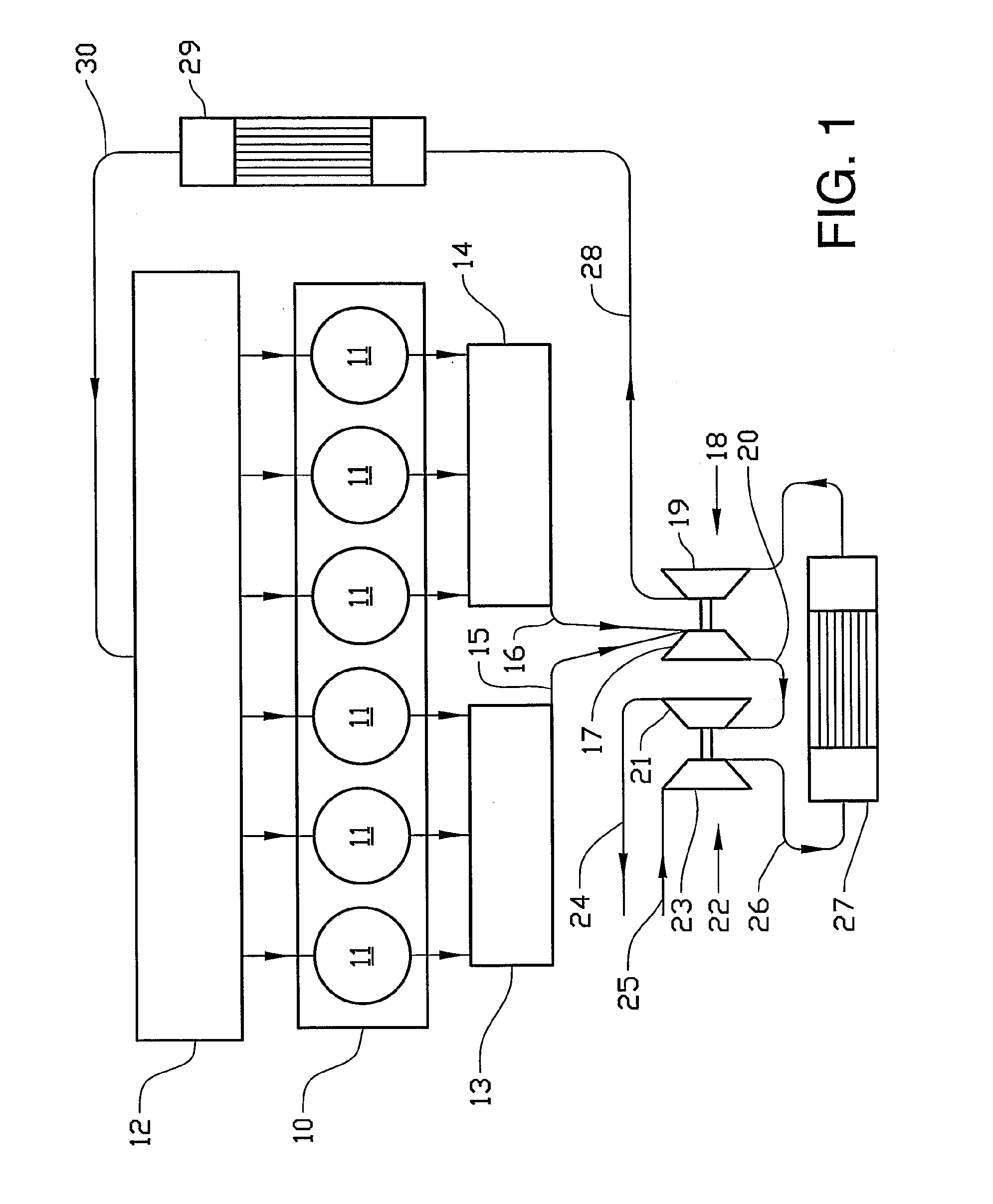
Figure 2 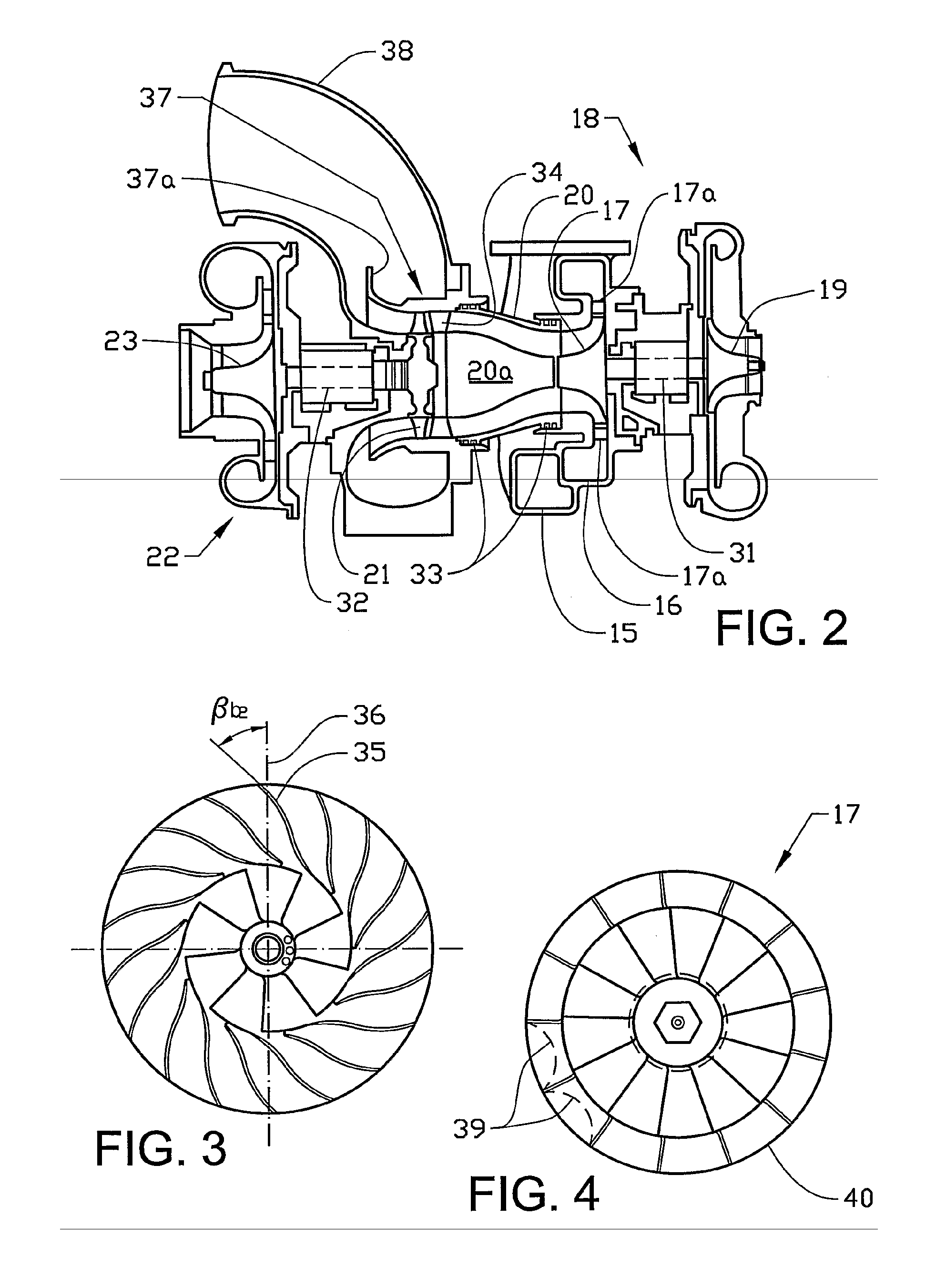
Figure 3
Abstract
Description
FIELD OF THE INVENTION
[0001] The present invention relates to a turbocharger system for an internal combustion engine having at least one exhaust line for evacuating exhaust gases from the combustion chamber of the engine and at least one inlet line for supplying air to the combustion chamber. A high-pressure turbine, interacting with a high-pressure compressor, and a low-pressure turbine, interacting with a low-pressure compressor, are also included for extracting energy from the exhaust flow of the engine and pressurizing the inlet air of the engine. BACKGROUND OF THE INVENTION
[0002] Turbocharger systems for supercharging diesel-type internal combustion engines, preferably for heavy-duty vehicles, usually include a single-stage compressor driven by a single-stage turbine, both of the radial type. Turbocharger systems with two-stage supercharge sometimes also include intermediate cooling, but the construction is usually based on standard assemblies intended for single-stage super...
Examples
Embodiment Construction
[0012] The invention relates to a supercharging system for, in the first place, diesel engines having a cubic capacity of between about 6 liters and about 20 liters, for use preferably in heavy-duty vehicles such as trucks, buses and construction machinery. The supercharging system has the characteristic that it offers a considerably more effective supercharge than current systems. The supercharge. is realized in two stages with two series-connected, radial-type compressors with intermediate cooling. The first compressor stage, referred to as the low-pressure compressor, is driven by a low-pressure turbine of the axial type. The second compressor stage, the high-pressure compressor, is driven by a high-pressure turbine of the radial type.
[0013]FIG. 1 shows an engine block 10 having six engine cylinders 11, which communicate in a conventional manner with an inlet manifold 12 and two separate exhaust manifolds 13, 14. Each of these two exhaust manifolds receives exhaust gases from th...