
High-throughput continuous-flow ultrasound reactor
a continuous-flow, high-throughput technology, applied in the direction of mechanical vibration separation, oxygen/ozone/oxide/hydroxide, surgery, etc., can solve the problem of high sensitive value of processing cost, and achieve the effect of high-efficiency energy us
Patent Information
- Authority / Receiving Office
- US · United States
- Patent Type
- Applications(United States)
- Current Assignee / Owner
- Publication Date
- 2005-12-15
- Estimated Expiration
- Not applicable · inactive patent
Smart Images
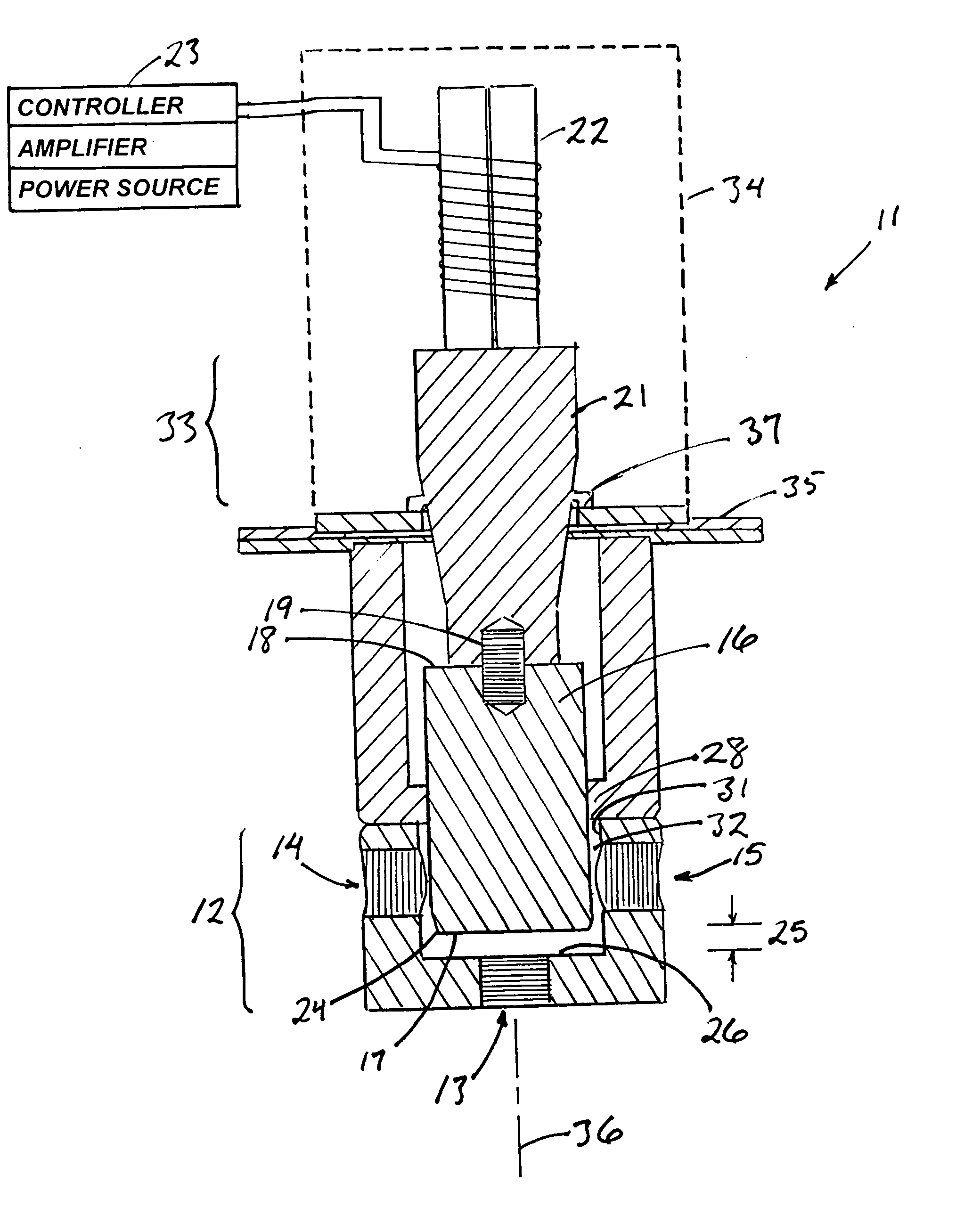
Figure 1 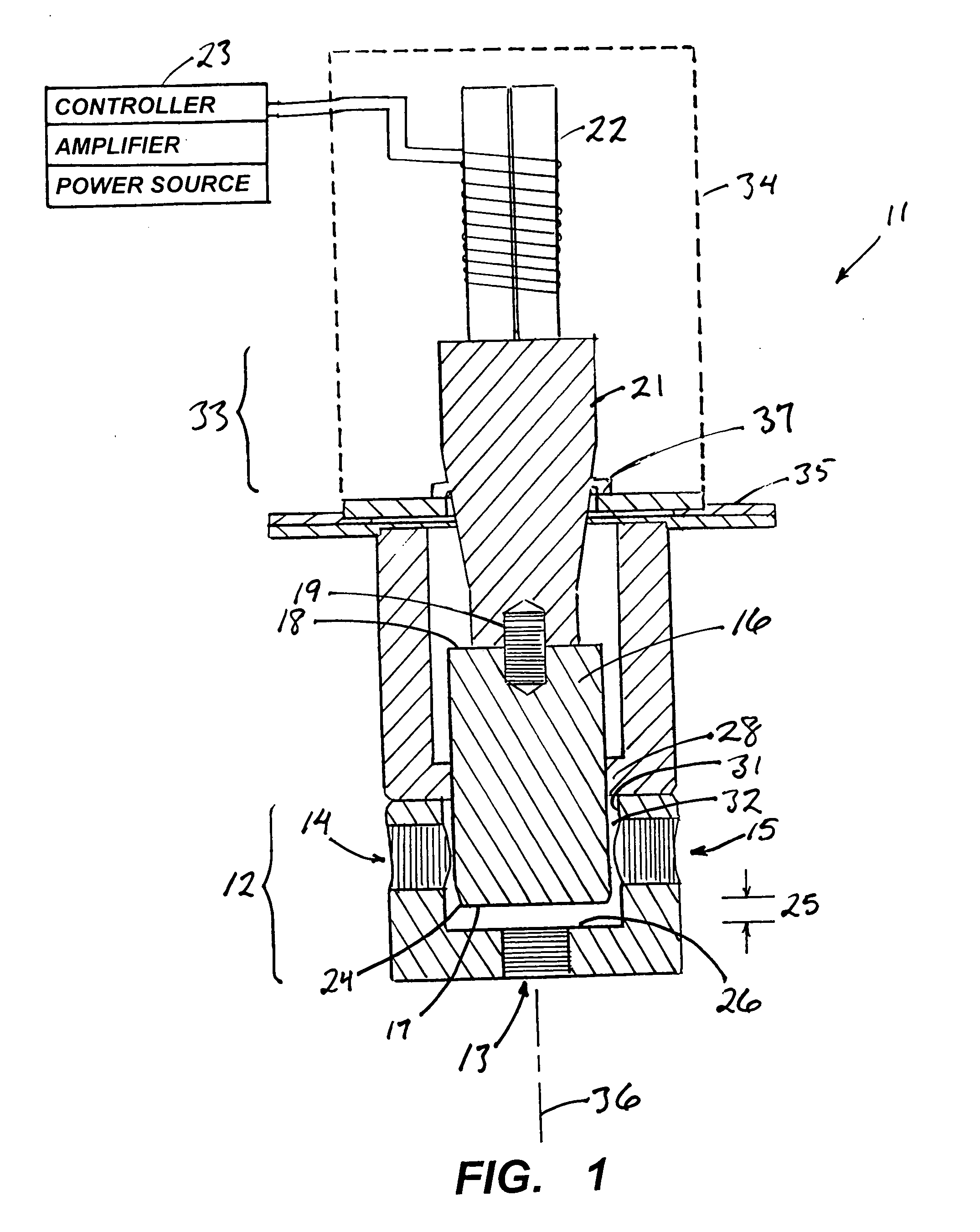
Figure 2
Abstract
Description
BACKGROUND OF THE INVENTION
[0001] 1. Field of the Invention
[0002] This invention resides in the field of process equipment used in the treatment of materials in liquid media by ultrasound, and also in the processing of petroleum and petroleum-based fuels.
[0003] 2. Description of the Prior Art
[0004] The use of ultrasound for driving chemical reactions is well known. Descriptions are found in Suslick, K. S., Science 247: 1439 (1990), and Mason, T. J., Practical Sonochemistry, A User's Guide to Applications in Chemistry and Chemical Engineering, Ellis Norwood Publishers, West Sussex, England (1991). A variety of ultrasound systems have been described, and among the most prominent are “probe”-type systems, which include an ultrasonic transducer that generates ultrasonic energy and transmits that energy to a probe, i.e., an ultrasonic horn, for amplification.
[0005] Uses of ultrasound have recently been extended to include petroleum processing, notably for the desulfurization of foss...
Examples
Embodiment Construction
[0012] While this invention is susceptible to a variety of implementations and configurations, a detailed study of a specific system within the scope of the invention will provide the reader with a full understanding of the concepts of the invention as a whole and how they can be applied. One such system is shown in the Figure.
[0013]FIG. 1 is an axial cross section of a continuous-flow reactor 11 in which a flowing reaction medium is exposed to ultrasound in accordance with this invention. The reactor consists of a reaction chamber 12 with an entry port 13 for the inflow of the reaction medium and exit ports, of which two 14, 15 are shown, through which the treated reaction medium leaves the chamber. Mounted to the reactor is an ultrasonic horn 16 whose distal end 17 extends into the interior of the reaction chamber 12. The proximal end 18 of the horn is joined by way of a coupling stud 19 to a connecting block 21 that in turn is joined to an ultrasonic transducer 22. The connectin...