
Magnesium-containing carrier components and application thereof to olefin polymerization
a technology of olefin polymerization and carrier components, which is applied in the direction of catalyst activation/preparation, physical/chemical process catalysts, chemical/physical processes, etc., can solve the problems of difficult handling, and short duration of activity, so as to achieve high olefin polymerization activity and high polymerization activity , excellent powdery properties
Patent Information
- Authority / Receiving Office
- US · United States
- Patent Type
- Applications(United States)
- Current Assignee / Owner
- Publication Date
- 2006-07-13
Smart Images
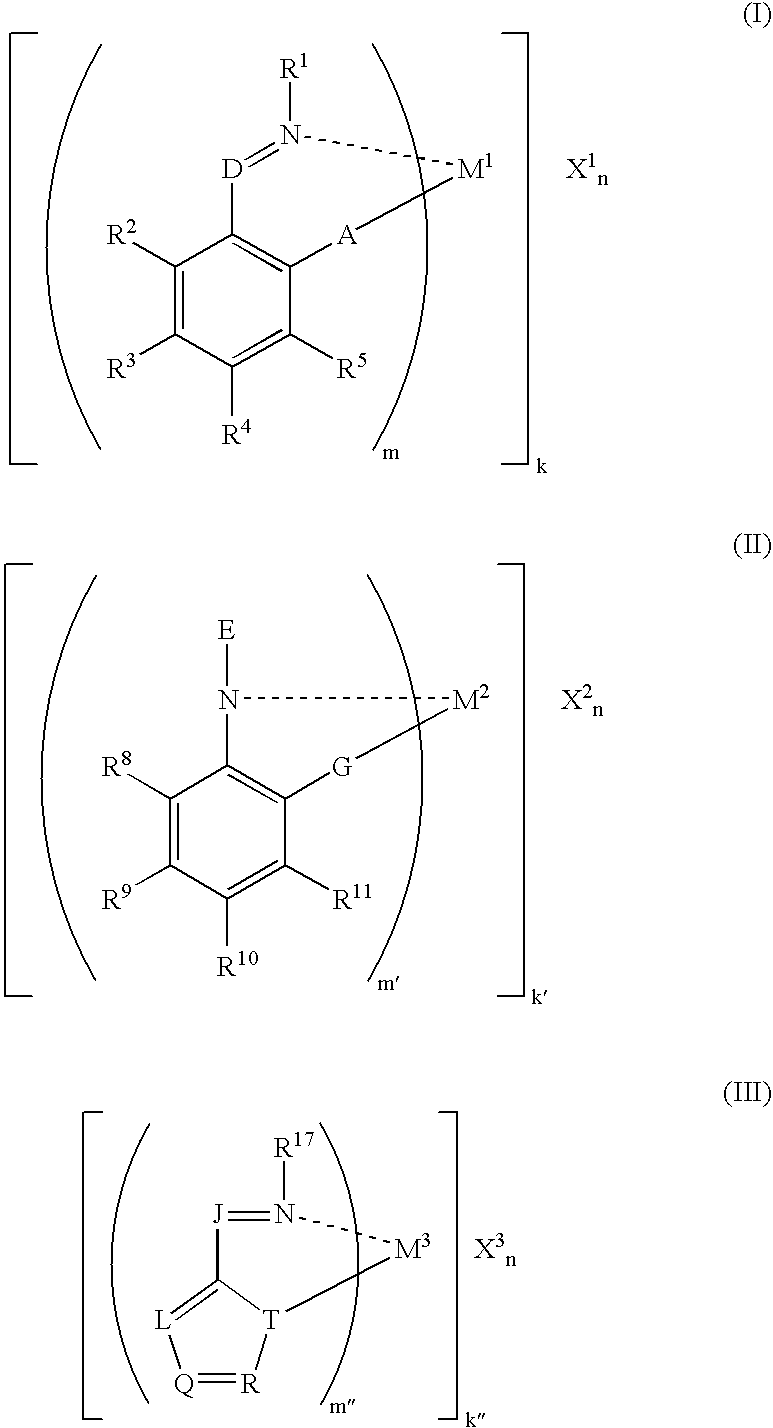
Figure 1 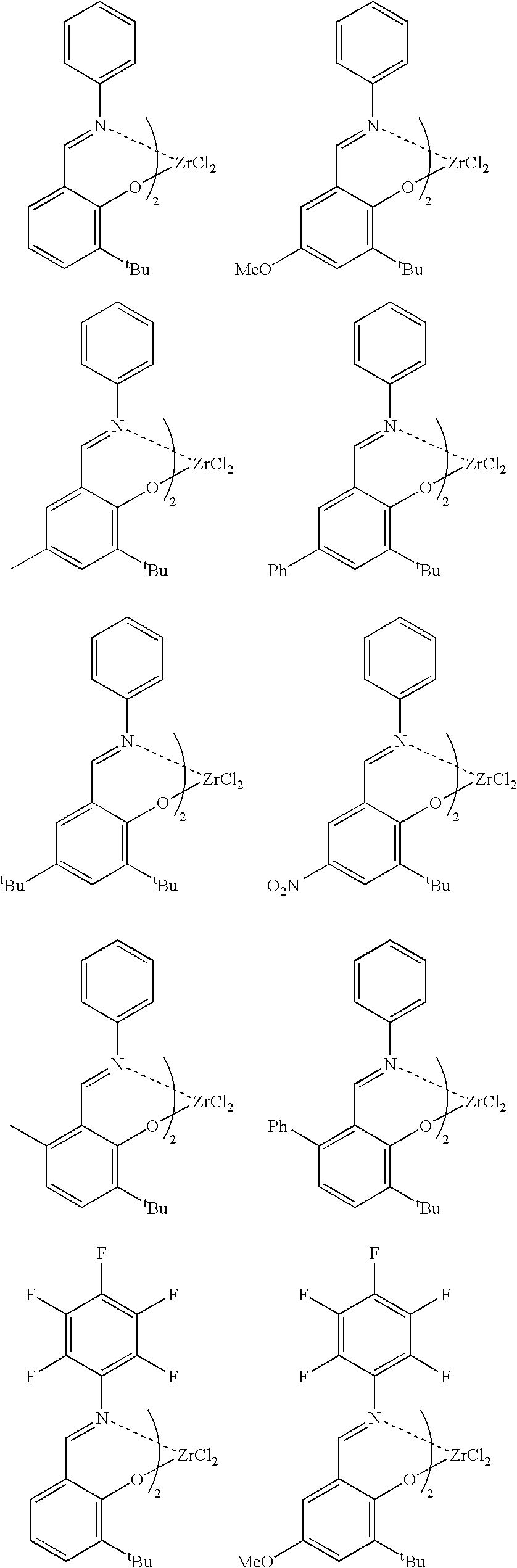
Figure 2 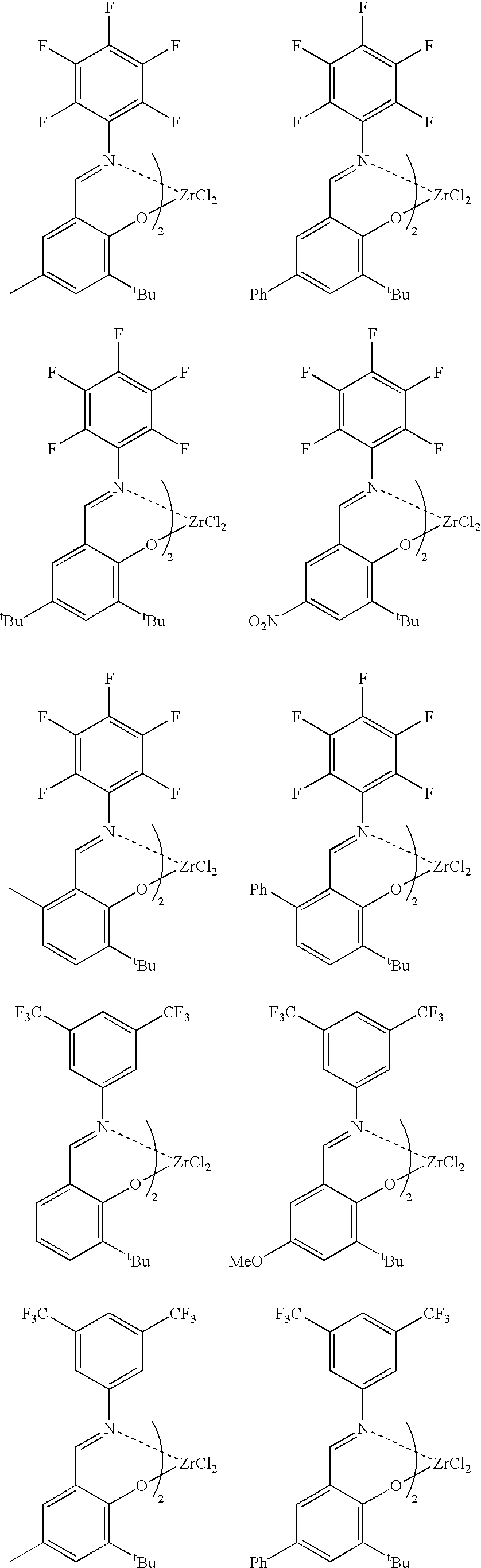
Figure 3
Abstract
Description
TECHNICAL FIELD
[0001] The present invention relates to an olefin polymerization catalyst and a process for producing an olefin polymer by using the olefin polymerization catalyst and in particular to an olefin polymerization catalyst not containing an organoaluminum oxy compound or an organoboron compound used conventionally as an olefin polymerization catalyst component, a process for producing an olefin polymer by using the olefin polymerization catalyst, and polyolefins excellent in powdery properties obtained by this process. BACKGROUND ART
[0002] There is known a method of polymerizing an olefin wherein a metallocene compound having a group having conjugated π electrons particularly cyclopentadiene and its derivative as a ligand is used as a catalyst to be combined with an organoaluminum oxy compound or an organoboron compound. For example, JP-A 58-19309 discloses a method of polymerizing an olefin wherein bicyclopentadienyl zirconium dichloride and methyl aluminoxane are used...
Examples
example 1
Preparation of Component (b1)
[0440] 95.2 g (1.0 mole) anhydrous magnesium chloride, 442 ml decane and 390.6 g (3.0 moles) 2-ethylhexyl alcohol were reacted at 130° C. for 2 hours to give a uniform solution (component (b1)).
Preparation of Component (b1-1)
[0441] A flask having an internal volume of 200 ml purged sufficiently with nitrogen was charged with 25 ml component (b1) (25 mmol in terms of magnesium atom) and 100 ml purified decane, and while the temperature of the solution was kept at 15° C. under stirring, 26 mmol triethyl aluminum diluted with purified decane was added dropwise thereto over 30 minutes. Thereafter, the temperature of the solution was increased to 80° C. over 120 minutes, and the mixture was reacted for additional 60 minutes. While the temperature was kept at 80° C., 49 mmol triethyl aluminum diluted with purified decane was again added dropwise thereto over 30 minutes, and the mixture was further reacted under heating for 60 minutes. After the reaction w...
example 2
Preparation of Component (b1-1-a2-140)
[0448] A flask having an internal volume of 200 ml purged sufficiently with nitrogen was charged with purified toluene so as to adjust the total volume to 128.4 ml and with component (b1-1) in an amount of 10 mmol in term of magnesium atom. While the sample was kept at 25° C. under stirring, 71.6 ml toluene solution (0.000699 mmol / ml) of component (a2-140) below was added dropwise thereto over 20 minutes. After the mixture was stirred for 1 hour, the solids were collected by filtration and washed sufficiently with toluene, and 100 ml purified decane was added thereto to give a decane slurry of component (b1-1-a2-140).
[0449] A part of the component (b1-1-a2-140) prepared by the above procedure was dried and examined for its composition, indicating 16.0 weight % magnesium, 2.7 weight % aluminum, 24.0 weight % 2-ethylhexoxy group, 48.0 weight % chlorine and 0.30 weight % zirconium. Similarly to Example 1, the analytical content of zirconium agre...
example 3
Preparation of Component (b1-1-a2-204)
[0452] A flask having an internal volume of 200 ml purged sufficiently with nitrogen was charged with purified toluene so as to adjust the total volume to 125.5 ml and with component (b1-1) in an amount of 10 mmol in term of magnesium atom. While the sample was kept at 25° C. under stirring, 74.5 ml toluene solution (0.000671 mmol / ml) of component (a2-204) below was added dropwise thereto over 20 minutes. After the mixture was stirred for 1 hour, the solids were collected by filtration and washed sufficiently with toluene, and 100 ml purified decane was added thereto to give a decane slurry of component (b1-1-a2-204).
[0453] Apart of the component (b1-1-a2-204) prepared by the above procedure was dried and examined for its composition, indicating 17.0 weight % magnesium, 2.7 weight % aluminum, 24.0 weight % 2-ethylhexoxy group, 50.0 weight % chlorine and 0.31 weight % zirconium. Accordingly, the molar ratio of magnesium to aluminum (Mg / Al) was...