
D-mannitol and its preparation
a technology of d-mannitol and its preparation, which is applied in the directions of organic chemistry, pill delivery, and heterocyclic compound active ingredients, can solve the problems of poor bindability of d-mannitol, strong friction with metal walls, and wear on the wall of a die and on the side face, and achieve excellent powder properties and simple procedures.
Patent Information
- Authority / Receiving Office
- US · United States
- Patent Type
- Applications(United States)
- Current Assignee / Owner
- Publication Date
- 2001-05-10
- Estimated Expiration
- Not applicable · inactive patent
Smart Images
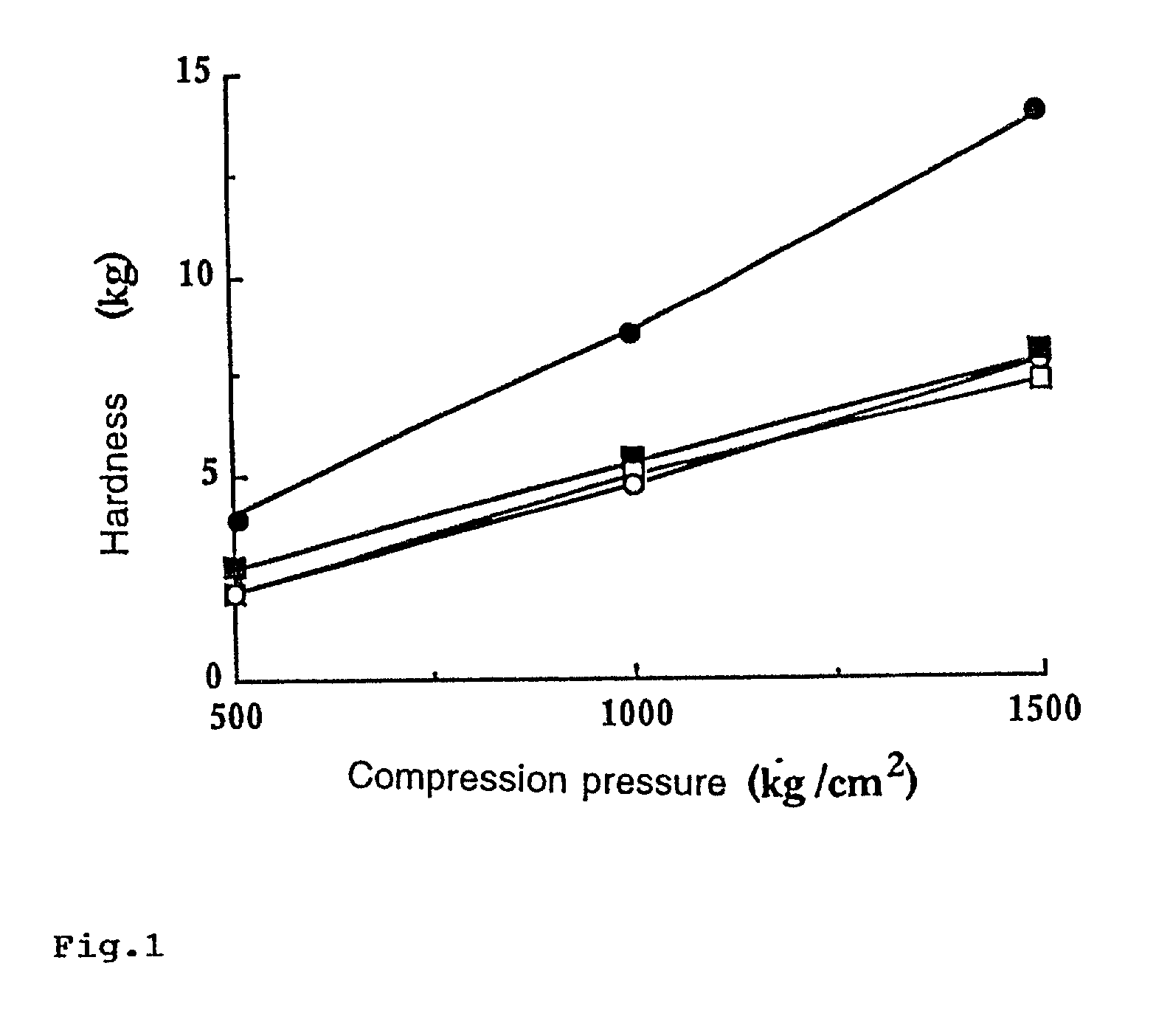
Figure 1 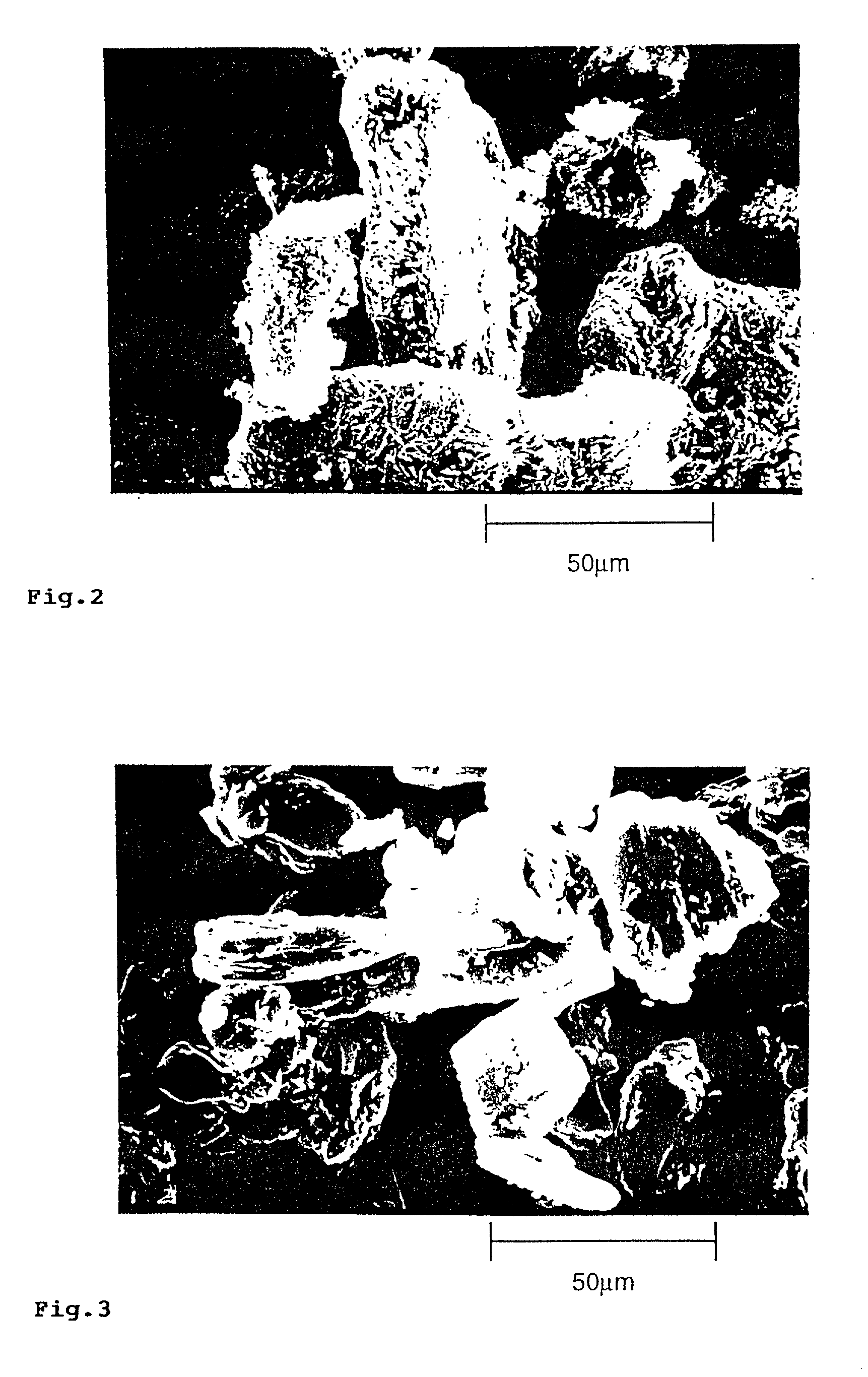
Figure 2 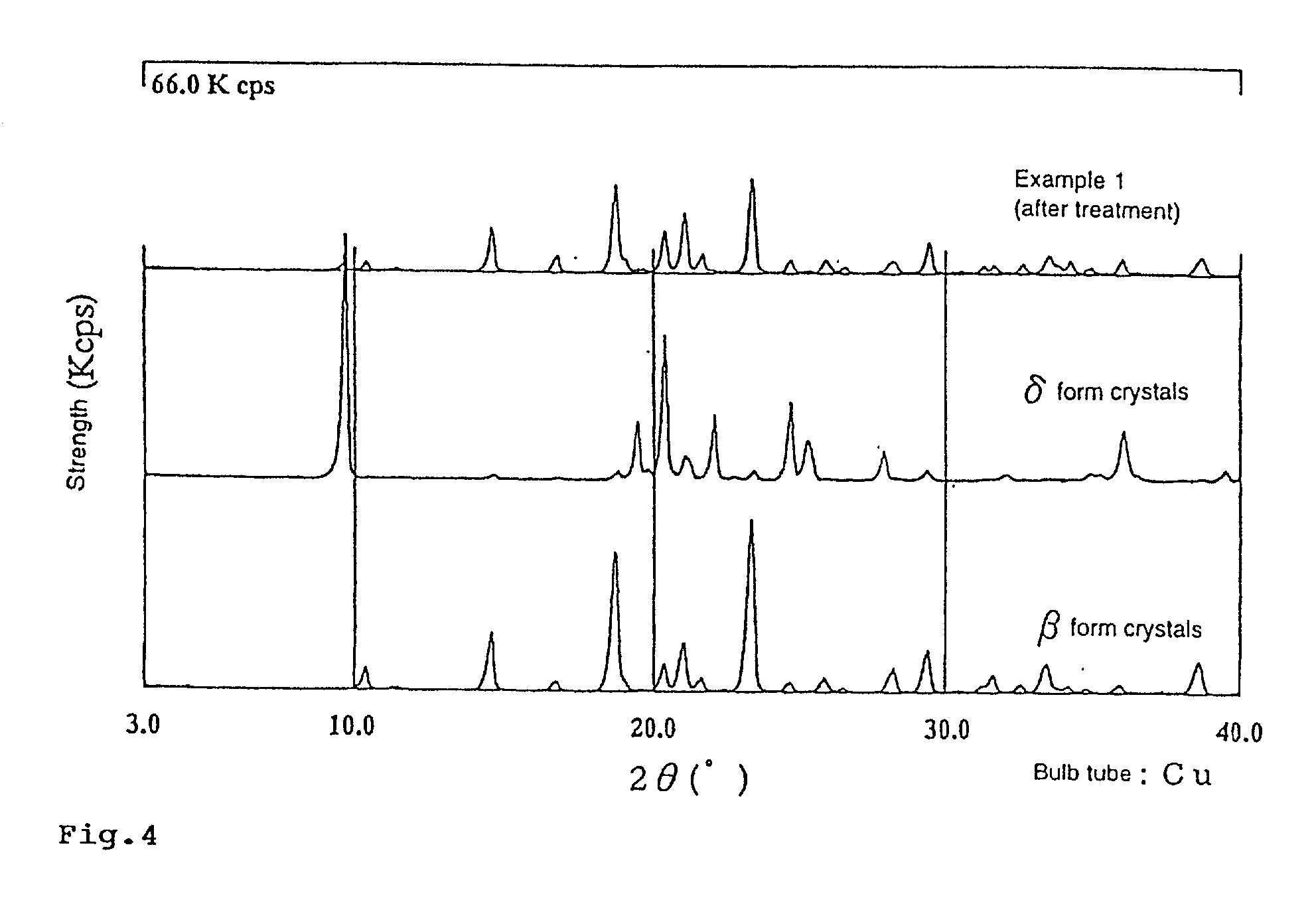
Figure 3
Abstract
Description
1. The present invention relates to a novel D-mannitol and its preparation. More specifically, it relates to D-mannitol which can be used as an excipient with excellent compressibility in the fields of preparation of medicaments and food processing industry, and a process for preparing it.2. D-mannitol is excellent in safety and the compatibility with physiologically active substances. And, since it is not hygroscopic and retains no substantial moisture, it is of high value as an excipient for formulation of, especially, a physiologically active substance of high moisture sensitivity into tablets or capsules. On the other hand, D-mannitol is poor in bindability when subjected to compression and, besides, its friction with a metal wall is strong. These shortcomings tend to cause die friction or capping upon compression, which fails to give sufficient hardness to the aimed tablets, giving wear on the wall of a die and on the side face of a punch, even making sometimes the running of a...
Examples
example 1
83. To 100 g of the 6 form D-mannitol crystals was added 20 g of purified water. The mixture was stirred in a mortar for 3 minutes to moisten the crystals evenly, which was subjected to vacuum drying (40.degree. C., 16 hours), followed by pulverizing through a sieve of 16 mesh. The powders thus obtained (specific surface area: 1.9 m.sup.2 / g) were subjected to compression molding under the same conditions as in Comparative Example 1. On the other hand, as comparative compressed products, compressed products were prepared respectively using untreated .delta. form D-mannitol crystals (specific surface area: 0.7 m.sup.2 / g) and .beta. form D-mannitol crystals (specific surface area: 0.5 m.sup.2 / g) in substantially the same manner. The hardness of the compressed product thus obtained and that of the compressed product in Comparative Example 1 were determined by an instrument of measuring tablet fracture strength (Toyama Sangyo). As the result, no difference of hardness was recognized, und...
example 2
84. In a agitating granulator (Powrex, Vertical Granulator VG10 type), 1500 g of the .delta. form D-mannitol crystals was evenly moistened with 375 g of purified water (200 rpm, 2 minutes), which was subjected to vacuum drying (40.degree. C., 16 hours), followed by milling in power mill (Showa Kagaku, P-3 type punching size: 1.5 mm.phi.). The powder thus obtained (specific surface area: 1.9 m.sup.2 / g; hereinafter called ".delta. form crystals AG") was mixed as in the following formula and subjected to tabletting. The hardness of the compressed product thus obtained and that of the compressed product of the Comparative Example 2 were determined by an instrument of measuring tablet fracture strength (Toyama Sangyo). The results showed that the compressed product of this Example 2 showed remarkably excellent compressibility and gave sufficient hardness with a low tabletting pressure, while the compressed product of Comparative Example 2 showed poor compressibility and capping occurred ...
example 3
85. In a agitating granulator (Powrex, Vertical Granulator VG 10 type), a mixture of 1267.2 g of the .delta. form D-mannitol crystals and 316.8 g of phenylpropanolamine hydrochloride was evenly moistened with 240 g of purified water (200 rpm, 2 minutes), which was subjected to vacuum drying (40.degree. C., 16 hours), followed by milling in power mill (Showa Kagaku, P-3 type, punching size: 1.5 mm.phi.). A mixture of 792.0 g of thus-obtained powders and 8.0 g of magnesium stearate was subjected to tabletting under the following conditions. The hardness of the compressed product was determined by an instrument of measuring tablet fracture strength (Toyama Sangyo). As a result, the compressed product of this Example 3 showed remarkably excellent compressibility and gave sufficient hardness, while the compressed product of Comparative Example 3 which was prepared by using .beta. form D-mannitol crystals showed poor compressibility and capping was occurred with a tabletting pressure of 2...