
ULTRAHIGH MOLECULAR WEIGHT ETHYLENE-a-OLEFIN OLEFIN COPOLYMER POWDER
a technology of ethylene-a-olefin olefin and copolymer powder, which is applied in the direction of cellulosic plastic layered products, natural mineral layered products, transportation and packaging, etc., can solve the problems of insatiable point reduction, insatiable mechanical strength, and inability to meet the requirements of alumina sulfide oxidation, and achieve excellent powder properties and low melting point
Patent Information
- Authority / Receiving Office
- US · United States
- Patent Type
- Applications(United States)
- Current Assignee / Owner
- Publication Date
- 2011-07-07
- Estimated Expiration
- Not applicable · inactive patent
Smart Images
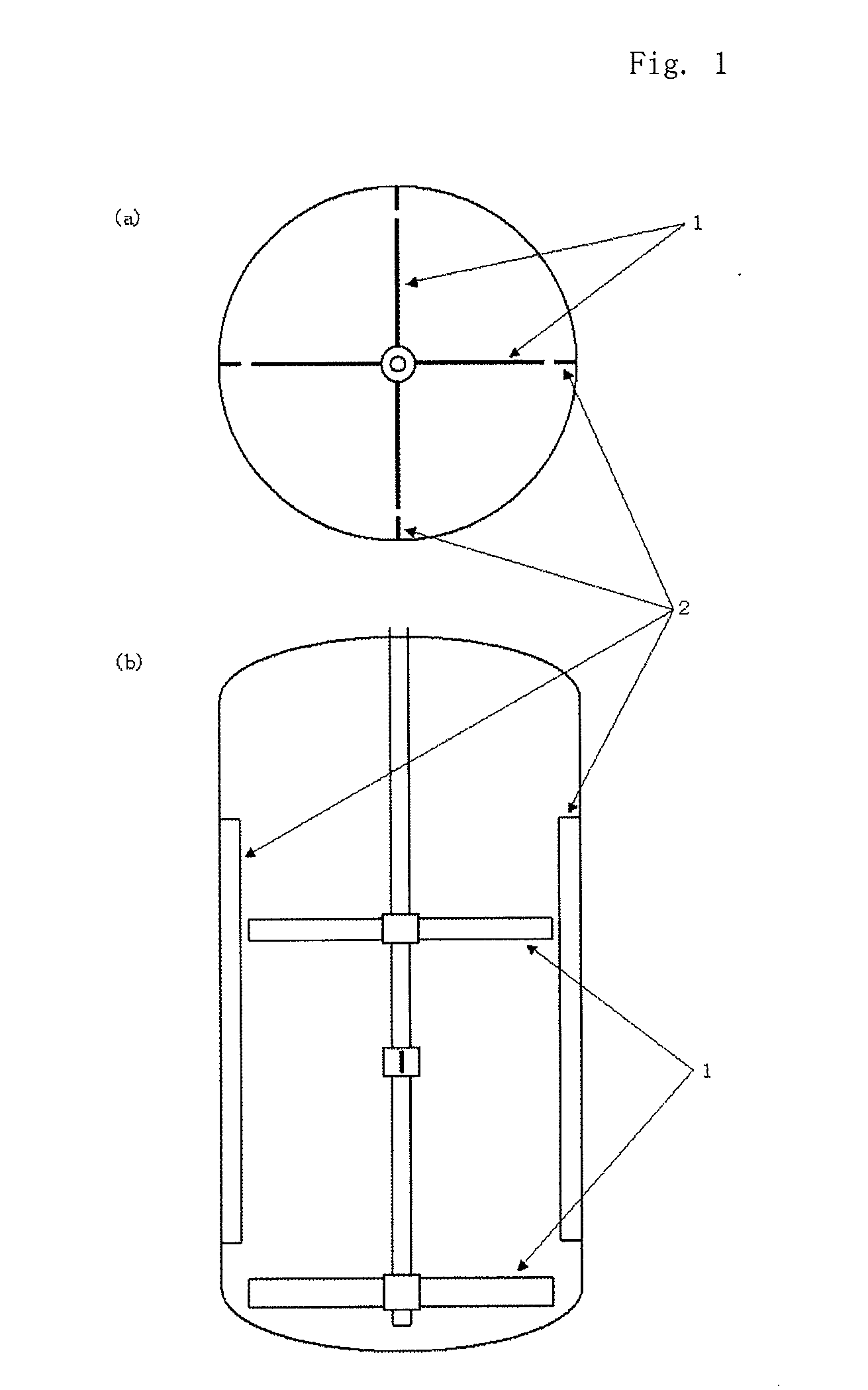
Figure 1 
Figure 2 
Figure 3
Abstract
Description
TECHNICAL FIELD
[0001] The present invention relates to an ultrahigh molecular weight ethylene-α-olefin copolymer powder having excellent powder properties and a low melting point.BACKGROUND ART
[0002] Ultrahigh molecular weight polyethylenes are more excellent in properties such as strength, abrasion resistance, impact resistance, self-lubricating property, solvent resistance and electrical insulating property than those of general polyethylenes, and have been used in various uses utilizing these properties. As the ultrahigh molecular weight polyethylenes are highly crystalline polyethylenes having a relatively high density, they have high melting points and low transparency. In order to improve these defects, for example, Japanese Examined Patent Publication No. 5-86803 describes ultrahigh molecular weight ethylene-α-olefin copolymers produced by copolymerization of ethylene with an α-olefin as a co-monomer.DISCLOSURE OF THE INVENTION
[0003] The ultrahigh molecular weight ethylene-α-ole...
Examples
example 1
(1) Synthesis of Solid Catalyst Component Precursor
[0150]Air in a 500 ml-cylindrical reactor provided with a stirrer and baffle plates (a reactor having a diameter of 0.07 m, provided with three pairs of a stirring blade with a diameter of 0.053 m and a width of 0.010 m, and four baffle plates with a width of 0.007 m, a power number: 3.02) shown in FIG. 1 was replaced by nitrogen, and 270 ml of hexane, 8.1 ml of tetrabutoxytitanium, and 79.9 ml of tetraethoxysilane were added thereto and stirred. Then, 182 ml of a solution of butyl magnesium chloride in dibutyl ether (a concentration: 2.1 moles / liter) was added dropwise to the stirred mixture over 4 hours, while the reactor temperature was kept at 5° C., wherein the number of rotations in stirring was 700 rpm. After the dropping was finished, the mixture was stirred at 20° C. for 1 hour, and then filtered. The resulting solid was washed with 280 ml of toluene three times, to which toluene was added so that the total volume was 250 m...
example 2
(1) Synthesis of Solid Catalyst Component Precursor
[0157]Air in a 500 ml cylindrical reactor provided with a stirrer and baffle plates, which was the same as used in Example 1 (1), was replaced by nitrogen, to which 270 ml of hexane, 16.8 ml of tetrabutoxytitanium, 75.5 ml of tetraethoxysilane and 6.0 ml of diisobutyl phthalate were added, and the mixture was stirred. Then, 182 ml of a solution of butyl magnesium chloride in dibutyl ether (a concentration: 2.1 moles / liter) was added dropwise to the stirred mixture over 4 hours, while the reactor temperature was kept at 45° C., wherein the number of rotations in stirring was 1000 rpm. After the dropping was finished, the mixture was stirred at 45° C. for 1 hour, and then filtered. The resulting solid was washed with 280 ml of toluene three times. Toluene was added thereto so that the total volume was 250 ml to form into a slurry. A part of the slurry was sampled, and the solvent was removed therefrom and dried to give a solid catalys...
example 3
(1) Ethylene-Butene Slurry Polymerization
[0163]A polymer was obtained in an amount of 156 g in the same polymerization manner as in Example 1 (3) except that 200 g of 1-butene and 550 g of butane were charged instead of 130 g of 1-butene and 620 g of butane, 20.8 mg of the solid catalyst component obtained in Example 2 (2) was added, and the polymerization temperature was 60° C.
[0164]An amount of the polymer produced (polymerization activity) per unit amount of the catalyst was 7500 g of the polymer / g of the solid catalyst component. The various values of the physical properties of the obtained polymer are shown in Table 1 and Table 2.