
Method for the detection of chromosomal aneuploidies
a chromosomal aneuploidy and detection method technology, applied in biochemistry apparatus and processes, fermentation, organic chemistry, etc., can solve the problem of finite risk of spontaneous abortion, and achieve the effect of superior sensitivity
Patent Information
- Authority / Receiving Office
- US · United States
- Current Assignee / Owner
- Publication Date
- 2006-11-09
Smart Images
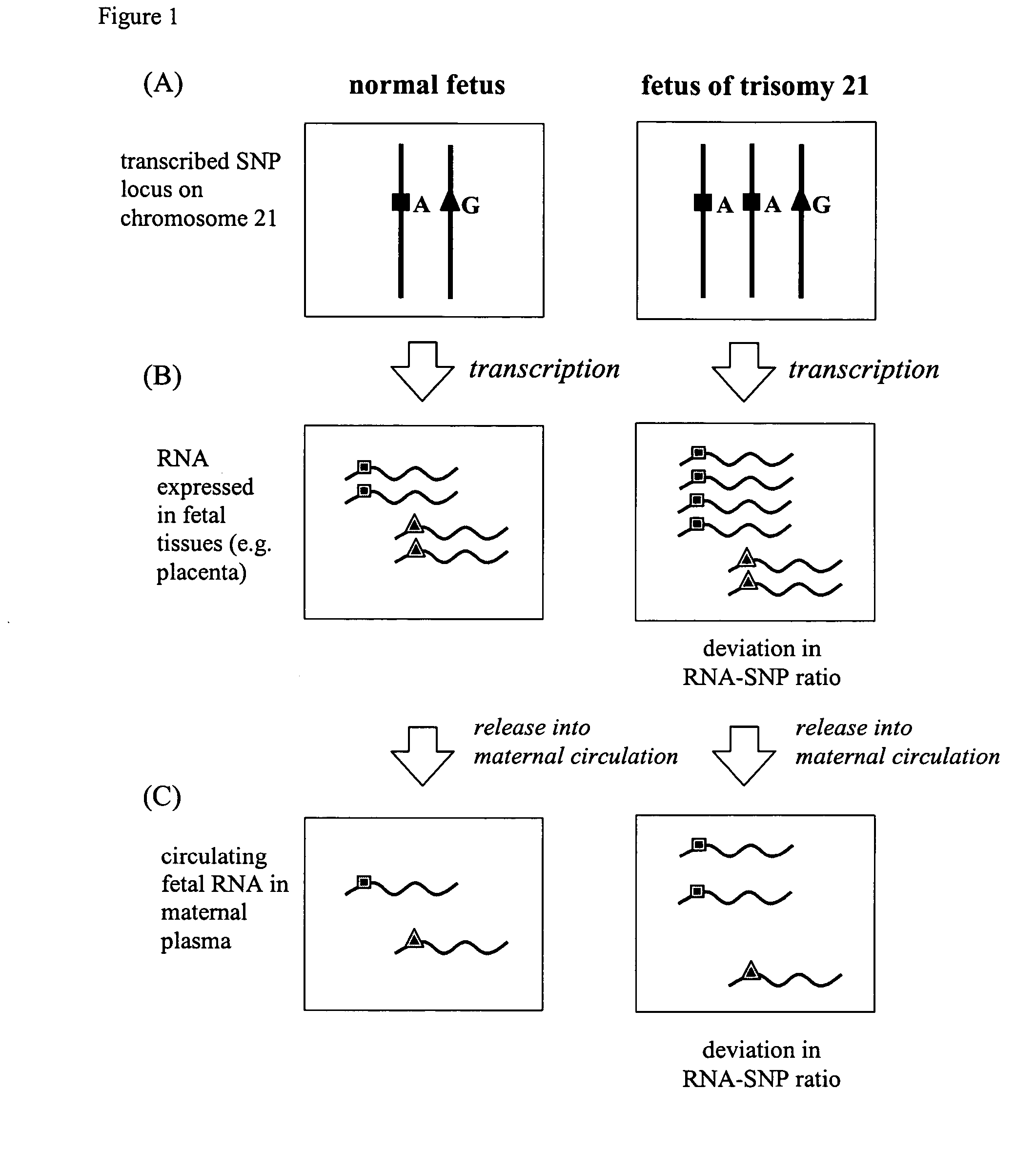
Figure 1 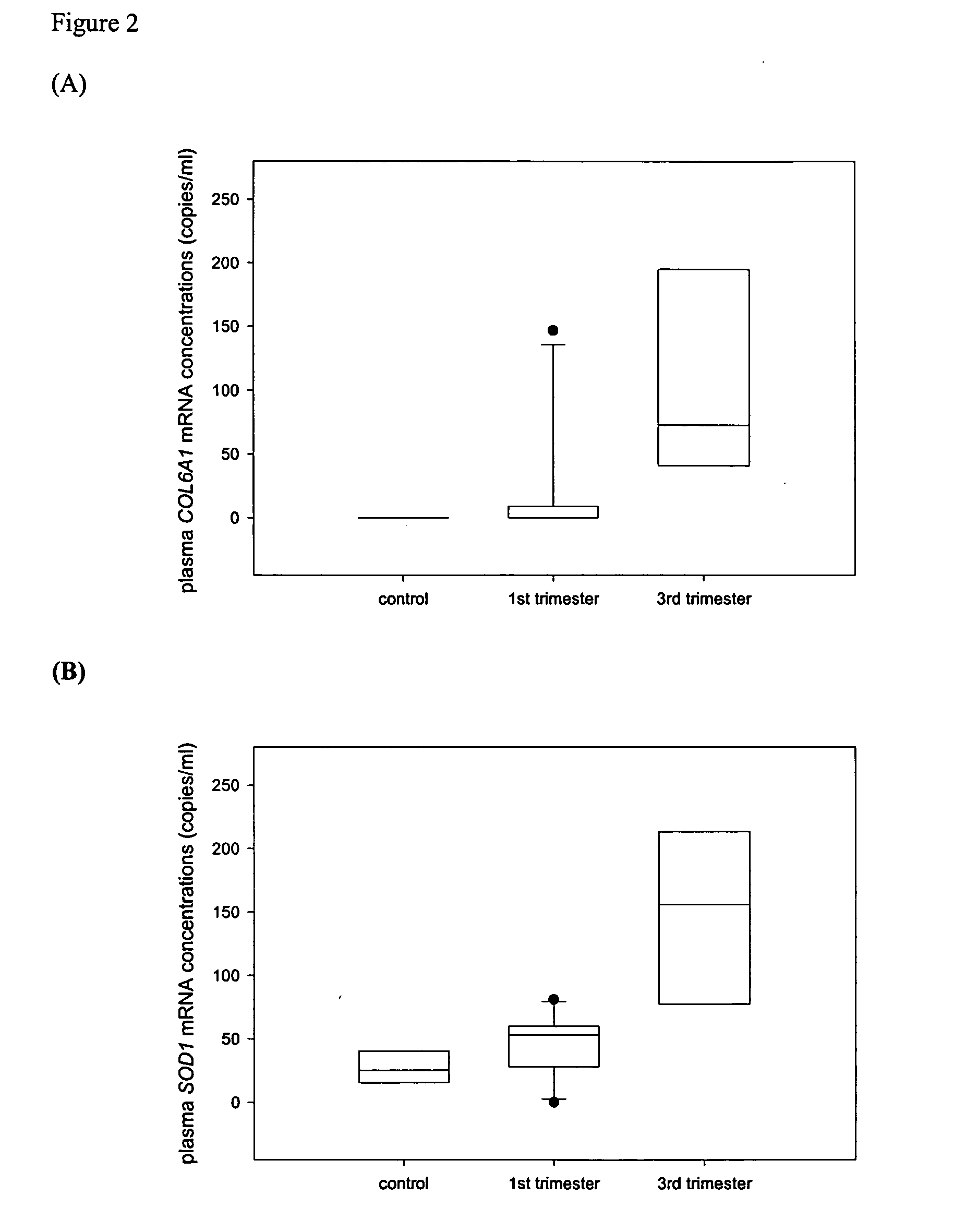
Figure 2 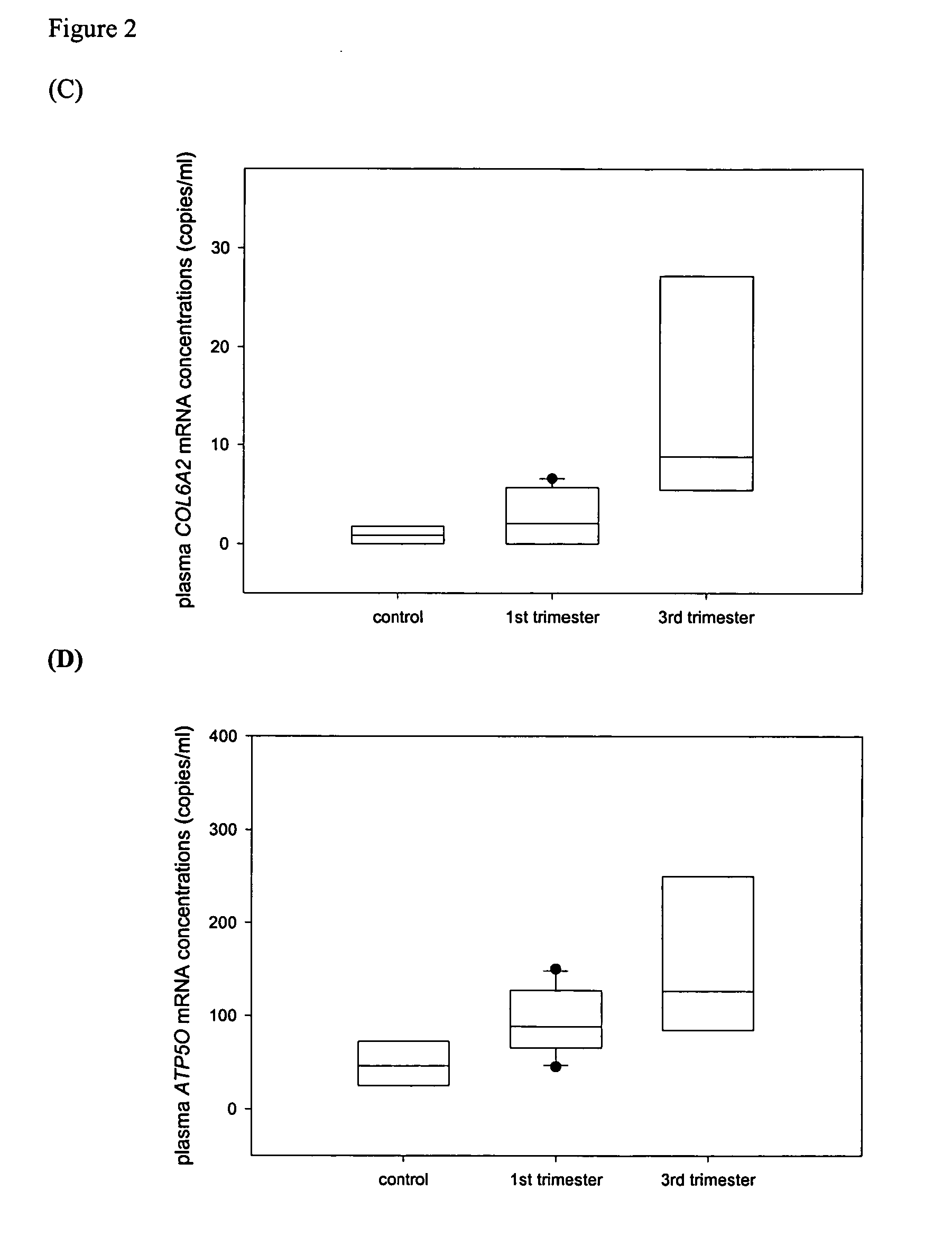
Figure 3
Abstract
Description
CROSS-REFERENCES TO RELATED APPLICATIONS
[0001] This application claims priority to U.S. Provisional Application No. 60 / 663,173, filed Mar. 18, 2005.STATEMENT AS TO RIGHTS TO INVENTIONS MADE UNDER FEDERALLY SPONSORED RESEARCH OR DEVELOPMENT
[0002] NOT APPLICABLE BACKGROUND OF THE INVENTION
[0003] Chromosomal aneuploidy is an important cause of morbidity during the prenatal and postnatal life. Assessment of chromosomal aneuploidy has traditionally been associated with the investigation of fetal viability and prenatal diagnosis. Methods for the detection and characterization of chromosomal aneuploidy include karyotyping of metaphase chromosomes, fluorescence in-situ hybridization (FISH) (Homer, J. et al., Prenat Diagn 23:566-571 (2003)), quantitative fluorescence polymerase chain reaction (PCR) (Mann, K. Methods Mol Med 92:141-156 (2004)), gene dosage PCR (Zimmermann, B. et al., Clin Chem 48:362-363 (2002), and array-based comparative genomic hybridization (CGH) (Hu, D. G. et al., Mol...
Examples
example 1
Identification of SNPs Useful for Detecting Trisomy 21 in Fetuses
[0102] The identification of SNPs useful for the detection of fetal trisomy 21 requires the identification of an RNA species that is expressed by fetal cells and is present in detectable concentrations in the analyzed biological samples.
Identification of Fetal-Specific Transcripts with High Placental Expression Levels
[0103] Gene expression profiles of five first-trimester chorionic villus sample (CVS) samples were obtained by microarray analysis of each individual tissue sample. In an effort to identify placenta-expressed transcripts amongst the circulating RNA molecules in maternal plasma, the gene expression profiles of maternal whole blood (specifically maternal hematopoietic cells) were obtained and compared with that of the corresponding placental tissues. Placenta-expressed transcripts in early pregnancy were identified by selecting transcripts whose expression levels were increased in the CVS tissues when co...
example 2
Detection of Trisomy 21 in the Fetus of a Pregnant Woman by Real-Time Quantitative RT-PCR
[0115] The two SNPs with the highest polymorphic rates were selected as targets for allele-specific QRT-PCR development. Discriminative hybridization probes were designed to allow discrimination of the different alleles of each SNP. Identical genotyping results were obtained by both the real-time PCR and direct sequencing which confirmed the allele-specificity of the probes. The probes were then incorporated into QRT-PCR assays where the relative expression levels of the different alleles of each SNP in placental tissues were first measured. RNA extracted from normal CVS and normal term placentas, as well as from placentas of trisomy 21 pregnancies were assayed by the allele-specific QRT-PCR. The ratios of the alleles of each SNP in the pregnancies with and without trisomy 21 are substantially different, enabling the detection of trisomy 21 in the fetus using the mother's plasma.
[0116] Sample ...
example 3
Detection of Trisomy 21 in the Fetus of a Pregnant Woman by Primer Extension and Mass Spectrometry Detection
[0123] The two SNPs with the highest polymorphic rates (rs1053320 on COL6A1 and rs2839114 on COL6A2) were targeted for further assay development. Primer extension reaction assays enabled determination of the SNP genotype of the placental tissue samples. The samples were processed using mass spectrometry to differentiate the different RNA-SNP alleles, and determine the relative expression levels of the RNA-SNP alleles in order to calculate the ratio of alleles. The difference in the ratios of the alleles of each SNP for pregnancies with and without trisomy 21 is sufficiently large that detection of trisomy 21 in the fetus is possible using the mother's plasma.
[0124] Placental tissue collection and processing. Second-trimester placental tissue samples were obtained from pregnant women carrying trisomy 21 fetuses before therapeutic terminations. Third-trimester placental tissue...