
Intestinal sleeve
a technology for intestines and sleeves, applied in the field of intestine sleeves, can solve the problems of increasing the prevalence of obesity at alarming rates, affecting the health of patients, and affecting the quality of life of patients, so as to limit the absorption of food products and modify the heating habits of patients
Patent Information
- Authority / Receiving Office
- US · United States
- Patent Type
- Applications(United States)
- Current Assignee / Owner
- Publication Date
- 2006-11-23
- Estimated Expiration
- Not applicable · inactive patent
Smart Images
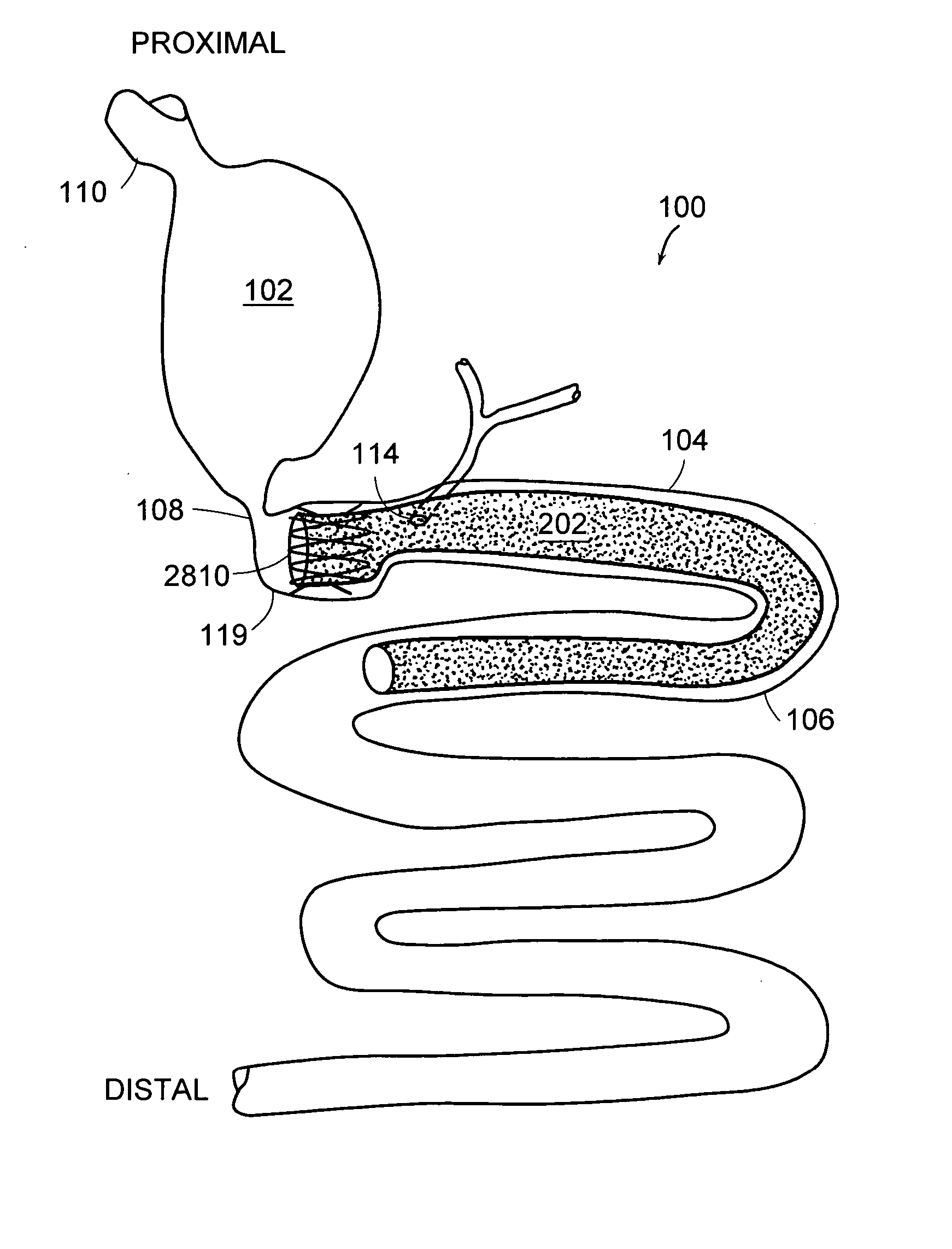
Figure 1 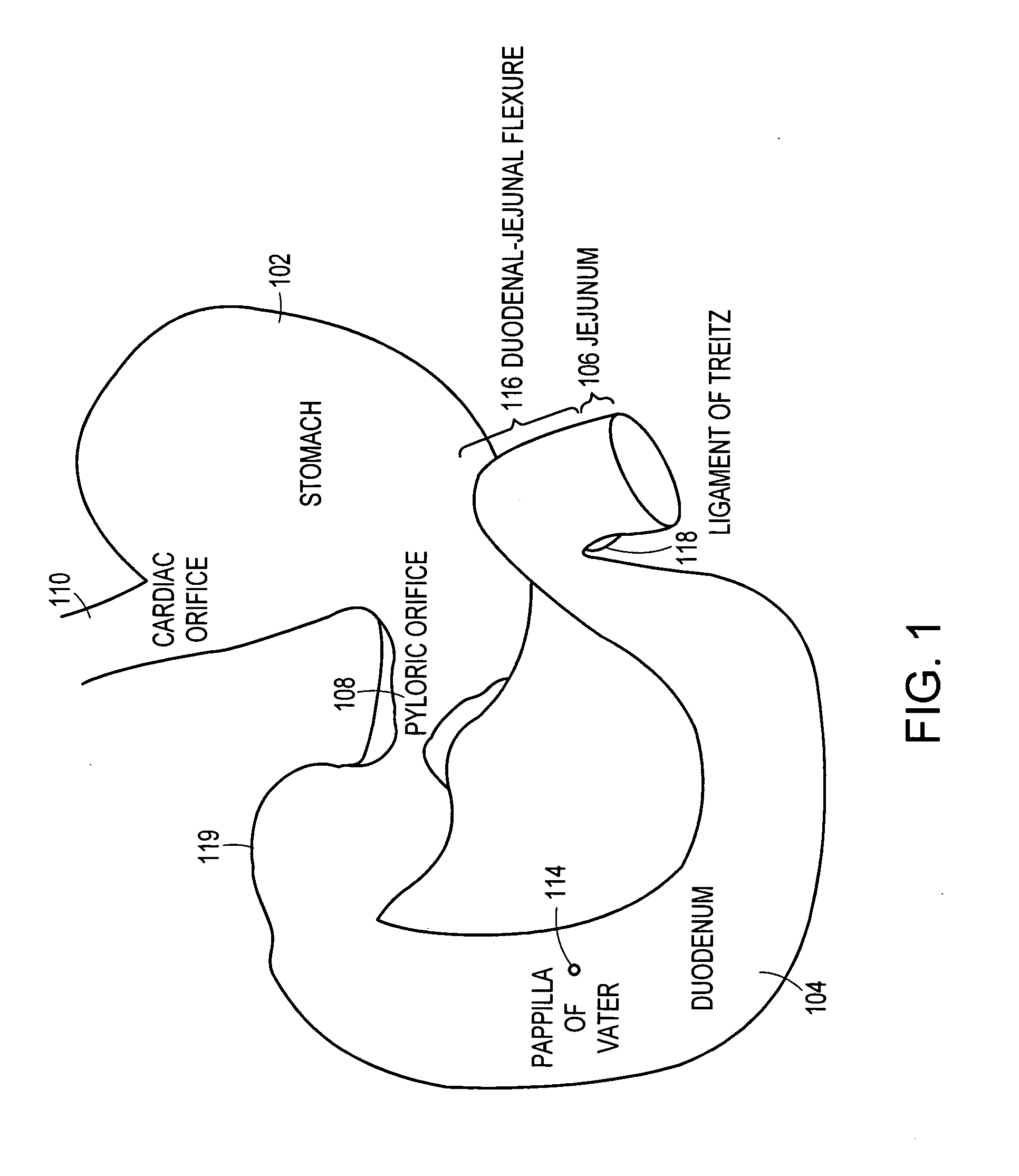
Figure 2 
Figure 3
Abstract
Description
RELATED APPLICATIONS
[0001] This application is a divisional of U.S. application Ser. No. 10 / 858,851, filed Jun. 1, 2004, which claims the benefit of U.S. Provisional Application No. 60 / 528,084, filed Dec. 9, 2003 and U.S. Provisional Application No. 60 / 544,527, filed Feb. 13, 2004. The entire teachings of the above application are incorporated herein by reference.BACKGROUND OF THE INVENTION
[0002] According to the Center for Disease Control (CDC), over sixty percent of the United States population is overweight, and almost twenty percent are obese. This translates into 38.8 million adults in the United States with a Body Mass Index (BMI) of 30 or above. The BMI is defined as a person's weight (in kilograms) divided by height (in meters), squared. To be considered clinically, morbidly obese, one must meet one of three criteria: BMI over 35, 100 lbs. overweight or 100% above ideal body weight. There is also a category for the super-obese for those weighing over 350 lbs.
[0003] Obesit...
Examples
Embodiment Construction
[0081] A description of preferred embodiments of the invention follows. FIG. 1 is a sectional view of a portion of the digestive tract in a body. Food to be digested enters the stomach 102 through the cardiac orifice 110 from the esophagus. Chyme, a semi-fluid, homogeneous creamy or gruel-like material produced by gastric digestion in the stomach exits the stomach through the pyloric orifice (pylorus) 108 and enters the small intestine 112. The pylorus 108 is a distal aperture of the stomach 102 surrounded by a strong band of circular muscle. The small intestine, about nine feet in length, is a convoluted tube, extending from the pylorus 108 to the ileo-caecal valve where it terminates in the large intestine. The small intestine has three sections, the duodenum 104, jejunum 106 and the ileum (not shown). The first eight to ten inch section of the small intestine 112, the duodenum 104, is the shortest, widest and most fixed part of the small intestine 112.
[0082] The duodenum 104 has...