
Methods, Compositions and Devices for Inducing Stasis in Cells, Tissues, Organs, and Organisms
a technology of inducing stasis and cell, applied in the field of cell biology, can solve the problems of inability to prolong the time of stasis, inability to depend on temperature for extended periods, and inability to achieve long-term stability, and achieve the effect of inducing stasis
Patent Information
- Authority / Receiving Office
- US · United States
- Patent Type
- Applications(United States)
- Current Assignee / Owner
- Publication Date
- 2008-04-10
- Estimated Expiration
- Not applicable · inactive patent
Smart Images
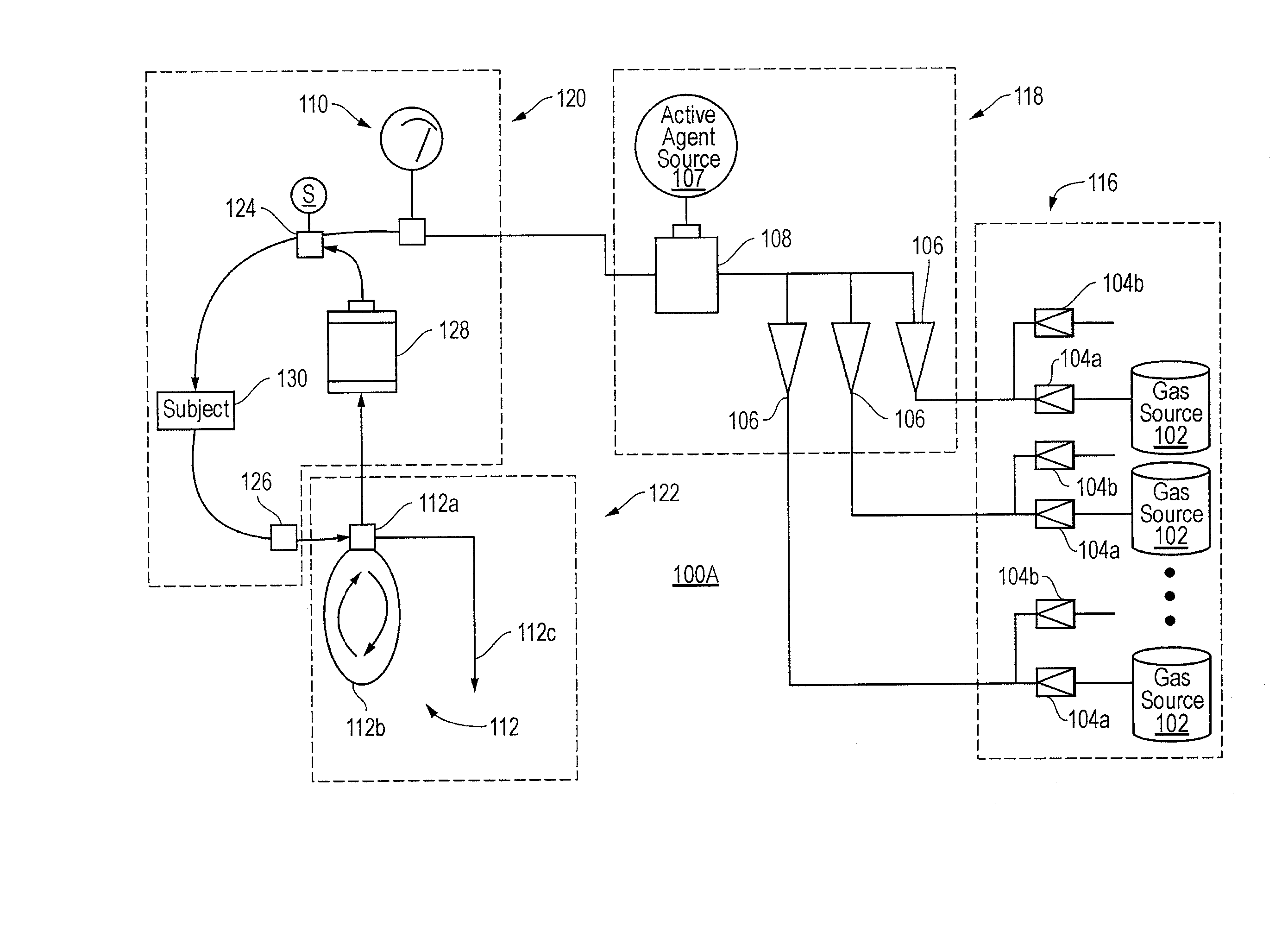
Figure 1 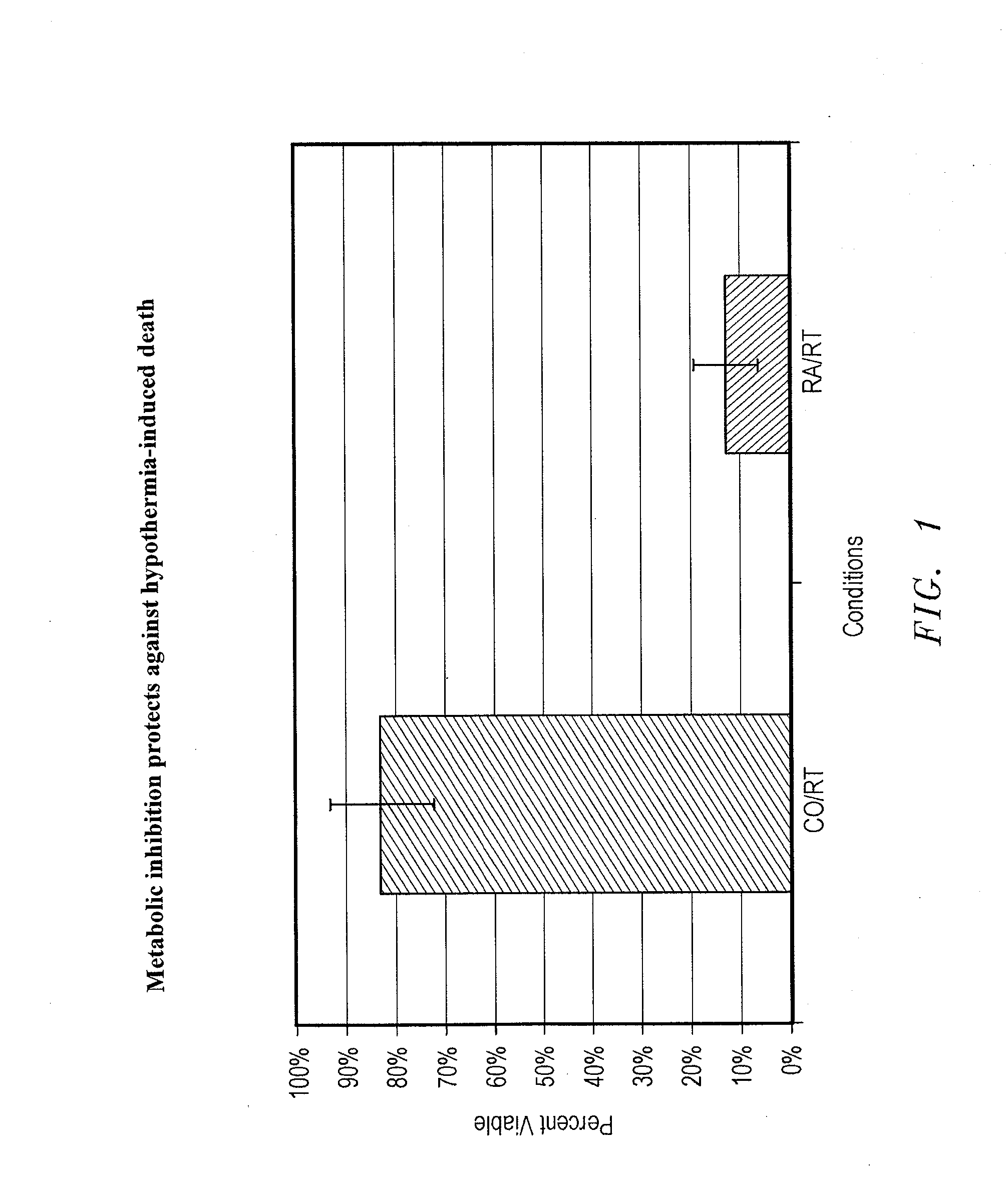
Figure 2 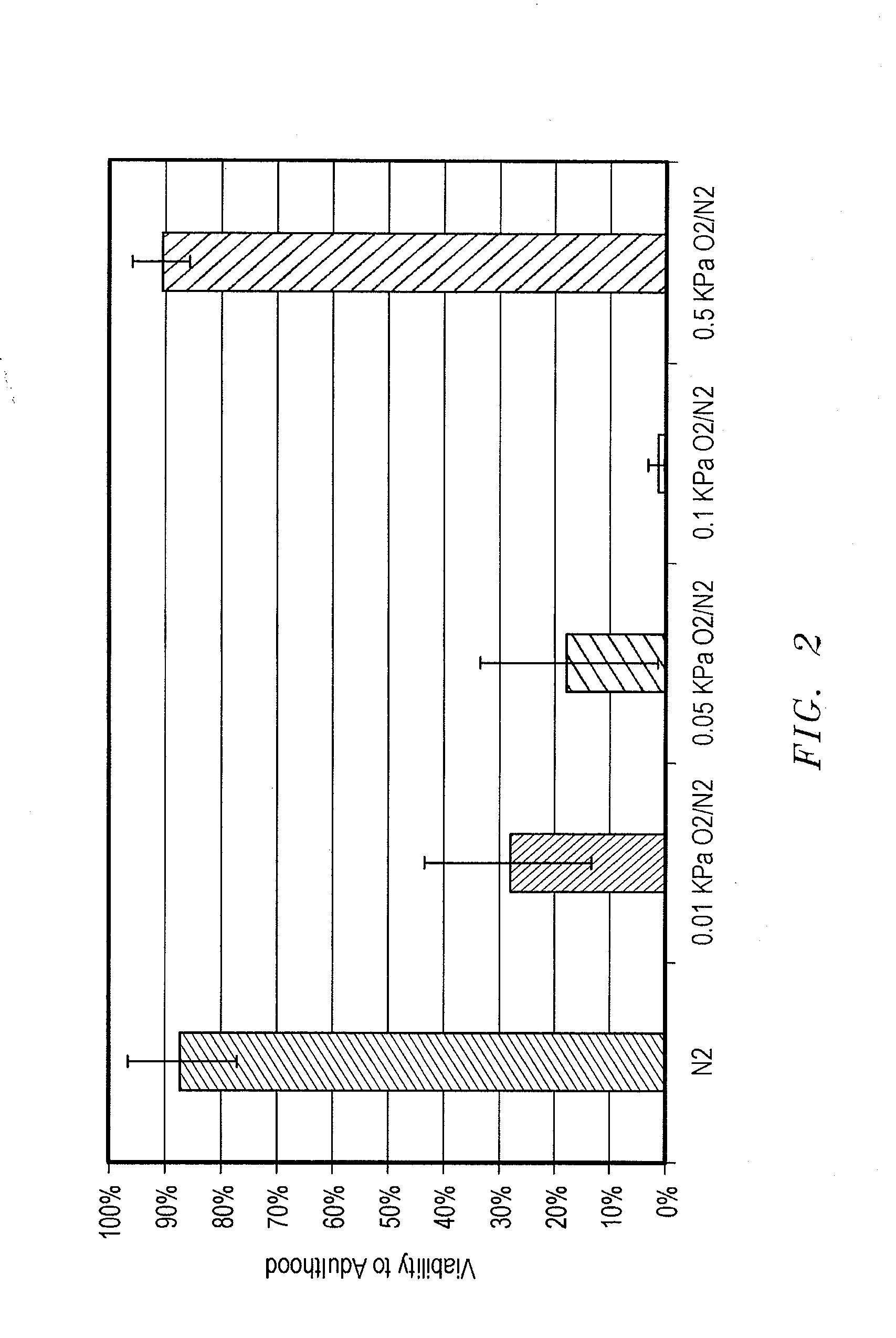
Figure 3
Abstract
Description
[0001] This application is a continuation application of U.S. patent application Ser. No. 10 / 971,575 filed on Oct. 22, 2004, which claims priority to provisional patent application Ser. No. 60 / 513,458 filed on Oct. 22, 2003, provisional patent application Ser. No. 60 / 548,150, filed on Feb. 26, 2004, and provisional application Ser. No. 60 / 577,942 filed on Jun. 8, 2004, all of which are hereby incorporated by reference.
[0002] This invention was made with government support under grant number GM048435 awarded by the National Institute of General Medical Sciences (NIGMS). The government has certain rights in the invention.BACKGROUND OF THE INVENTION
[0003] 1. Field of the Invention
[0004] The present invention relates generally to the field of cell biology. More particularly, it concerns methods and apparatuses for inducing stasis in cells, tissues, organs, and organisms using a substance that competes with oxygen. In certain embodiments, there are methods and apparatuses for treating,...
Examples
example 1
Preservation of Nematodes in Carbon Monoxide
[0343] The atmosphere contains 210,000 ppm oxygen. Exposure to low levels of oxygen, or hypoxia, results in cellular damage and death in humans. In the nematode, C. elegans, oxygen concentrations between 100 ppm and 1000 ppm are also lethal. By critically studying the response of nematodes to a range of oxygen tensions, it was found that oxygen concentrations below 10 ppm and above 5000 ppm are not lethal. In 10 ppm oxygen balanced with nitrogen, nematodes enter into a state of reversible suspended animation in which all aspects of animation observable under the light microscope ceases (Padilla et al., 2002). In oxygen concentrations of 5000 ppm (balanced with nitrogen) and above, nematodes progress through their life cycle normally. In a search for drugs that protect nematodes against hypoxic damage, carbon monoxide was tested.
[0344] To achieve specific atmospheric conditions the following apparatus was used: a glass syringe barrel havi...
example 2
Preservation of Human Skin in Carbon Monoxide
[0347] Carbon monoxide is extraordinarily toxic to humans because it strongly competes with oxygen for binding to hemoglobin, the primary molecule that distributes oxygen to tissues. The fact that nematodes, which do not have hemoglobin, are resistant to carbon monoxide and even protected against hypoxic damage by this drug suggested the possibility that carbon monoxide would protect against hypoxic damage in human tissue in situations where blood is not present, such as in tissue transplant or blood free surgical fields. To tested this hypothesis using human skin.
[0348] Three human foreskins were obtained for this purpose. The foreskin tissue was preserved in keratinocyte growth medium (KGM) containing insulin, EGF (0.1 ng / ml), hydrocortisone (0.5 mg / ml) and bovine pituitary extract (approx. 50 micrograms / ml of protein). Foreskins were rinsed in PBS, and excess fatty tissue was removed. Each foreskin sample was divided into 2 equal pie...
example 3
More Information Related to Example 1
[0351] The following example contains information that overlaps and extends the information disclosed in Example 1.
A. Materials and Methods
[0352] Environmental chambers and apparati. Oxygen deprivation experiments were carried out using a custom atmospheric chamber designed by W. Van Voorhies (Van Voorhies et al., 2000). The chamber is a 30 mL glass syringe (Fisher #14-825-10B) fitted with a custom steel stopper that is lined with two viton o-rings to ensure a tight seal. The stopper is bored through and has a steel lure lock on the exterior face so that a hose carrying compressed gas can be attached. A defined gas mixture is delivered to the chamber at a constant pressure and flow rate from compressed tanks by passing first through a rotometer (Aalborg, flow-tube number 032-41ST) or mass flow controller (Sierra Instruments #810) to monitor flow rate and then through a 500 ml gas washing bottle (Fisher #K28220-5001) containing 250 ml water to...