
Combined Use of Prame Inhibitors and Hdac Inhibitors
a technology of hdac inhibitors and prame, which is applied in the field of combined use of prame inhibitors and hdac inhibitors, can solve the problems of no longer responsiveness, unclear molecular basis of prame's selective growth inhibition activity on cancer cells, and no function of prame to da
Patent Information
- Authority / Receiving Office
- US · United States
- Current Assignee / Owner
- Publication Date
- 2008-05-22
Smart Images
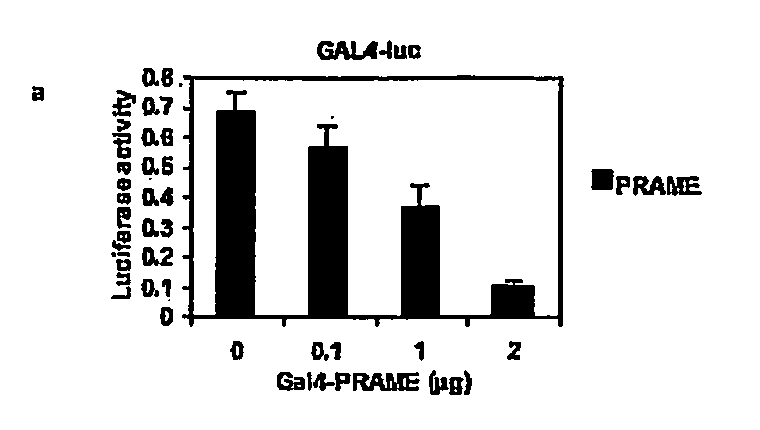
Figure 1 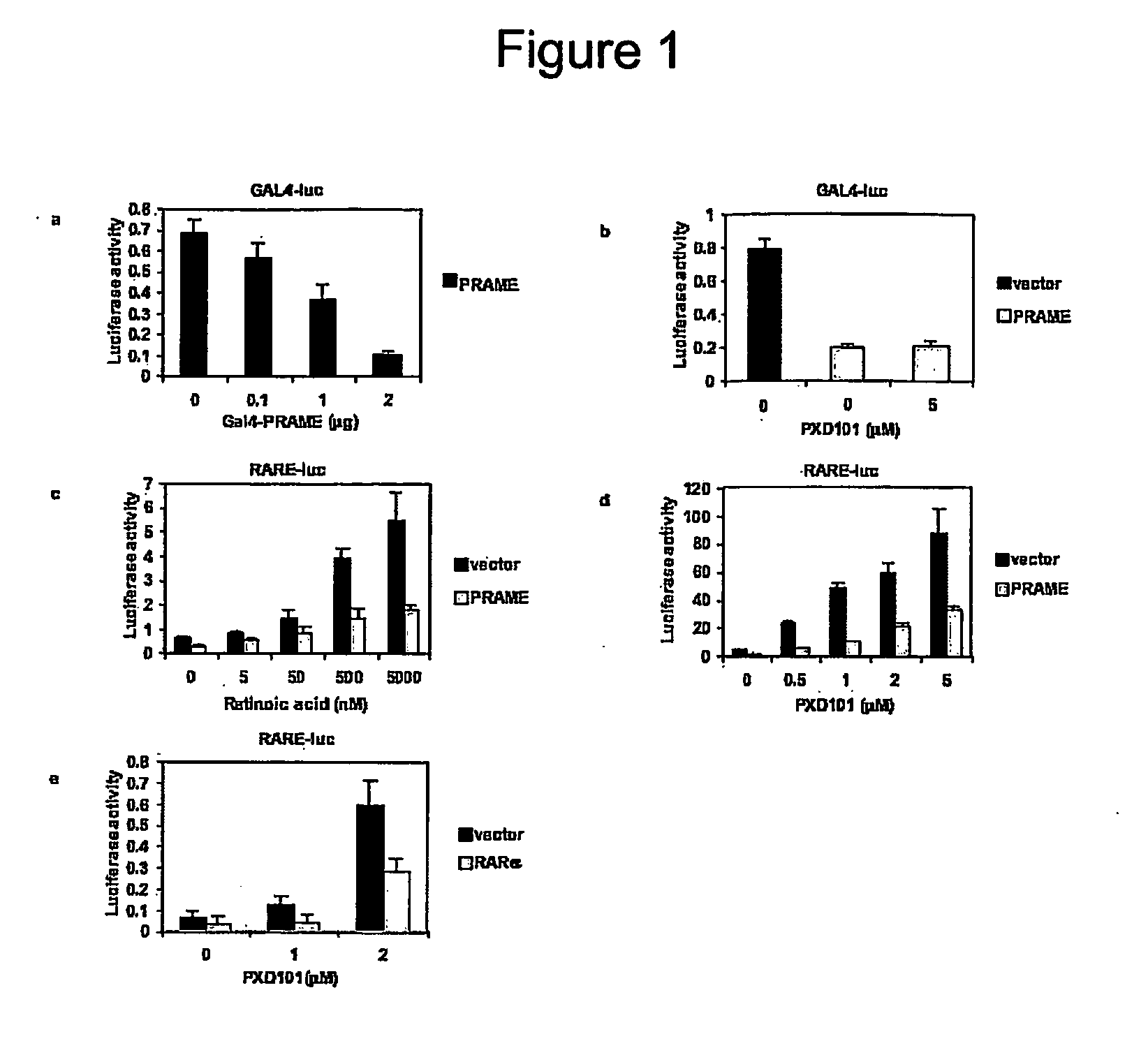
Figure 2 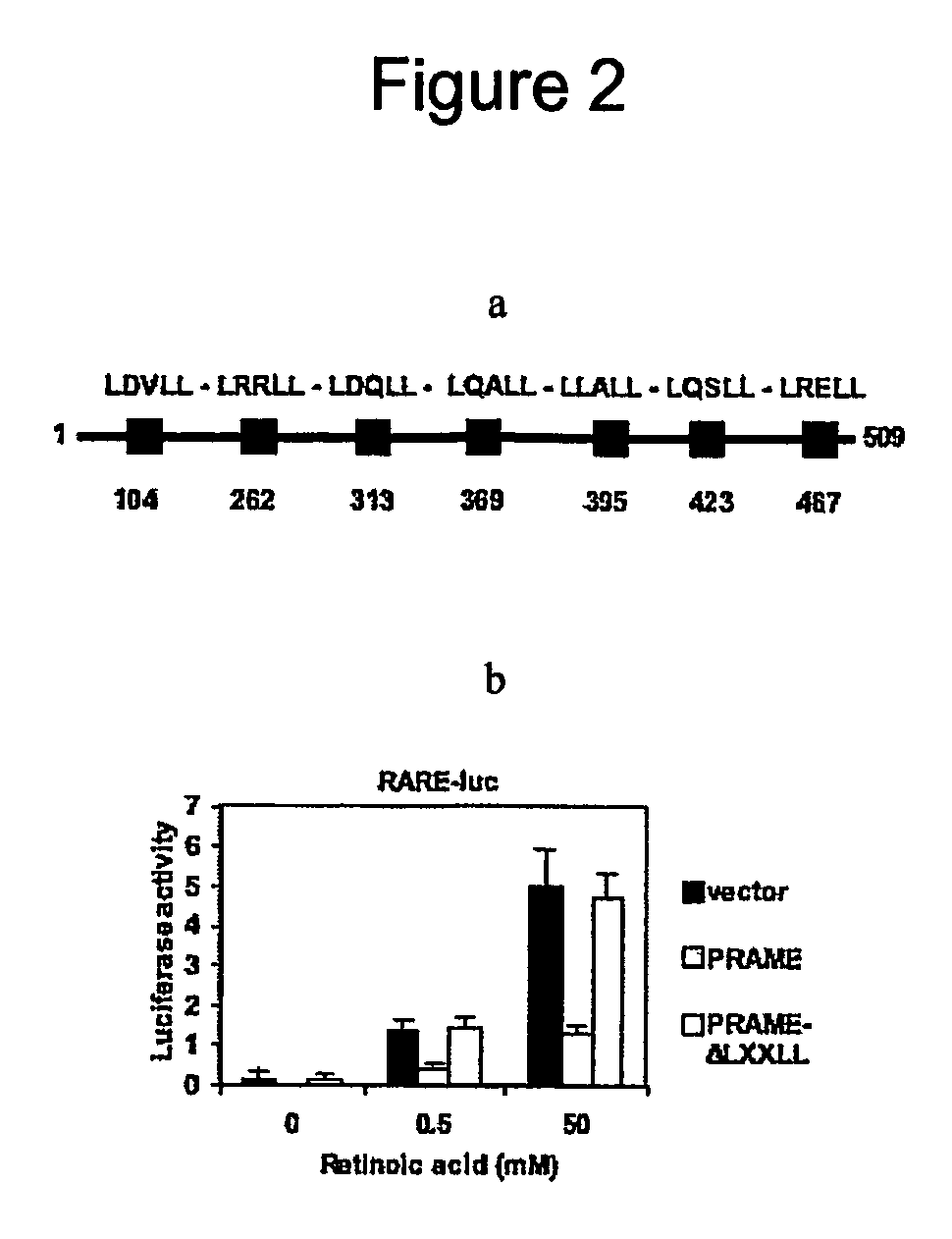
Figure 3
Abstract
Description
[0001] The present invention defines a new use for the known cancer antigen PRAME (PReferentially expressed Antigen in MElanoma), and in particular provides methods for the stratification of cancer patients based on PRAME expression and for the treatment of subjects with cancer by the inhibition of PRAME expression or activity.
[0002] Retinoic acid (RA) induces proliferation arrest, differentiation and apoptosis in a wide variety of cell types (Altucci, 2001; Freemantle, 2003). Defects in retinoic acid receptor (RAR) signalling, such as those caused by the PML-RARα and PLZF-RARα translocations in acute promyelocytic leukaemia, have been implicated in cancer (Altucci, 2001; Freemantle, 2003. Binding of RA to its receptor leads to release of co-repressor molecules and recruitment of co-activators to RAR, resulting in activation of transcription (Xu, 1999).
[0003] Acetylation and deacetylation of histones is associated with transcriptional events leading to cell proliferation and / or differe...
Examples
Embodiment Construction
Inhibitor of PRAME
[0027]An inhibitor of PRAME includes any compound capable of either preventing expression of PRAME or of preventing PRAME when expressed from exerting its normal activity. Normal activity, as used in this respect, refers to any activity performed by the PRAME expression product in the human or animal body. Typically such activities include the repression of transcription and / or interaction with RAR.
[0028]A preferred inhibitor of PRAME is an interfering RNA (RNAi). RNA interference is the process of sequence-specific, post-transcriptional gene silencing in animals and plants, initiated by double-stranded RNA (dsRNA) that is homologous in sequence to the silenced gene. RNA interference (RNAi) is a process whereby the introduction of double stranded RNA (dsRNA) into a cell inhibits gene expression post-translationally, in a sequence dependent fashion. This process is also known as post-transcriptional gene silencing. Current models of RNAi indicate that it is mediated...