
VEGF-specific antagonists for adjuvant and neoadjuvant therapy and the treatment of early stage tumors
a technology of vegf and tumors, applied in the field of vegf-specific antagonists for adjuvant and neoadjuvant therapy and the treatment of early stage tumors, can solve the problems of relatively non-selective treatment, difficult timely detection and treatment, and cancer is one of the most deadly threats to human health, so as to prevent or reduce the likelihood of cancer recurrence in the subject, prevent or reduce the likelihood of cancer recurrence, and prevent cancer
Patent Information
- Authority / Receiving Office
- US · United States
- Patent Type
- Applications(United States)
- Current Assignee / Owner
- Publication Date
- 2008-10-09
- Estimated Expiration
- Not applicable · inactive patent
Smart Images
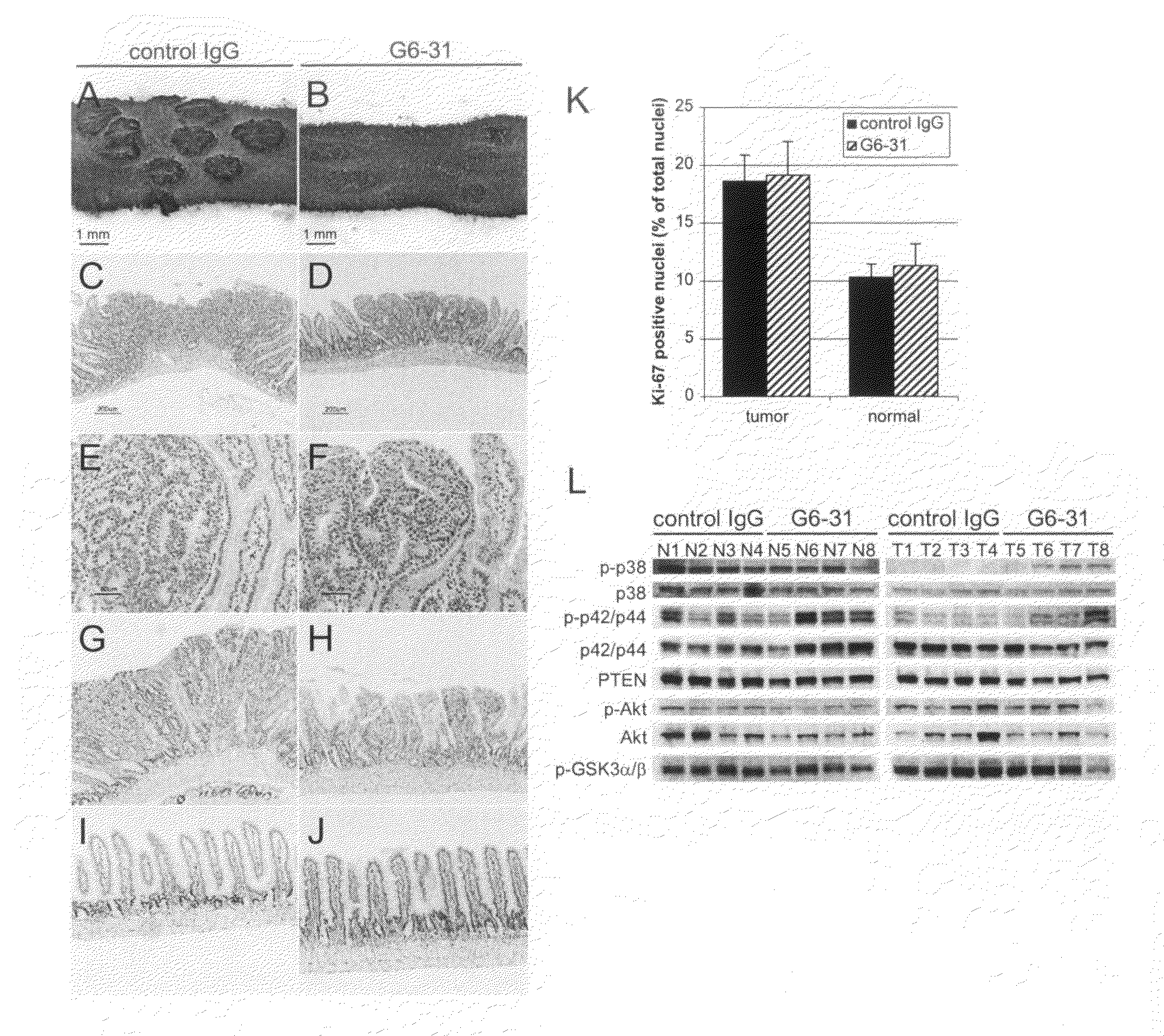
Figure 1 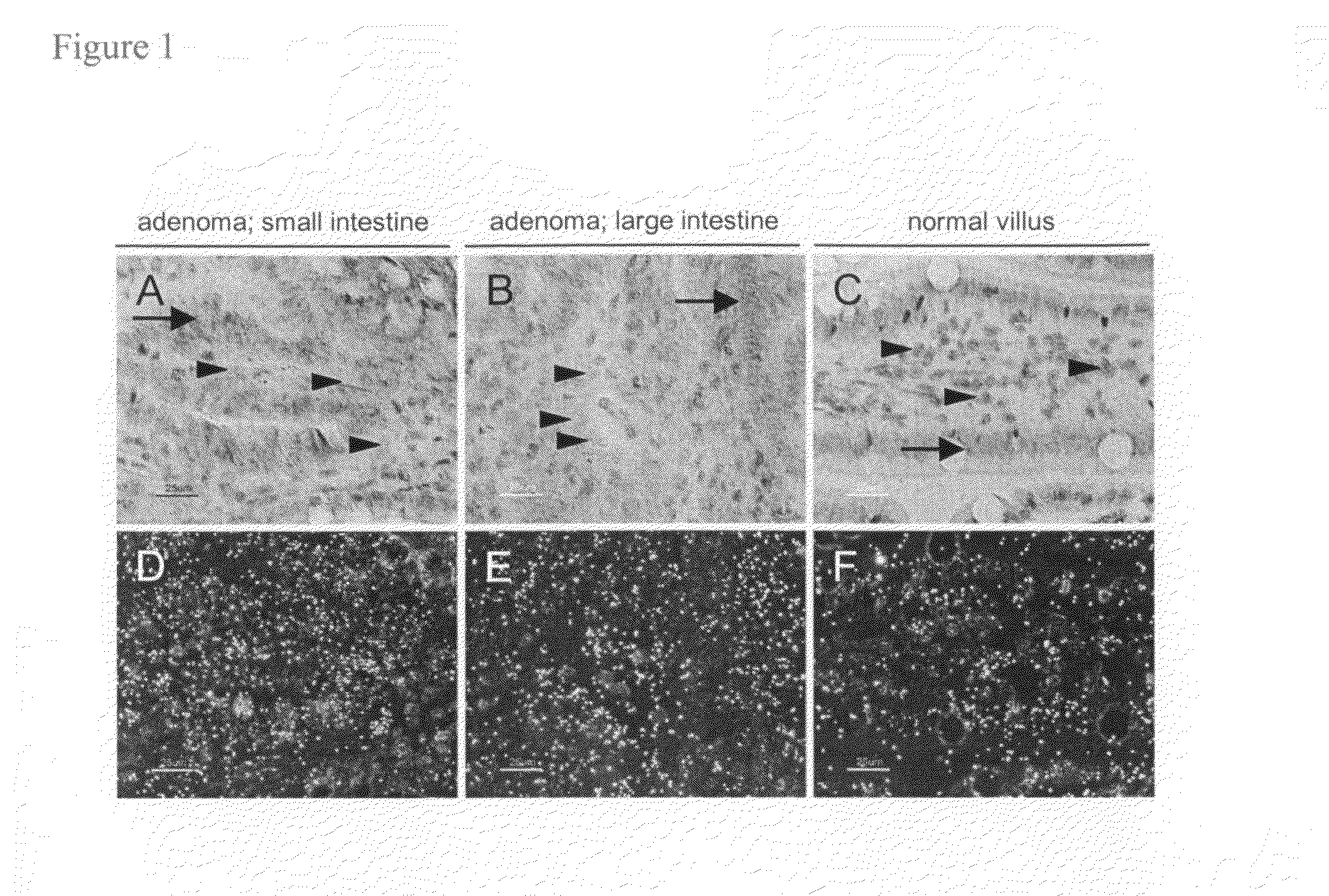
Figure 2 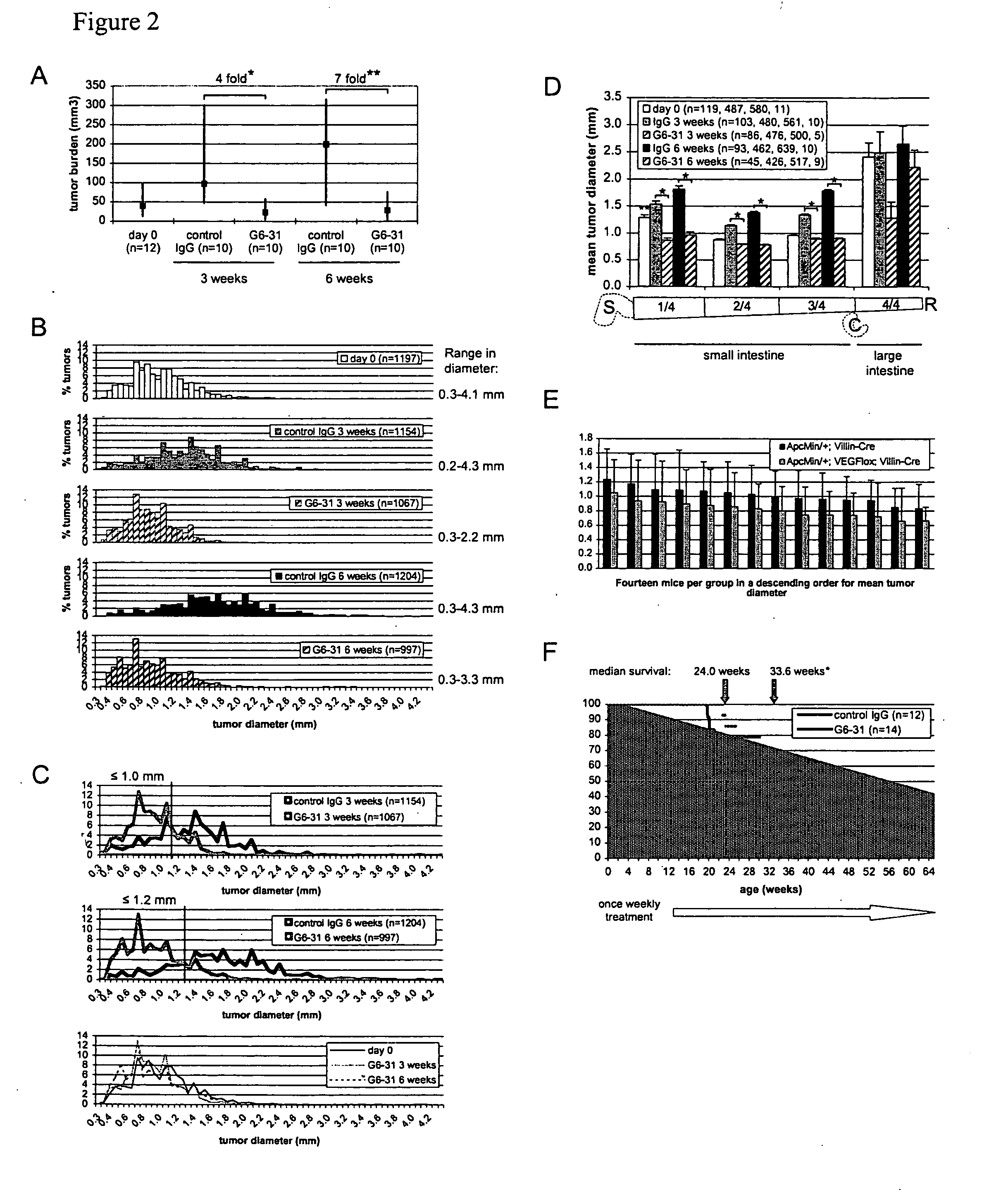
Figure 3
Abstract
Description
CROSS-REFERENCE TO RELATED APPLICATIONS
[0001] This application claims the benefit of the filing date of U.S. provisional application Nos. 60 / 870,741, filed Dec. 19, 2006; 60 / 870,745, filed Dec. 19, 2006; 60 / 877,267, filed Dec. 27, 2006; 60 / 919,638, filed Mar. 22, 2007; 60 / 958,384, filed Jul. 5, 2007; and 60 / 989,397, filed Nov. 20, 2007, each of which is herein incorporated by reference.BACKGROUND
[0002] Cancer is one of the most deadly threats to human health. In the U.S. alone, cancer affects nearly 1.3 million new patients each year, and is the second leading cause of death after cardiovascular disease, accounting for approximately 1 in 4 deaths. Solid tumors are responsible for most of those deaths. Although there have been significant advances in the medical treatment of certain cancers, the overall 5-year survival rate for all cancers has improved only by about 10% in the past 20 years. Cancers, or malignant tumors, metastasize and grow rapidly in an uncontrolled manner, making ti...
Examples
example 1
Inhibition of VEGF-A Results in Arrest of Intestinal Adenoma Growth and Long-Term Survival of Apcmin / + Mice
[0322]The syndrome of Familial Adenomatous Polyposis (FAP) and the majority of sporadic colorectal cancers are caused by mutations in the APC gene. FAP patients develop hundreds to thousands of adenomatous polyps in their lower gastrointestinal (GI) tract, in addition to extra-colonic tumors, which include desmoids and tumors of the upper GI tract. Apcmin / + mice with a heterozygous truncation allele at codon 850 mimic some features of the polyposis of FAP patients with germ line APC mutation (Moser et al., Science 247:322-324 (1990), Su et al., Science 256:668-670 (1992)). The onset of tumor formation in Apcmin / + mice is in early adulthood and the animals typically develop 60-150 intestinal polyps in a C57BL / 6 genetic background. Tumor development results in a severely compromised longevity of the mice, usually resulting in death from anemia and / or hypoproteinemia (Moser et al....
example 2
Anti-VEGF-A Monoclonal Antibody Inhibits the Growth of Pituitary Adenomas and Lowers Serum Prolactin and Growth Hormone Level in a Mouse Model of Multiple Endocrine Neoplasia
[0364]Multiple endocrine neoplasia (MEN) is a disorder characterized by the incidence of tumors involving two or more endocrine glands. A patient is classified with MEN type 1 (MEN1) when a combined occurrence of tumors in the parathyroid glands, the pancreatic islet cells, and the anterior pituitary is identified. Mutations in the MEN1 gene were discovered to underlie the disorder, which commonly result in a truncation or absence of the protein menin (reviewed in Pannett et al., Endocr. Relat. Cancer 6:449-473 (1999)). With the added finding of a frequent loss of the remaining allele in the tumors, (Bystrom et al., Proc. Natl. Acad. Sci USA 87:1968-1972 (1990), Debelenko et al., Cancer Res. 57:2238-2243 (1997), Larsson et al., Nature 332:85-87 (1988)) MEN1 has been classified as a tumor suppressor gene. While M...
example 3
Anti-VEGF Intervention Efficacy and Regression / Survival Efficacy in the RIP-TβAg Model of Multi-Stage Carcinogenesis
[0401]In order to better understand the role of anti-VEGF therapies in various stages of tumor growth, we turned to a number of preclinical tumor models, including the RIP-TβAg. RIP-TβAg (Exelixis, Inc.) is a conditional version of a mouse pancreatic islet tumor model driven by transgenic expression of the SV40 Large T antigen (TAg) (targeted to the pancreatic β-cell, where TAg functions as a potent oncogene by binding both p53 and Rb). The RIP-TβAg is phenotypically similar to the RIP-TAg model that has been previously described (Hanahan, Nature 315:115-122 (1985); Bergers et al., Science 284 (808-811), 1999). We have found that this model progresses through a series of increasingly aggressive stages, including the activation of VEGF signaling and an “angiogenic switch” (i.e., initiation of the process of forming new blood vessels) at approximately 5 weeks. Small tumo...