
Method of reducing atmospheric ammonia in livestock and poultry containment facilities
Patent Information
- Authority / Receiving Office
- US · United States
- Current Assignee / Owner
- Publication Date
- 2014-02-13
Smart Images
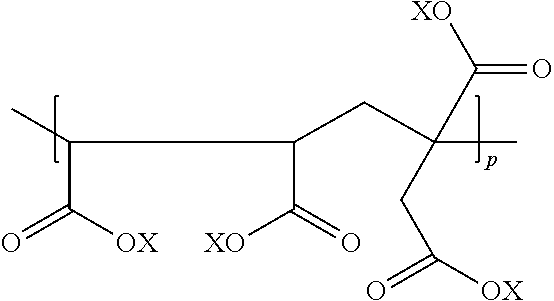
Figure 1 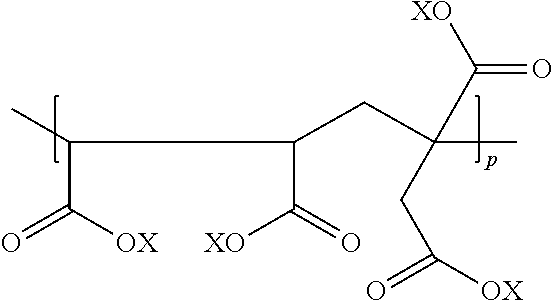
Figure 2
Abstract
Description
BACKGROUND OF THE INVENTION
[0001] 1. Field of the Invention
[0002] The present invention is directed to methods for treating livestock or poultry confinement facilities equipped with manure collection zones, such as pits or litter accumulations, to reduce and mitigate the effects of gaseous ammonia within the facility and thereby lessen the deleterious effects of ammonia on the livestock or poultry within the facility. More particularly, the invention is concerned with such methods wherein an aqueous treatment material comprising a partial calcium salt of a maleic-itaconic copolymer in combination with a partial ammonium salt of a maleic-itaconic copolymer. Such treatments promptly reduce the gaseous nitrogen content within the confinement facilities, and maintain such reductions over a significant period of time.
[0003] 2. Description of the Prior Art
[0004] Ammonia is a common by-product of animal waste due to the often inefficient conversion of feed nitrogen into animal product. Livesto...
Examples
example 1
[0026]In this test, a poultry layer house was treated having approximately 300 tons of litter in the house basement. The litter was treated with 25 gallons of the preferred liquid mixture, which was incorporated into the litter using a composting tractor with a sprayer mounted on the front and supporting a rear tank containing the mixture diluted with 75 gallons of water. Gaseous ammonia levels were determined prior to application of the treatment mixture on Days 1 and 3, on the day of treatment (Day 4), and thereafter on Days 5, 10, 11, and 12. Ammonia measurements were made at the exhaust fan and in the basement, with each measurement being taken three times and averaged. The following are the test results.
DayLocation / TempTreatmentAmmonia ppm1exhaust 68° F.None22.81exhaust 68° F.None55.33exhaust 50° F.None85.43exhaust 50° F.None84.81basementNone17.71basementNone55.33basementNone172.83basementNone116.74exhaust 27° F.treated8.64exhaust 50° F.treated324basementtreated19.14basementtre...
example 2
[0027]A hog-finishing house having a manure pit with a 250,000 gallon capacity was treated using 18 ounces of the preferred treatment per acre of ground to be fertilized using the treated manure. The treatment was poured onto the top of the manure in the pit, and ammonia readings were taken at the pit exhaust fan prior to and after treatment. The following results were recorded.
DayTreatmentAmmonia ppm1none751treated33(one hour aftertreatment, 2readings averaged)7treated1015treated718treated5
example 3
[0028]A slatted dairy barn with corn cob bedding was treated with the preferred treatment. The manure pit had a 1.2 gallon capacity, and the treatment was applied at 18 ounces per acre (213 acres @ 5600 gallons per acre. Ammonia readings were taken inside the barn at multiple points.
Ammonia ppmDayDetails / LocationTreatment(readings averaged)1within barn, 2 points, 15 mins.none33.02within barn, 2 points, 15 mins.none31.42within barn, 2 points, 15 mins.treated26.13within barn, 4 points, 40 mins.treated22.58within barn, 4 points, 40 mins.treated19.228within barn, 8 points, 60 mins.treated15.641within barn, 8 points, 60 mins.*treated1.3*20 loads of manure were removed prior to the readings