
Triclosan derivatives and uses thereof
a technology of triclosan and derivatives, applied in the field oftriclosan derivatives, can solve the problems of weakened resistance of target microorganisms within a sample, prolonged lag phase, and stress on the environment in which the microorganisms were present at the time of collection, so as to reduce or prevent false positives
Patent Information
- Authority / Receiving Office
- US · United States
- Patent Type
- Applications(United States)
- Current Assignee / Owner
- Publication Date
- 2014-06-26
Smart Images
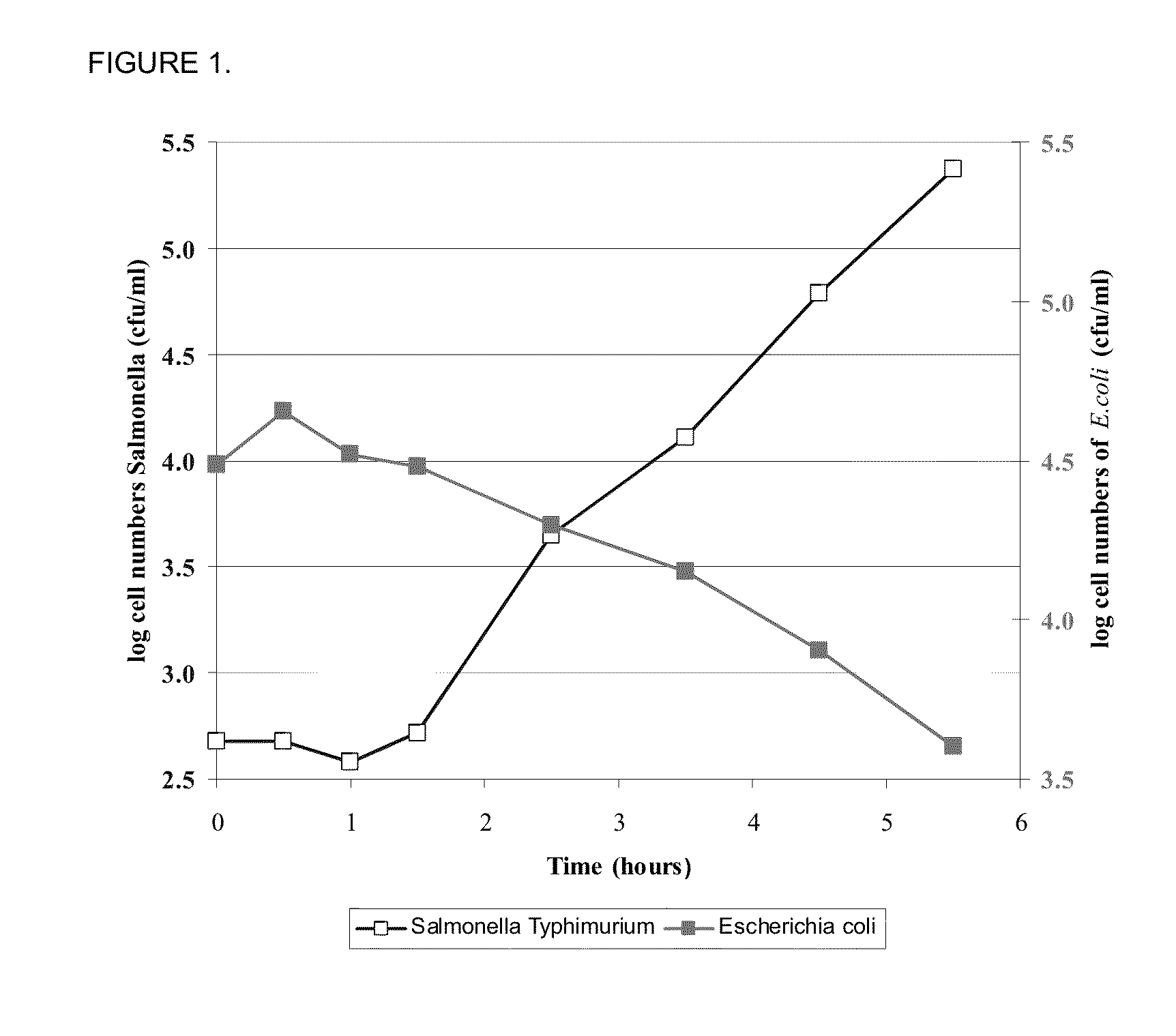
Figure 1 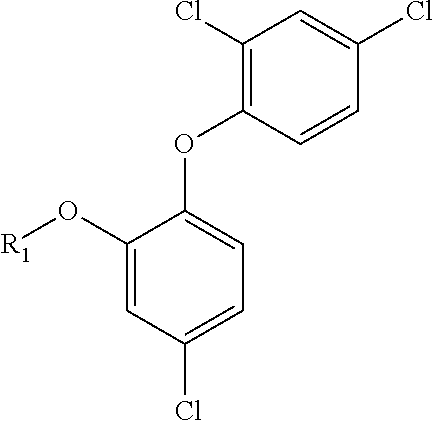
Figure 2 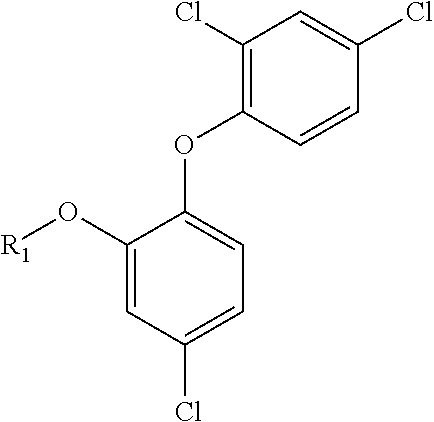
Figure 3
Abstract
Description
RELATED APPLICATIONS
[0001] This application claims priority to GB1223309.4 filed Dec. 21, 2012 which is expressly incorporated by reference herein in its entirety.
[0002] The present invention relates to triclosan derivatives and uses thereof, in particular selective agents comprising triclosan derivatives and selective media containing triclosan derivatives. The invention also concerns methods for selectively inhibiting the growth of certain cells in a mixed population using a selective agent comprising a triclosan derivative and kits for performing such methods.BACKGROUND
[0003] The broad spectrum antimicrobial agent, 5-chloro-2-(2,4-dichlorophenoxy)phenol (also referred to as “triclosan” or “Irgasan®”, which is Ciba Specialty Chemical's brand name for triclosan), has been commonly used since the early 1970's for personal hygiene products, including soap, toothpaste, deodorant, and for household and industrial cleaning products. Although at high concentrations triclosan is a biocide,...
Examples
example 1
[0060]Acetylation of Sugars
[0061]A suspension of 30.0 mmoles of the sugar in 10 ml (129 mmoles) of anhydrous pyridine under an argon atmosphere was cooled in ice with stirring. Acetic anhydride (10 ml, 0.09 mol) was then added drop-wise and the reaction stirred at room temperature for 18 hours. The solution was then concentrated in vacuo, azeotroping with toluene. The resulting residue was dissolved in dichloromethane (50 ml), and washed with 1M HCl (2×50 ml), saturated aqueous NaHCO3 solution (2×50 ml) and brine (2×50 ml). The dichloromethane layer was then dried with magnesium sulphate, filtered and concentrated in vacuo to yield the product as a white powder.
example 2
[0062]Bromination
[0063]To 13.0 mmoles of the acetylated sugar from Example 1, cooled to 0° C., 36.7 mmoles of HBr in glacial acetic acid (45% w / v) was added drop-wise. The solution was stirred at 0° C. for 3 hours, then it was poured onto ice and extracted with CH2Cl2 (2×100 ml). The combined extracts were washed with saturated aqueous NaHCO3 solution (2×100 ml), then dried with anhydrous magnesium sulphate, filtered and concentrated in vacuo to yield a clear orange syrup. The syrup was dissolved in ethyl acetate and crystallized as a white powder.
example 3
[0064]Method 1 for Glycosidation
[0065]Use of the Koenigs-Knorr method ensured that only the trans anomeric form of the glycoside was formed.
[0066]Triclosan (4.04 g, 14.0 mmoles) was dissolved in 100 ml of water containing 14 ml of a 1M sodium hydroxide solution (14mmoles) and 40 ml of acetone. To the stirred solution was then added 60 ml of a solution of acetobromogalactose (13.2 mmoles) in acetone in one go. The reaction mixture was stirred at room temperature for 18 hours then solvent was removed in vacuo. The crude product was purified by flash chromatography (silica gel eluted with a 3:2 mixture of hexane / ethyl acetate) to yield the product.