
Viral vectors encoding recombinant fviii variants with increased expression for gene therapy of hemophilia a
Patent Information
- Authority / Receiving Office
- US · United States
- Current Assignee / Owner
- Publication Date
- 2017-08-17
Smart Images
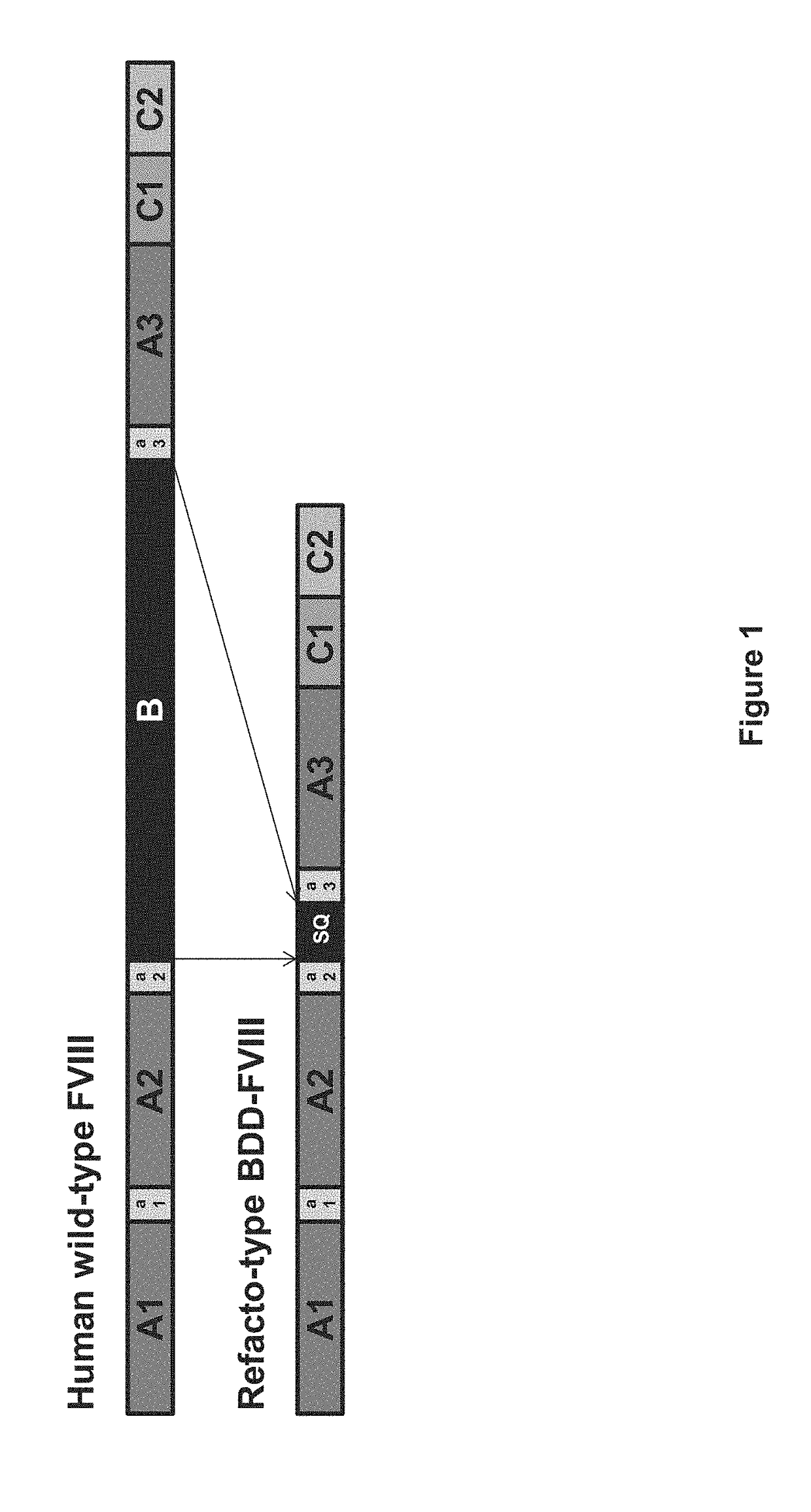
Figure 1 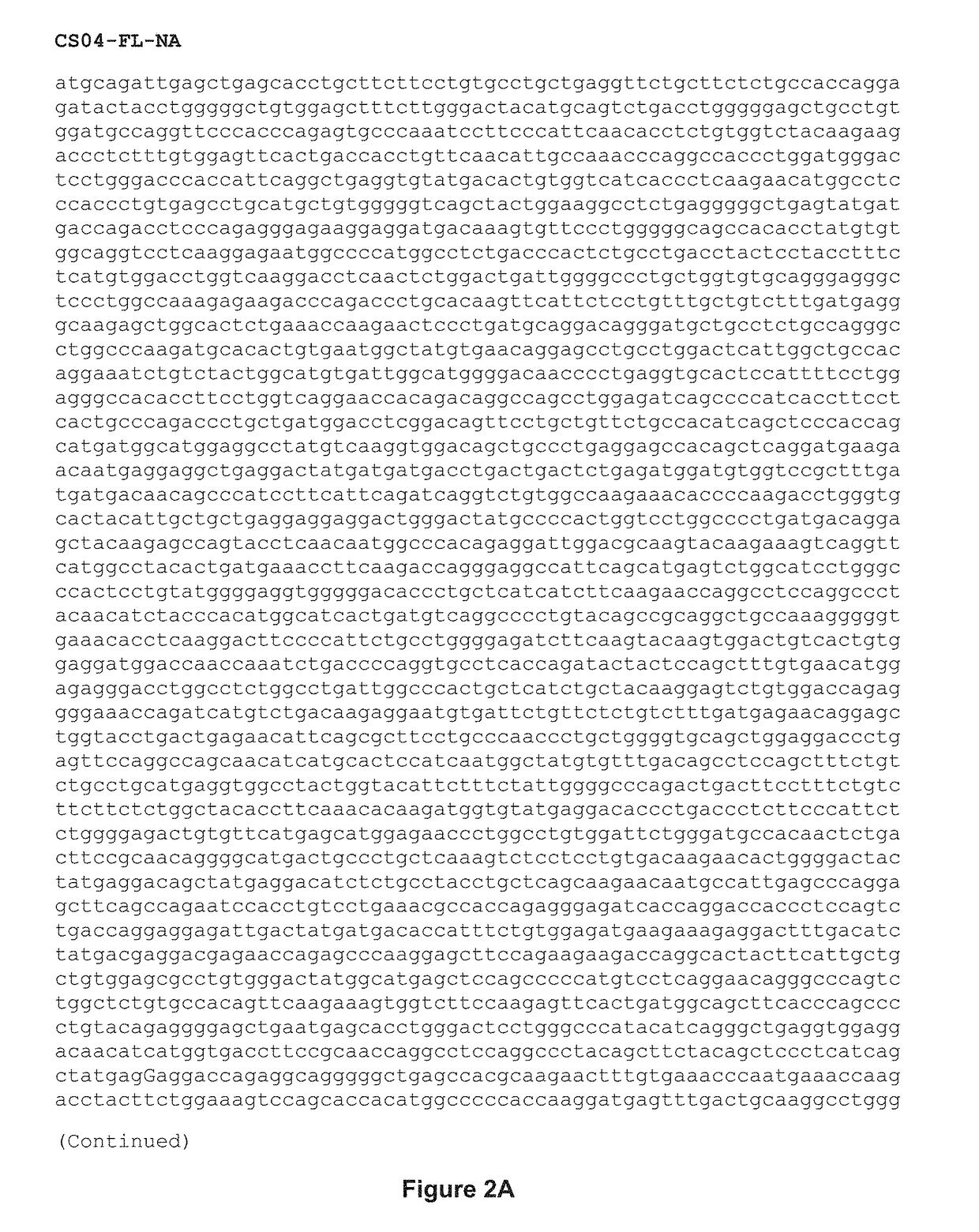
Figure 2 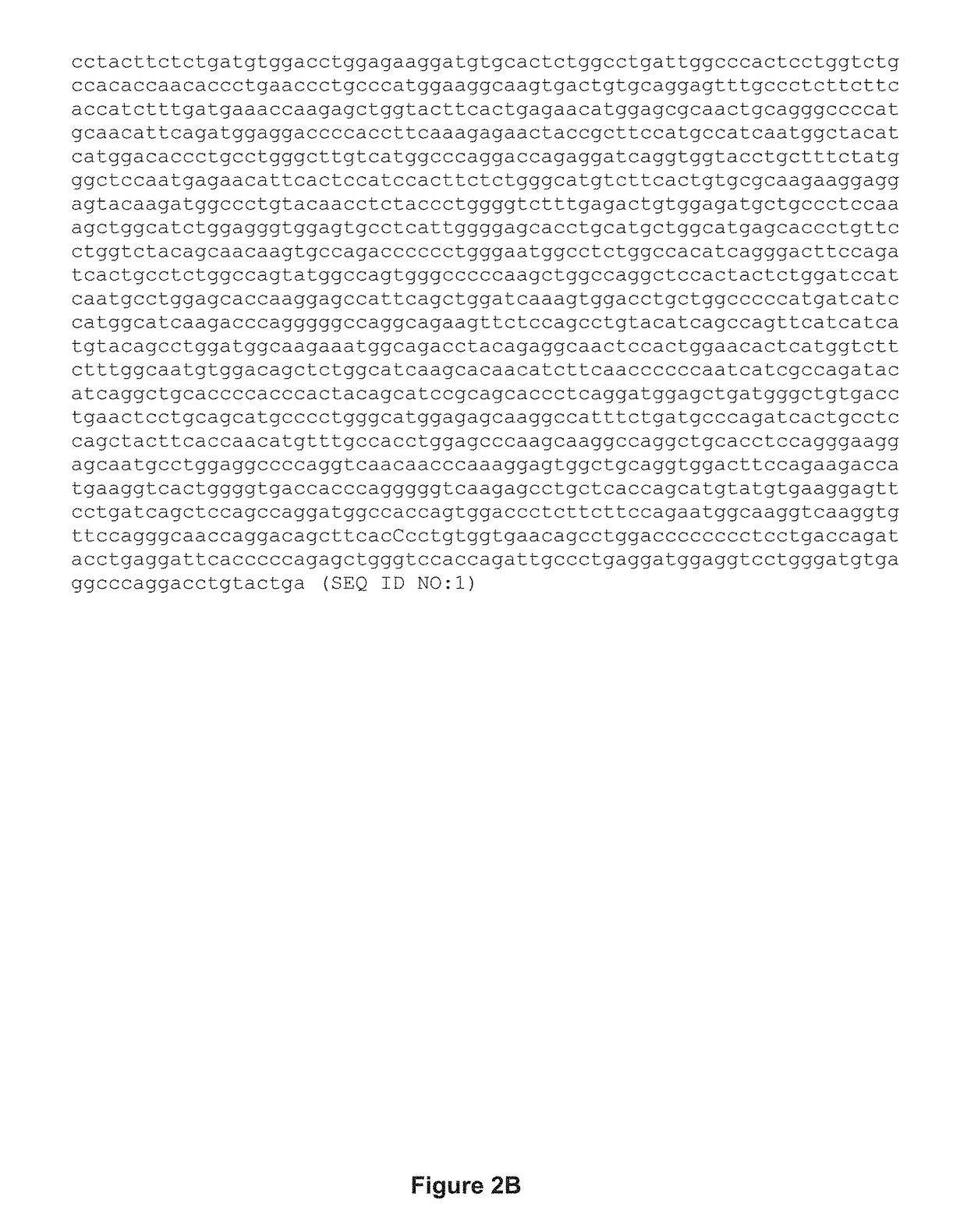
Figure 3
Abstract
Description
CROSS REFERENCE TO RELATED APPLICATIONS
[0001] This application claims priority to U.S. Provisional Patent Application No. 62 / 255,317, filed Nov. 13, 2015, the content of which is hereby incorporated by reference in its entirety for all purposes.SEQUENCE LISTING
[0002] The instant application contains a Sequence Listing which has been submitted electronically in ASCII format and is hereby incorporated by reference in its entirety. Said ASCII copy, created on Nov. 9, 2016, is named 008073_5107_US_Sequence_Listing.txt and is 353,479 bytes in size.BACKGROUND OF THE DISCLOSURE
[0003] Blood coagulation proceeds through a complex and dynamic biological pathway of interdependent biochemical reactions, referred to as the coagulation cascade. Coagulation Factor VIII (FVIII) is a key component in the cascade. Factor VIII is recruited to bleeding sites, and forms a Xase complex with activated Factor IX (FIXa) and Factor X (FX). The Xase complex activates FX, which in turn activates prothrombin to th...
Examples
example 1
Construction of a Codon Altered Factor VIII Variant Expression Sequence
[0358]Two hurdles had to be overcome in order to create a Factor VIII coding sequence that is effective for gene therapy of hemophilia A. First, because of the genomic size limitations of conventional gene therapy delivery vectors (e.g., AAV virions), the encoded Factor VIII polypeptide had to be shortened considerably. Second, the coding sequence had to be altered to: (i) stabilize packaging interactions within the delivery vector, (ii) stabilize the mRNA intermediary, and (iii) improve the robustness of transcription / translation of the mRNA.
[0359]To achieve the first objective, Applicants started with a B-domain deleted Factor VIII variant construct, referred to herein as “FVIII-BDD-SQ.” In this construct, the B-domain is replaced with a fourteen amino acid sequence referred to as the “SQ” sequence. Recombinant FVIII-BDD-SQ is sold under the trade name REFACTO®, and has been shown to be effective for the manage...
example 2
In Vivo Expression of Codon Altered Factor VIII Variant Expression Sequences
[0375]To test the biological potency of the codon-altered Factor VIII variant sequences, the ReFacto-type FVIII constructs described in Example 1 were administered to mice lacking Factor VIII. Briefly, the assays were performed in C57B1 / 6 FVIII knock-out (ko) mice (with 6-8 animals per group) by tail vein injection of 4E12 vector genomes (vg) per kilogram body weight of mouse. Blood was drawn 14 days after injection by retroorbital puncture and plasma was prepared and frozen using standard procedures. Expression levels at day 14 were chosen because there is minimal influence of inhibitory antibodies at this time, which are seen in some animals of this mouse model at later times. FVIII activity in the mouse plasma was determined using the Technochrome FVIII assay performed, with only minor modifications, as suggested by the manufacture (Technoclone, Vienna, Austria). For the assay, the plasma samples were app...
example 3
Design of Glycosylation Peptides for the B-domain Substituted Linker
[0377]Others have shown that inclusion of a small peptide (the “V3 peptide”) containing six putative N-linked glycosylation sites from the wild-type Factor VIII B-domain, into a B-domain deleted gene therapy construct, increased Factor VIII levels in the plasma of mice (McIntosh et al., Blood 121(17):3335-44 (2013)). However, in order to maintain the small size of the B-domain substituted linker, the glycosylation sites were taken out of the context of the wild-type B-domain. In silico prediction (Gupta et al., Supra) of the linker containing the V3 peptide suggests that only two of these glycosylation sites in the V3 peptide will be modified in vivo (FIG. 15).
[0378]Thus, Applicants attempted to identify alternative glycosylation peptides that would support higher levels of glycosylation in vivo, which matched wild type glycosylation more closely than the V3 peptide. Applicants designed and tested several alternativ...